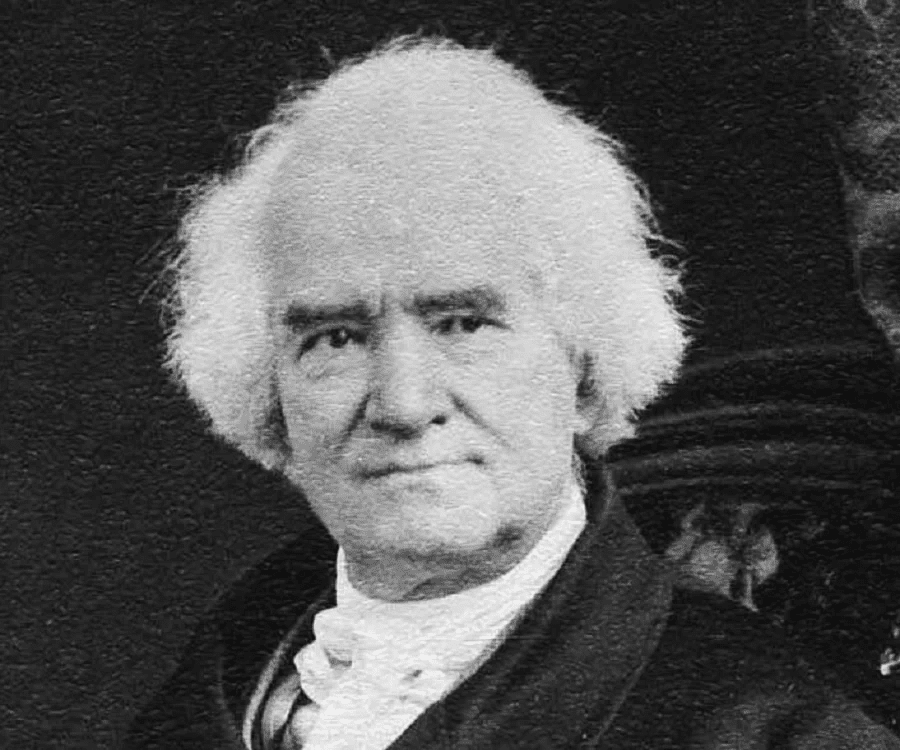

George Dallas is undoubtedly known for his surname, as a city and county in Texas are named after him. However, this is not the only significant accomplishment in the biography of the politician that deserves recognition. He made significant contributions to the country’s development in the political, public and diplomatic sectors. Find out more at iphiladelphia.
Family and legal career
The politician was born on July 10, 1792, in Philadelphia, Pennsylvania, United States. His father, Alexander James Dallas, was a quite well-known political figure. He was born in Kingston, Jamaica, as the son of a doctor. He later relocated to Philadelphia, where he became an influential person. Alexander was the Secretary of the Treasury under United States President James Madison, and he also served as the Secretary of War. George Dallas acquired his political insight from his father. Also, the man’s future was influenced by his upbringing and the atmosphere in the family. It was dominated by a strong political and cultural spirit, which the figure thereafter carried into his daily life and work. His upbringing also affected his interest in public assistance and service to the country. Since George’s father had a lot of political connections while working in the field, George was given his middle name in honor of one of those acquaintances, Thomas Mifflin.
Dallas grew up in a big family, being the second child out of six. He attended a private Quaker preparatory school. After graduation, he enrolled at the College of New Jersey, today known as Princeton University. He finished with honors and received his bachelor’s degree. After that, he went to study law at his father’s office. However, the man was not interested in continuing his law career since he wanted to join the ranks of those fighting for their country on the battlefield rather than at the negotiating table. However, the father did not share his son’s opinions, thus the decision to join the army was abandoned in favor of practice. After deciding on a further career path, George was hired as a personal secretary by an old family friend, Albert Gallatin. The man had a lot to teach, as he was a former finance minister who had spent years digging into the political world. With Gallatin, George headed to Russia, where they were sent to enlist support in peace negotiations between the United Kingdom and the United States of America. However, the future politician only stayed in this country for six months before being dispatched to London for the next executive mission. Already in August 1814, he returned to Washington and presented a draft peace treaty.
Career development and training
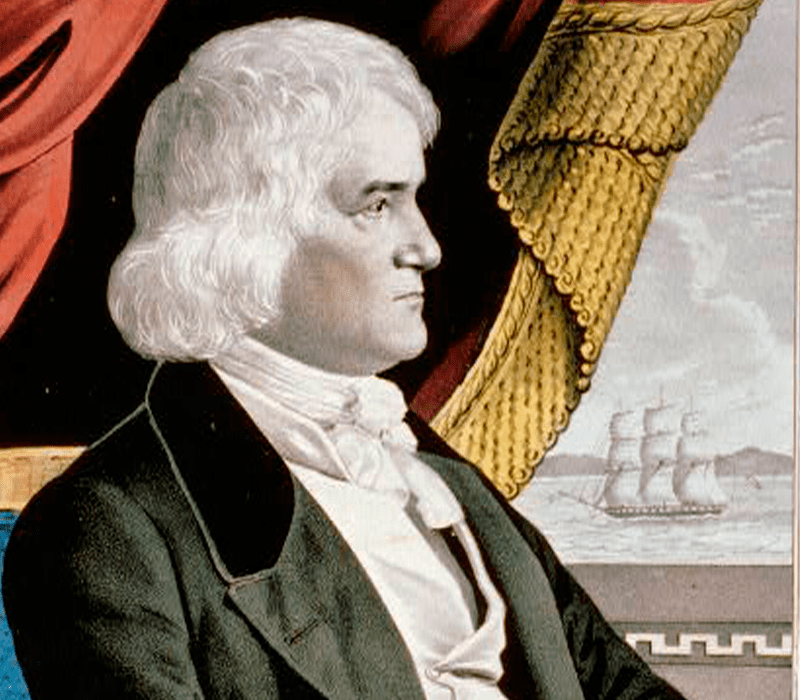
When George arrived back in his country, he was assigned to a new position as the remitter of the treasury. He recognized that this job would be quite boring and not demand much effort, but it would provide him with the opportunity to learn. The politician accepted the position and dedicated all of his free time to learning about politics, which drew him in and became a direct professional interest. His achievements in human rights drew notice and established him as a prominent figure in the legal field.
The next stage in his career was his appointment as the counsel to the Second Bank of the United States. However, the path that George had envisioned for himself was no longer feasible. In 1817, the man’s father died, which marked the end of the development of the family legal practice. Additionally, these events corresponded with the termination of employment at the Second Bank of the United States. As a result, Dallas’ career took a different turn. In 1820, he was appointed deputy attorney general of Philadelphia.
Mayor and public figure
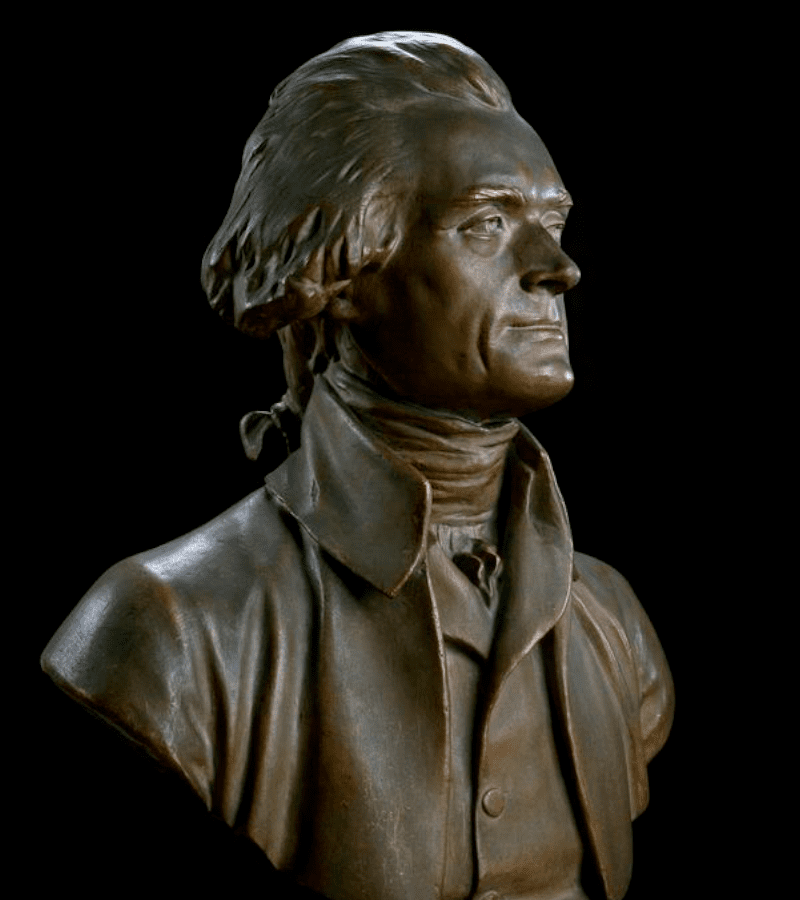
Following the end of the war in 1812, the country began to work to improve the lives of its citizens. Dallas was one of those who tried to improve the state of the city and led a faction in the “Family party”. He became the leader of the Democratic Party, which sparked rivalries with other representatives. Later, in 1828, George was appointed Mayor of Philadelphia. He tried not to waste time because he had no idea how long he would hold this position. The individual was actively working to improve the educational system and public services. He directed all possible reforms aimed at improving the lives of local residents. However, he quickly got tired of standing still, so he resigned the following year, and in 1829 became the United States attorney for the eastern district of Pennsylvania. A noteworthy fact about his family is that his father held the same post from 1801 to 1814. Dallas held office until 1831 when he was elected Senator from Pennsylvania. He held this position until March 3, 1833.
Vice president
After leaving the Senate, Dallas decided to resume his legal practice, which led to his appointment as Attorney General. He maintained this position for a lengthy time, from 1833 to 1835. In 1835, the man was even initiated into the Scottish Rite Freemasonry at the Franklin Lodge. At the same time, George was the Grand Master of Freemasons in Pennsylvania. Dallas’ positions became more significant year after year, and it was impossible to foresee how his career would progress. In 1837, he was named Envoy Extraordinary and Minister Plenipotentiary to Russia. He was in office for 2 years after which required to be recalled. Despite different employment positions, he constantly returned to legal practice, sometimes even rejecting presented possibilities, such as when the man was offered the post of Prosecutor General but declined.
The concentration on legal practice shifted in 1844 when the Democratic Party nominated its representative for vice president in the election. They believed that their leader, who fought for a better living in the city, could do more for the country from a higher position. Dallas was unaware of the nomination and claimed that when the victory was announced in the middle of the night, he was not very happy with what had happened. However, this position provided him with renewed motivation to better the situation in the country. He had a key role in the expansion, development and implementation of the country’s domestic and foreign policies. However, Dallas’ most significant accomplishment as vice president was the signing of a treaty between Great Britain and the United States of America, which allowed the US-Canada border issue to be resolved.
Following his appointment, Vice President George set a higher standard for himself. He set out to settle in the White House. However, his position during the Mexican-American War prevented him from advancing to the presidency. Dallas advocated for the annexation of the entire territory of Oregon and Mexico, which did not occur. Such harsh opinions on his side undermined election plans and efforts. The United States reached a compromise and retained only part of the territory. However, none of the ideas George promoted during the conflict were forgotten. As a result, the campaign began to explore alternative strategies to enhance its position. Dallas made a final push for the White House and focused on an aggressive, expansionist foreign policy agenda. However, his goal could not be achieved.
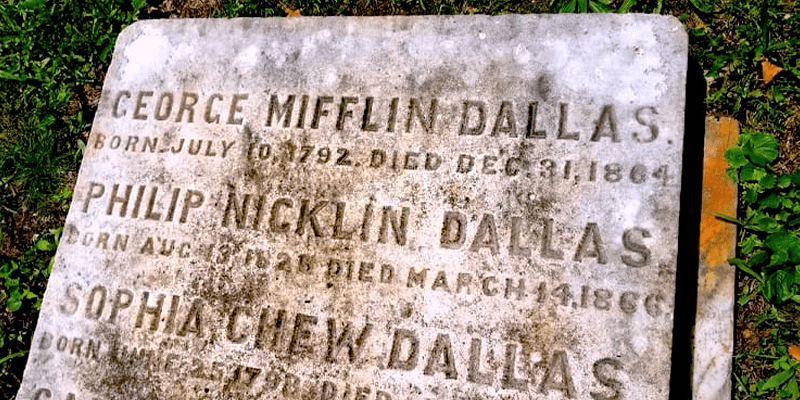
After completing his political and diplomatic careers, Dallas returned to where he started – law practice — and chose a private life with his family. He died in Philadelphia on December 31, 1864. The politician passed away without seeing how his country had evolved and achieved accomplishment on the international stage. However, this man’s contribution was critical to the development of the country in which all of his heirs live.