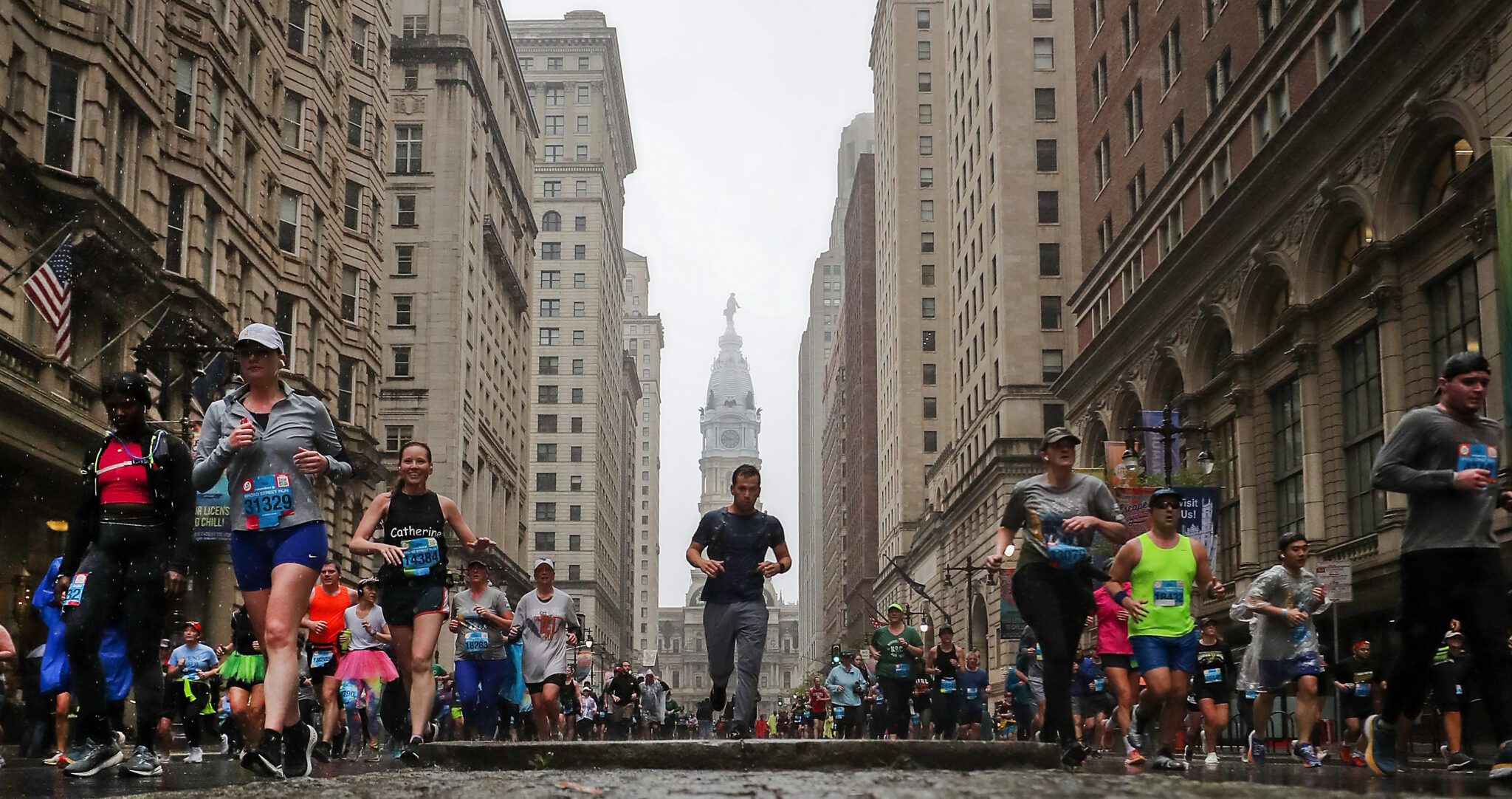

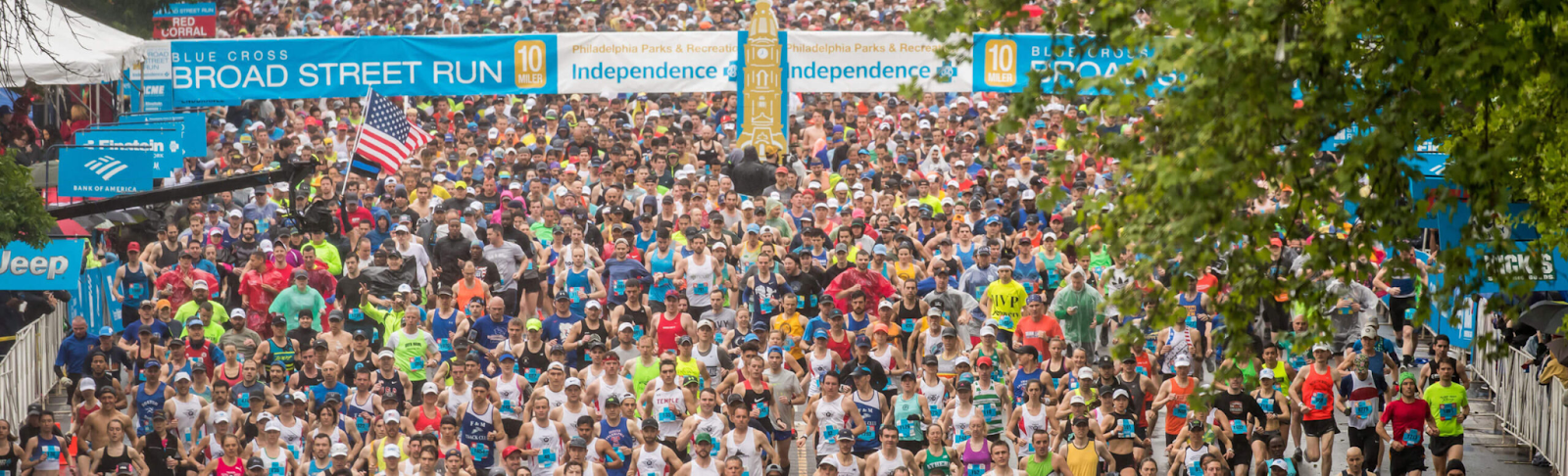
The Broad Street Run is not merely an annual race; it is the largest 10-mile (16.1 km) road race in the United States and has become a quintessential symbol of Philadelphia’s identity. Every first Sunday in May, Broad Street—the city’s primary north-south arterial—is completely shut down to make way for forty thousand athletes. This unique course runs in a dead-straight line, offering participants a front-row seat to the city’s architectural and cultural evolution: from the industrial roots of Olney to the grandeur of City Hall, finishing in the waterfront oasis of the Navy Yard.
In this article at iphiladelphia.net, you will discover how the nation’s largest 10-mile race annually unites forty thousand participants in a straight line through the heart of Philadelphia, transforming the city’s main artery into a vibrant corridor of charity, legendary humor, and the electrifying energy of the Navy Yard.
Race History: From a Local Initiative to a National Record
The inaugural Broad Street Run took place in 1980, with only 1,500 enthusiasts crossing the starting line. Organized by the Philadelphia Department of Parks and Recreation, the goal was to create a democratic sporting event accessible not just to elite marathoners but to everyday residents.
- Inclusivity. Unlike the daunting 26.2-mile marathon, the 10-mile distance is often cited as the “Goldilocks” of racing—challenging enough to require training, yet attainable for the casual jogger.
- A Skyrocketing Profile. Due to overwhelming demand, organizers implemented a lottery system for the coveted race bibs. Every year, the number of applicants nearly doubles the course’s capacity.
- A Mission of Charity. The race generates millions of dollars for the American Cancer Society and other local charities, effectively turning the sweat of athletes into tangible community support.
The Route: A Linear Journey Through Cultural Strata
The Broad Street Run course is legendary for its geometry. It is a nearly continuous descent with a gentle grade toward the Delaware River, making it one of the fastest courses in the world for setting personal bests.
- The Northern Start. Runners gather near Central High School in the Olney neighborhood. The atmosphere here is one of quiet focus and early morning mist. Olney has historically served as a gateway for Philadelphia’s immigrant populations, and that vibrant, diverse energy sets the stage for the miles to come.
- Academic Energy. As the pack thunders through the Temple University campus, athletes receive their first major boost from collegiate drumlines and cheering squads. It’s a moment where the silence of academia is replaced by the raw pulse of the city.
- The Epicenter: City Hall. Racing around the magnificent City Hall is the race’s emotional peak. The course narrows, and the roar of the crowd becomes deafening. City Hall, topped by the statue of William Penn, stands as a grand, silent observer of this massive human migration.
- South Philly Hospitality. The neighborhoods of South Philadelphia greet runners with Italian flags, live music, and the city’s trademark wit displayed on handmade signs. Here, amidst the aroma of fresh bakeries and the boisterous shouts of locals, the race transcends sport and becomes a communal block party. Every stride down Broad Street brings runners closer to the Navy Yard, but it is this stretch that fosters a true sense of belonging. It is a profound symbol of unity, where physical exhaustion is overcome by the genuine smiles of strangers.
The Pulse of Broad Street
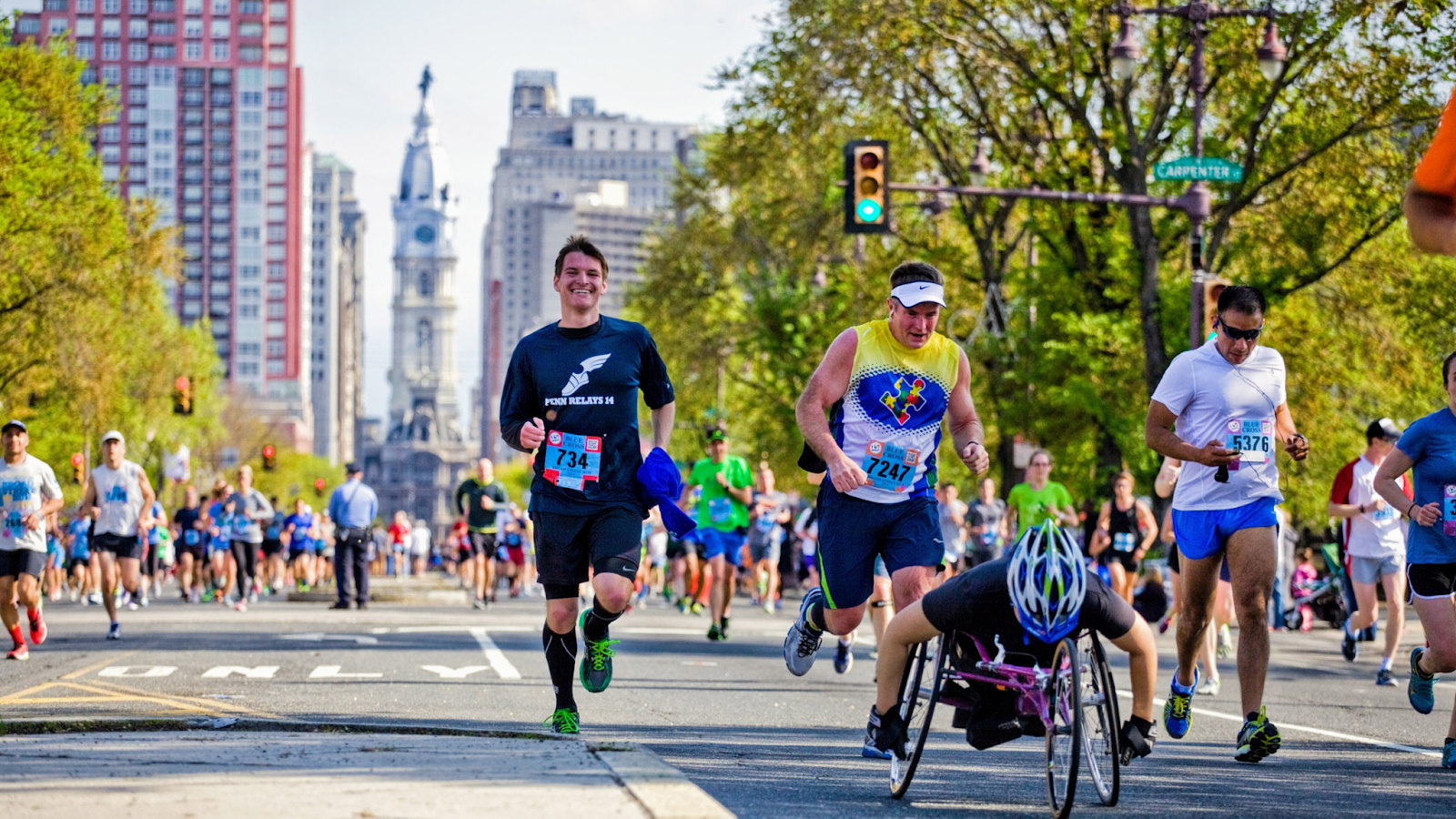
To truly grasp the drive and philosophy of this event, one must experience it firsthand. When ten miles of a straight-as-an-arrow highway transform into a continuous gauntlet of human voices and raw emotion, you understand the magic of the Broad Street Run. While it is a timed athletic event, the real soul of the race lives on the sidewalks. Over a million Philadelphians line the route each year, creating a support ecosystem that makes this the most popular 10-miler in the nation. For the runners, it isn’t just a distance; it’s a psychological journey fueled by the city’s collective heartbeat.
A Symphony of Streets: From Gospel to Punk Rock
The musical landscape of Broad Street shifts as dynamically as the neighborhoods it traverses. In North Philly, runners are met by the soaring voices of gospel choirs, capable of lifting the spirits of even the most fatigued athletes. These hymns, deeply rooted in the city’s African American heritage, provide a spiritual boost in the early miles.
Approaching Temple University, the air is thick with the rhythmic thunder of marching bands. Further south, local punk bands set up “porch concerts,” turning residential stoops into DIY stages. This non-stop soundtrack keeps the pace high and transforms the monotony of running into a rhythmic exploration of Philadelphia’s cultural layers.
Humor as Therapy: Philadelphia’s Legendary Signage
Philadelphians are world-renowned for their sharp tongues and specific brand of humor, which serves as the ultimate antidote to muscle cramps. The creative signs held by spectators are a form of street art in themselves. Phrases like “Run like you stole a cheesesteak from Pat’s” or the provocative “Smile if you’re peeing your shorts right now” have become legendary staples of the event. This “tough love” approach to encouragement is the highest form of caring in Philly; a genuine laugh at mile nine is often more effective than any energy gel.
Hydrants and the Saving Mist
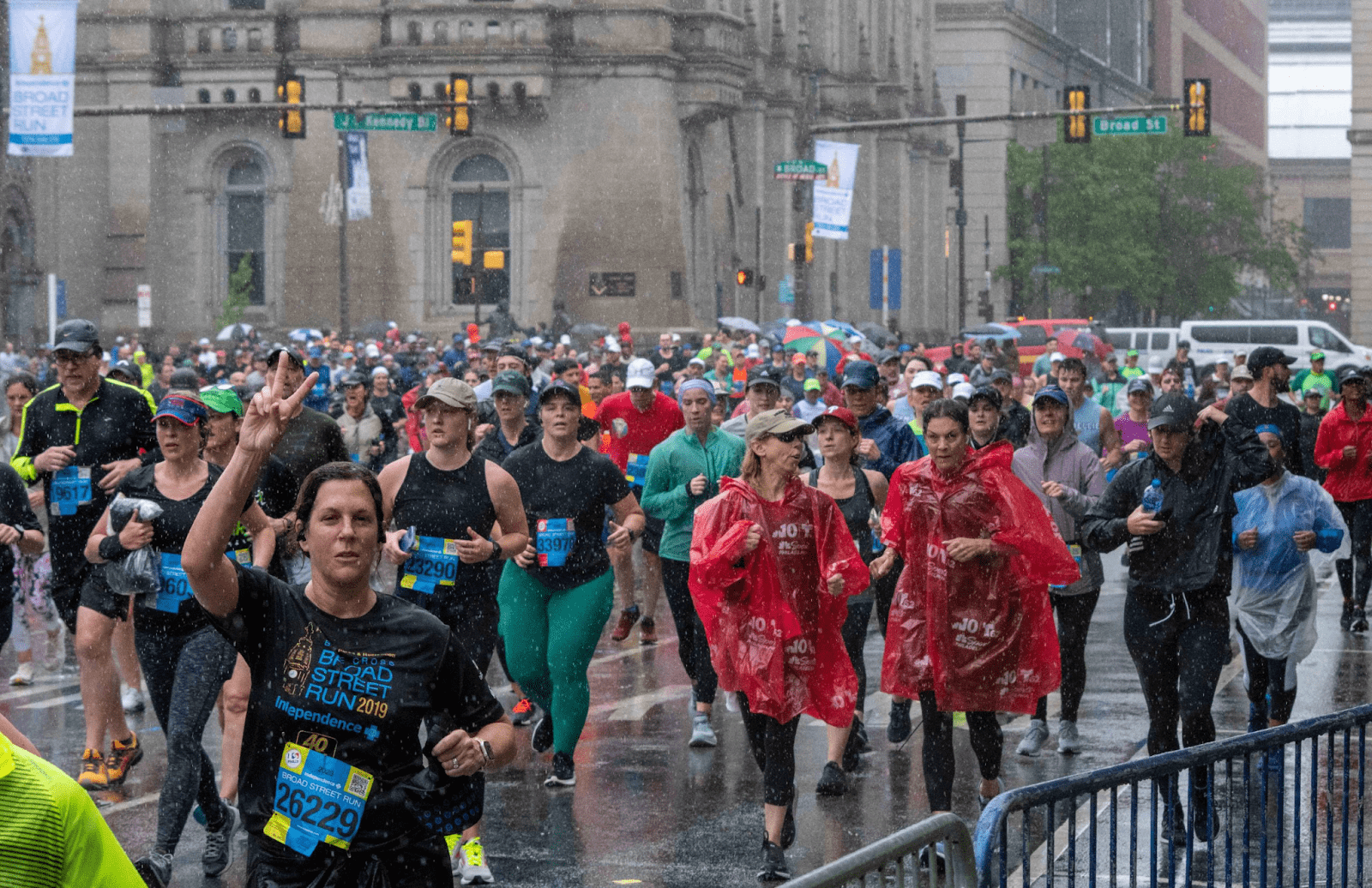
In years when the May sun decides to test the runners’ resolve, local heroes in helmets step up. Philadelphia Fire Department stations along the route deploy “hose stations.” Using specialized nozzles, they create massive zones of water mist that runners pass through. This isn’t just a cooling mechanism; it’s a ritual. Running through a rainbow of water spray to the roar of a South Philly crowd is a moment of pure catharsis, providing the final surge of adrenaline needed to reach the Navy Yard gates.
Social Mission: Where the Funding Goes
The Blue Cross Broad Street Run is about more than just personal records; it is a vital engine for social good. Over decades, it has evolved into a powerhouse for philanthropy. Its primary partner for over 40 years has been the American Cancer Society. Together, participants have raised over $6 million, funding groundbreaking research and providing free lodging for families battling the disease through programs like Hope Lodge.
Beyond medical research, the race invests heavily in the city’s “green lungs” via the Fairmount Park Conservancy. These funds go toward trail restoration, historic preservation, and environmental education. Furthermore, the race supports mentorship programs like Students Run Philly Style, which uses long-distance running to transform the lives of thousands of local students.
Sustainability is also key. Every piece of clothing discarded at the start line is collected and donated to local shelters, ensuring a cycle of kindness where every registration fee and discarded sweatshirt serves a greater purpose.
Fundraising and Resource Allocation Statistics
| Expenditure Category / Recipient | Total Contribution | Purpose / Allocation |
| American Cancer Society | > $6,000,000 (Cumulative) | Cancer research, Hope Lodge, patient logistics. |
| Fairmount Park Conservancy | Annual Grants | Trail upgrades, environmental education. |
| Students Run Philly Style | Corporate Donations | Gear and mentorship for local youth. |
| Clothing Recycling Program | Tons of textiles annually | Supporting local homeless shelters. |
| Shoe Recycling Initiatives | Thousands of pairs | Humanitarian aid and youth sports funding. |
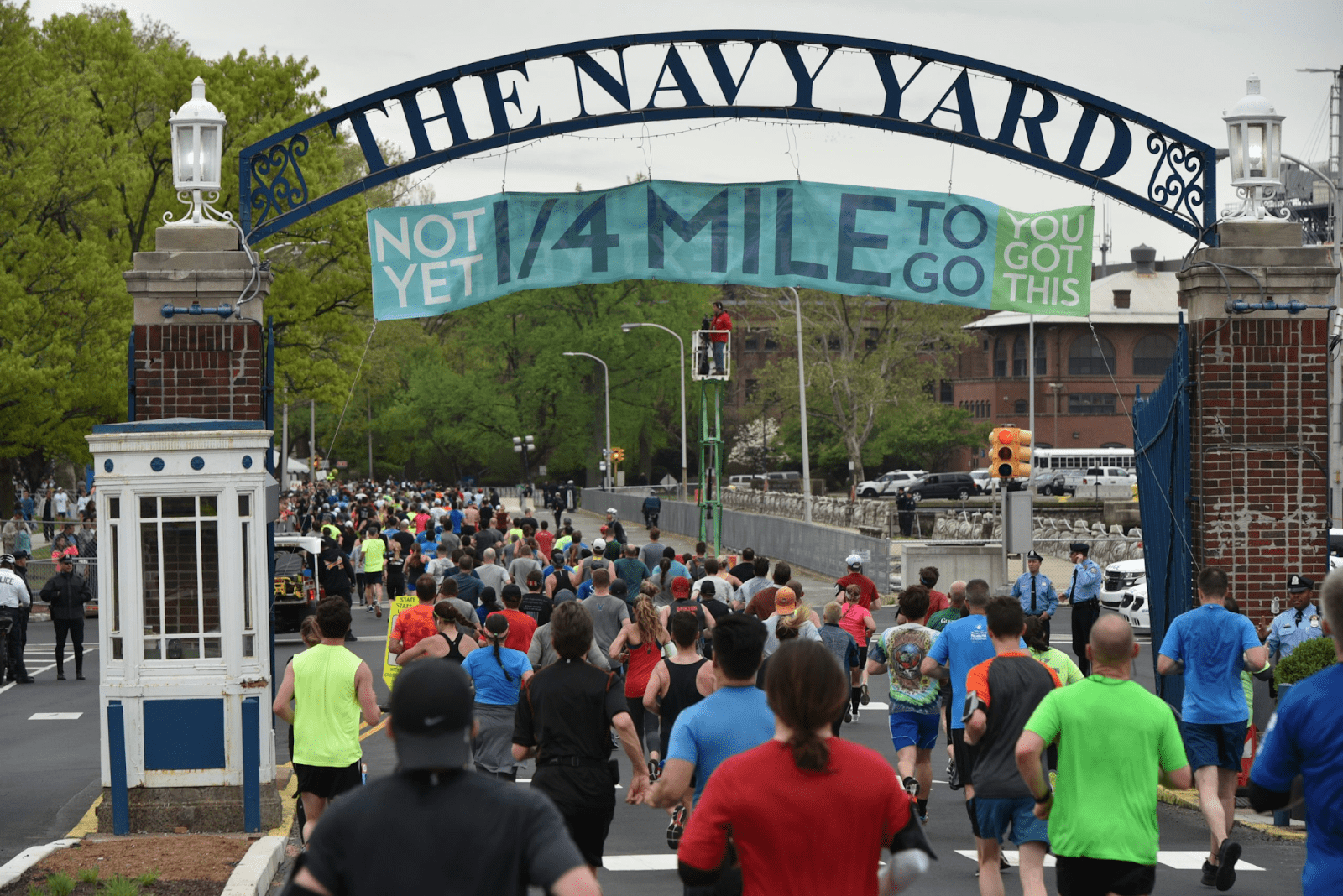
The Finish as a Beginning: Triumph in the Navy Yard
As the silhouette of City Hall recedes and the canyon of skyscrapers gives way to the open vistas of the southern waterfront, every runner feels the climax approaching. The finish line at the Navy Yard is more than a GPS coordinate; it is the point where the individual efforts of forty thousand souls merge into a singular moment of civic pride. The medal placed around each finisher’s neck is a lifetime pass to an elite club: those who have “conquered Broad Street.”
For Philadelphia, this race is more than a date on a calendar or a tourism statistic. The Blue Cross Broad Street Run is an annual audit of the city’s heart and soul. As the final participants cross the line to the thunderous applause of volunteers, the city is already looking ahead to next May. The Broad Street Run proves that in Philadelphia, the shortest distance between two neighbors is a shared ten-mile journey where every step is a part of the grander story of the City of Brotherly Love.
Sources:
- https://www.phillymag.com/be-well-philly/2019/04/30/first-time-broad-street-runners/
- https://www.inquirer.com/philly-tips/broad-street-run-philadelphia-2022-route-road-closures.html
- https://www.fox29.com/news/broad-street-run-2022-what-you-need-to-know-for-the-42nd-annual-event
- https://www.broadstreetrun.com/2020-virtual-blue-cross-broad-street-run/
- https://www.phillyvoice.com/broad-street-run-road-closures-philadelphia-restrictions-2021/