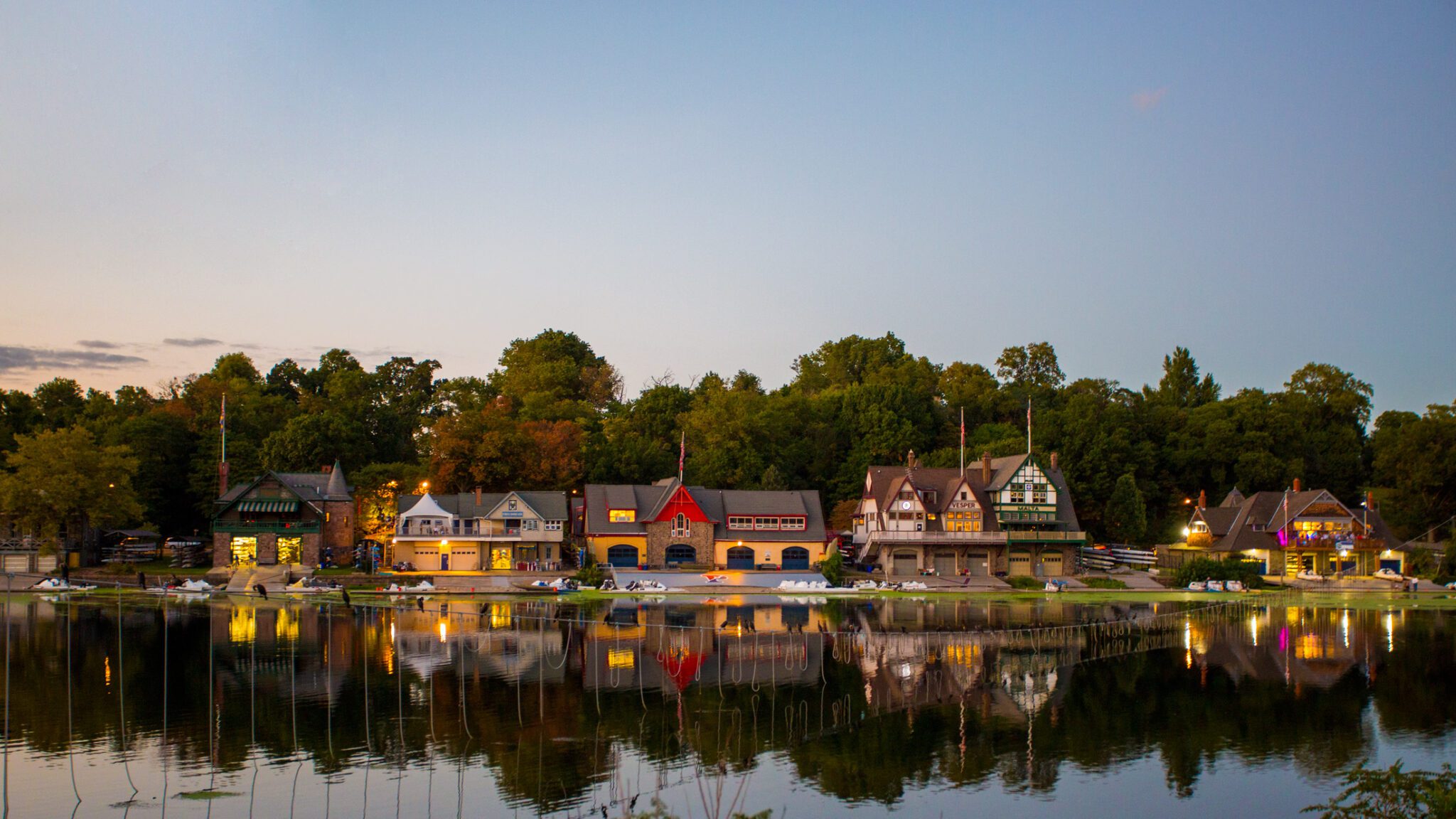

Fifteen historic stone structures lining the banks of the Schuylkill River form Boathouse Row—the preeminent citadel of American rowing. Since 1858, this architectural ensemble in Philadelphia has served as the headquarters for the oldest amateur athletic association in the United States. Here, elite athletes sharpen their resolve daily, training for victories at the world’s most prestigious regattas. The site is officially recognized as a National Historic Landmark and stands as a definitive symbol of the nation’s athletic endurance and competitive spirit.
The architectural diversity of these Victorian facades conceals the rigorous training schedules of future Olympic champions. These houses have become a world-renowned landmark, thanks in part to their iconic contour lighting system. They embody the steadfastness of team spirit and a profound respect for centuries of heritage. Every year, thousands of visitors flock here to witness the rhythmic pulse of competitive rowing. Boathouse Row remains a central anchor of modern Philadelphia’s identity. Read on for a deep dive into this landmark at iphiladelphia.net.
From Industrial River to Athletic Oasis
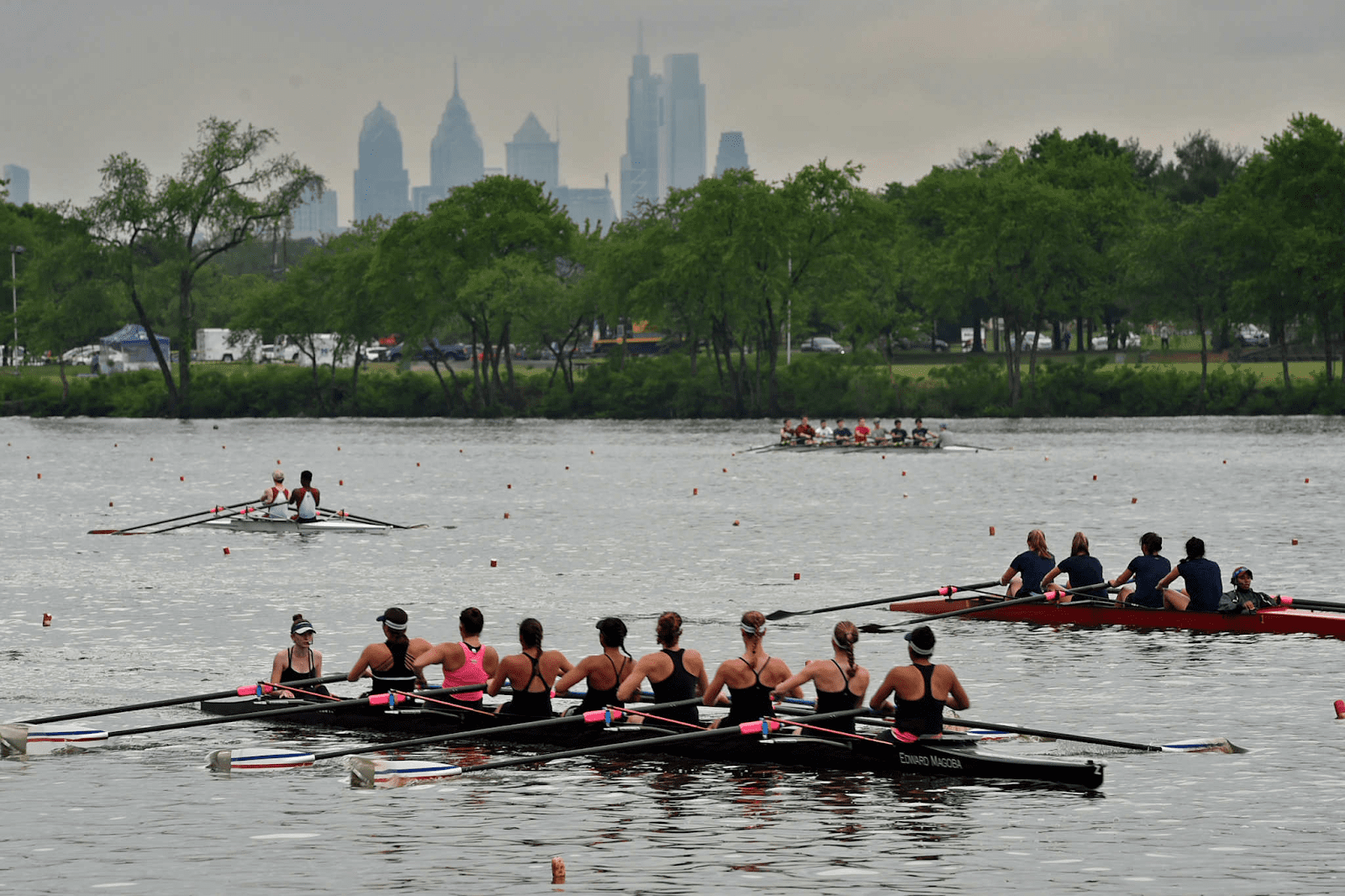
The emergence of Boathouse Row is intimately tied to the development of city infrastructure and the environmental challenges of the mid-19th century. At the time, the city was growing rapidly, and the river was the lifeblood of Philadelphia’s expansion.
- Dam Construction. In 1821, a dam was built on the Schuylkill River for the city’s waterworks. This tamed the once-turbulent river into a tranquil mirror of water, creating conditions perfectly suited for rowing. It transformed a wild waterway into a serene stage for sport, setting the scene for what would become a global center for oarsmen.
- Water Protection. To prevent industrial runoff from contaminating the water supply, the city purchased the surrounding land and established Fairmount Park. This preserved the riverbanks for recreation and sport. This move was a stroke of visionary urban planning, ensuring that factories would not mar the beauty of the shoreline, keeping it pristine for the rowing clubs that were soon to follow.
- Architectural Evolution. Most of the boathouses seen today were constructed between the 1860s and 1904. They showcase a diverse mix of styles, from Victorian Gothic and Italian Renaissance to half-timbered designs, creating a unique visual rhythm along the shoreline. Each structure reflects the aesthetic preferences of its era, blending into a singular, picturesque row.
While the first clubs began as exclusive men’s societies, they eventually became the foundation for the development of competitive rowing in American colleges and secondary schools. This transition helped democratize the sport, turning it into a staple of the American academic experience.
The Schuylkill Navy: America’s Oldest Athletic Organization
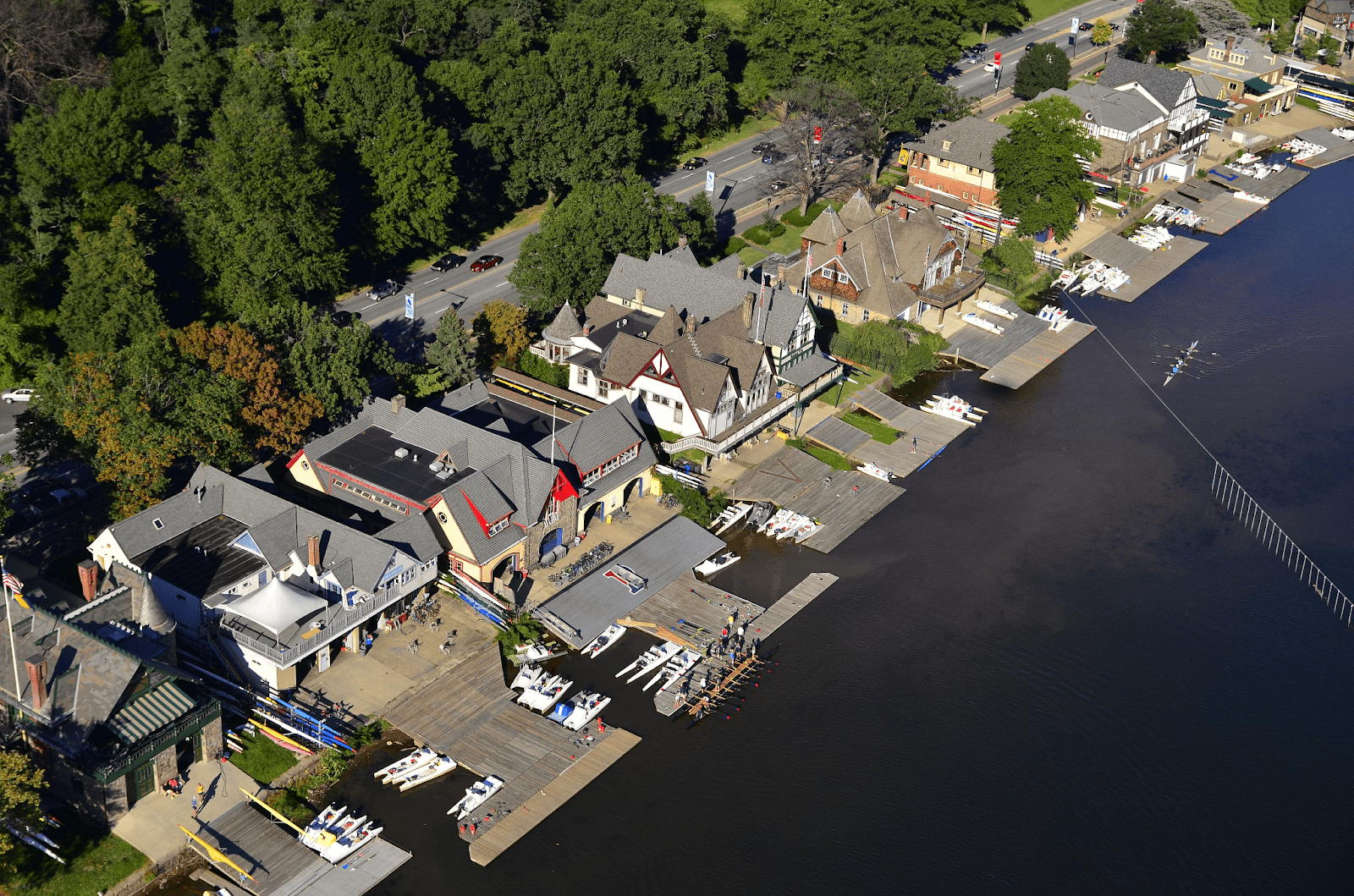
You might think we’ve made a mistake by using the word “Navy” for an organization based on a freshwater river. In fact, the Schuylkill Navy is the oldest amateur athletic association in the United States, founded in 1858 to govern Philadelphia’s rowing clubs. The term “Navy” is a historical nod to 19th-century traditions, when any organized group of vessels—even small racing shells—was proudly referred to as a fleet. Today, this “river army” of rowers is a national treasure, producing Olympic gold medalists amidst the picturesque backdrop of Boathouse Row. It serves as the umbrella organization for all clubs on the Row, coordinating competitions and ensuring the preservation of the sport’s traditions.
- Legendary Clubs. Each boathouse has its own storied specialty. For instance, Vesper Boat Club and Penn Barge Club have produced dozens of Olympic champions. The University Barge Club is traditionally affiliated with the University of Pennsylvania. These clubs are more than just sports facilities; they are living archives of athletic achievement, with walls covered in trophies that span over a century.
- The Dad Vail Regatta. Every year, the river hosts the largest collegiate regatta in the United States, drawing thousands of athletes and spectators, transforming the banks into a vibrant, cheering stadium. It is the highlight of the collegiate rowing calendar, bringing a surge of energy and competition to the city’s waterfront.
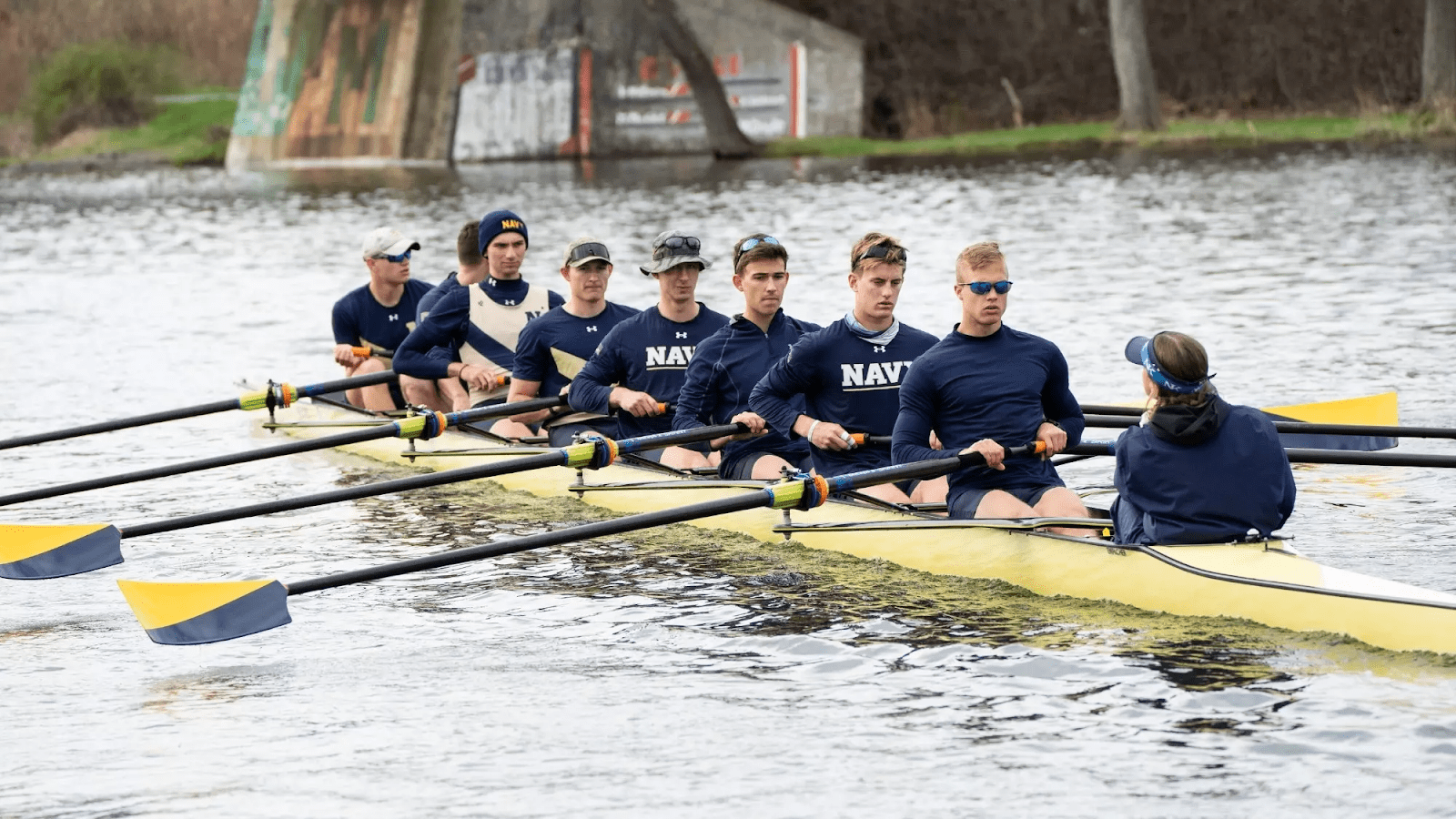
- The Spirit of Competition. Rowing on the Schuylkill is considered particularly challenging due to the current and the river’s technical bends, making a victory here a prestigious achievement for any oarsman or oarswoman. Navigating these waters requires more than just strength; it requires a deep understanding of the river’s unique personality.
Lights Over Water: The Night Magic of Boathouse Row
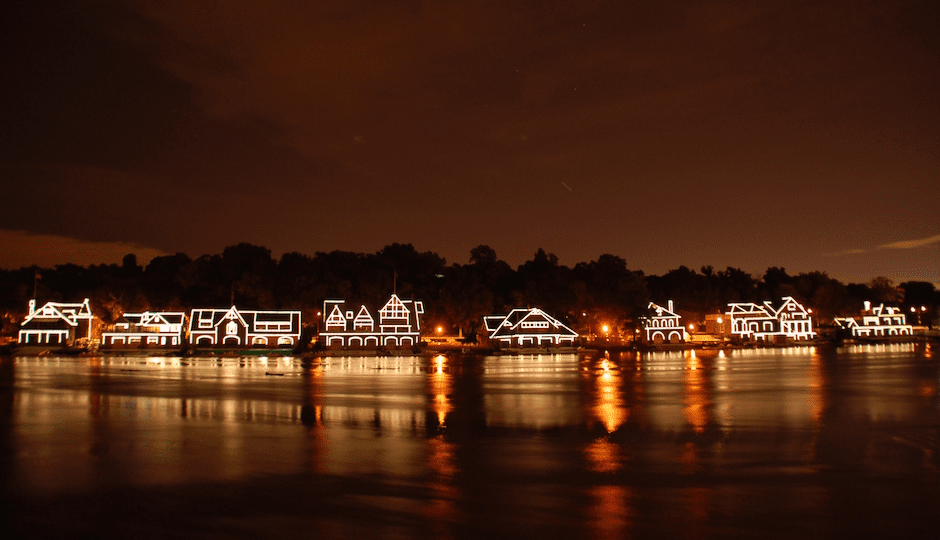
The history of Boathouse Row’s world-famous illumination began not as an art project, but as a diplomatic gesture. In 1979, Philadelphia was preparing for the historic visit of Pope John Paul II. City officials decided to light up the contours of the boathouses to impress the world during televised broadcasts. The effect was so breathtaking that the temporary installation became a permanent fixture of the city’s skyline.
After decades of use, the aging lighting system began to fail due to moisture and wear. In 2023, the Row went dark for nearly a year for a massive $2.1 million modernization. Engineers replaced the outdated lamps with 6,400 individually programmable LEDs. The new system is significantly more durable and energy-efficient.
Today, the Boathouse Row lighting serves as a massive communication screen for the entire city. Advanced software allows for instantaneous palette changes at the touch of a button.
- Sports Spirit. The houses glow vibrant green following victories by the Philadelphia Eagles. It’s a visual celebration that signals the city’s pride to everyone within sight of the river.
- Social Awareness. Pink lights are activated throughout October to support Breast Cancer Awareness. This transformation shows how historic landmarks can participate in contemporary social causes.
- National Pride. Red, white, and blue hues illuminate the banks during Independence Day celebrations, grounding the festivities in the city’s revolutionary roots.
A unique visual effect is created by the interaction of light with the dark water. The river acts as a giant mirror, blurring the sharp geometric lines into dynamic light paintings that shift with the current. This makes Boathouse Row one of the most photographed night spots in Pennsylvania, offering a dreamlike atmosphere that captures the imagination of locals and tourists alike.
Life Beyond the Oar: Trails and Leisure
Boathouse Row has never been an isolated fortress for athletes. It is a vital nerve in the urban landscape, woven into the daily lives of Philadelphians. Running directly alongside these majestic structures is the Schuylkill River Trail—frequently cited as one of the best and most-visited urban bike paths in the United States. For thousands of runners, cyclists, and casual walkers, the rhythmic splash of oars and the distant calls of coaches have become the natural soundtrack to their morning exercise, making the training process part of the collective public space.
To truly appreciate the architectural splendor of the Row, one must change perspective and cross the river. On the opposite bank, near the park entrance on Martin Luther King Jr. Drive, lies the perfect vantage point, often called “the best view in Pennsylvania” by photographers. From here, you get a panoramic vista where the geometric rigor of Victorian roofs meets the fluidity of the water, creating that iconic image that graces millions of postcards and travel brochures.
Behind the boathouses’ closed doors lies a world where modern technology coexists with century-old nostalgia. The interiors of many clubs resemble private museums. The walls are densely hung with medals darkened by time and black-and-white photographs of athletes whose names are now part of history. Alongside these relics, state-of-the-art carbon-fiber racing shells are stored on special racks, costing tens of thousands of dollars, underscoring the high price of collegiate triumph.
Despite their status as private organizations, Boathouse Row remains remarkably accessible to those who wish to glimpse the world of aristocratic sport. During major city regattas or special “open house” days, the boathouses hospitably open their massive doors to everyone. This allows residents and visitors alike to witness the elite training conditions and feel the profound sense of generational continuity that makes this corner of Philadelphia so much more than just a sports complex.
Sources:
- https://philadelphiaencyclopedia.org/essays/boathouse-row/
- https://www.phillymag.com/life-style/2023/04/27/penn-boathouse-renovation/
- https://www.theconstitutional.com/blog/2015/08/25/boathouse-row
- https://www.inquirer.com/philly/entertainment/20161218__Boathouse_Row___Glorious_tale_of_a_Philadelphia_landmark.html