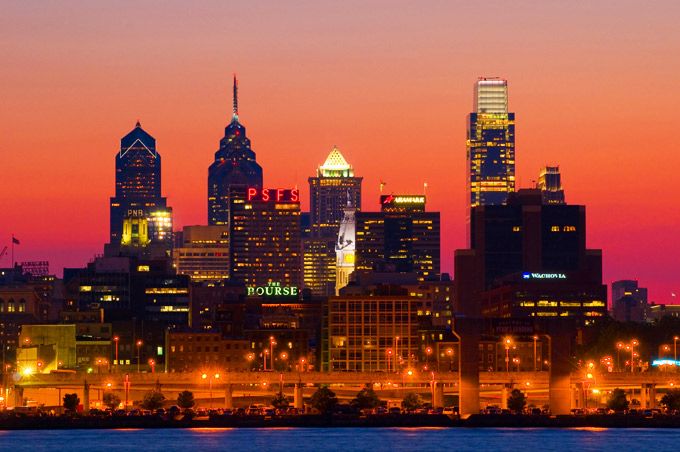

The name of the American city of Philadelphia is more than just a geographical label; it’s a mission statement embedded in the very foundation of a new colony. In 1682, the English Quaker William Penn established this settlement on the Delaware River, giving it a name loaded with deep religious and humanitarian significance. The story behind the naming is inextricably linked to the ideals of liberty and tolerance that its founder sought to implement. We break down the details on iphiladelphia.net.
Greek Roots and a Religious Ideal
The name “Philadelphia” has profound and deliberate Greek origins that served as the philosophical bedrock for the city’s founding. It’s composed of two words: phileo (Φιλϵˊω), meaning “love” or “one who loves,” and adelphos (αˊδϵλφoˊς), which translates to “brother.” Put together, the entire name signifies “Brotherly Love.”
This choice was neither accidental nor purely aesthetic. The city’s founder, William Penn, was a devout member of the Quaker religious community. Penn had personally experienced severe religious persecution in England, where Quakers often faced sharp discrimination. His goal was far broader than simply establishing a colony. He aimed to create a so-called “Holy Experiment” in North America—a unique society founded on tolerance.
Philadelphia was intended to be a place where people of diverse faiths (Quakers, Anglicans, Lutherans, Jews, and others) could live together in peace and harmony, putting into practice the Christian tenets of mutual love and tolerance. The city’s name thus became not merely a geographical designation but the foundational principle of this project, a determinant of its social model. In this way, the very name encapsulated the primary challenge and the ultimate success this new American enclave was meant to achieve.
Historical Precedent in Asia Minor
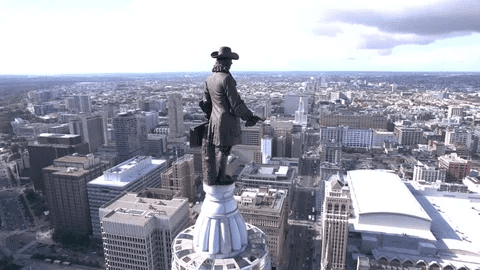
Penn did not invent the word. In fact, the name Philadelphia already existed in the ancient world. A city named Philadelphia was located in Asia Minor (modern-day Turkey). This settlement, founded in the 2nd century BCE, is also famous for its mention in the biblical Book of Revelation as the site of one of the seven early Christian congregations.
By naming his new city after an ancient one with such rich religious context, Penn underscored its Christian mission and its aspiration for universal brotherhood. He wanted his city to be an oasis where religious liberty and genuine charity were not mere words but a way of life.
The Founder and His Principles
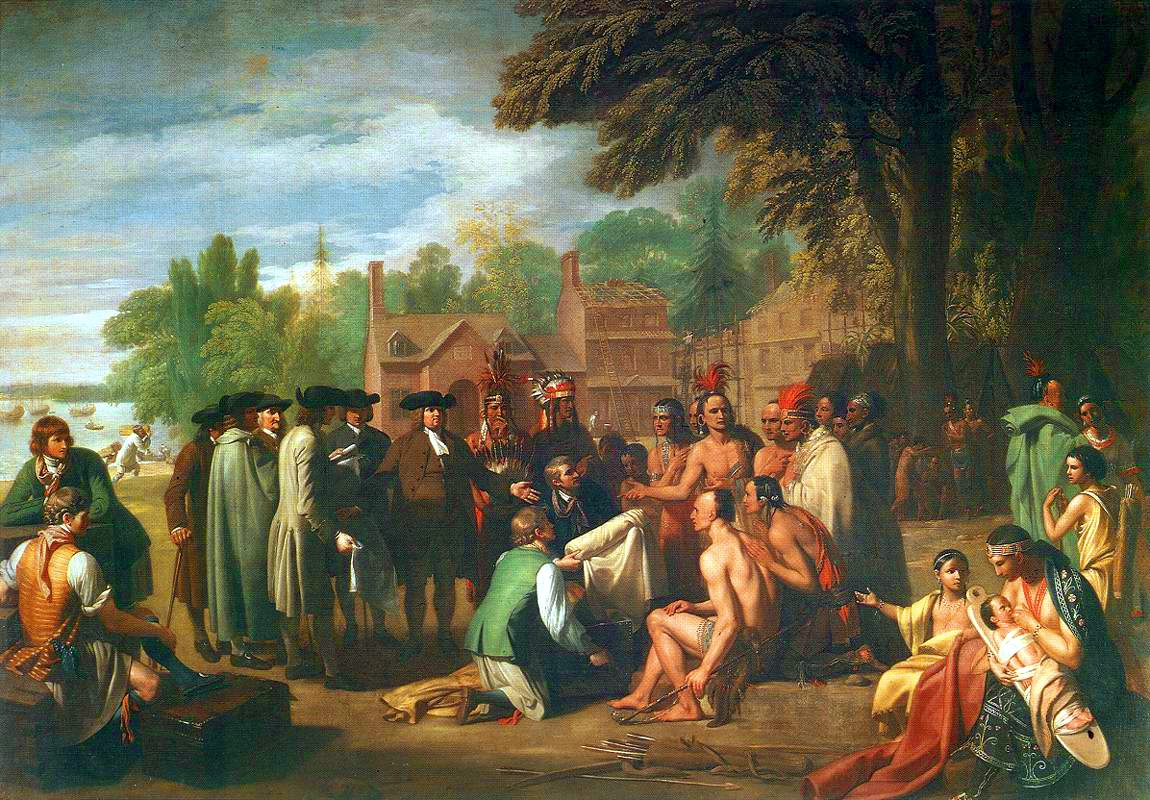
Through the execution of William Penn’s principles, which were inherent in the name itself, Philadelphia rapidly developed into a thriving center. These principles involved not just religious tolerance but also fair treaties and peaceful relations with the indigenous people—the local Lenape tribe. Penn insisted on the honest purchase of land, a rare occurrence in colonial America, which secured the city a long period of peace.
These conditions of tolerance and security made Philadelphia a magnet. It began to attract a vast number of settlers from various parts of Europe. These residents were actively seeking refuge from religious and political persecution. As a result, the city did create a unique polyethnic community, including English, German, Dutch, and Irish settlers. Thanks to this rapid influx of people and vigorous trade, Philadelphia grew into the largest city in colonial America by the mid-18th century. Soon, the original name, “The City of Brotherly Love,” evolved into an unofficial yet enduring nickname. It became a solid synonym not only for religious tolerance but also for the emerging American ideals of democracy and civil liberty.
The Symbolism on the Seal and in the Public Conscience
The concept of brotherly love, established by William Penn, transcended a simple name, becoming a fundamental principle of governance and identity. This ideal is enshrined not only in the well-known nickname but also in the city’s Latin motto: Philadelphia maneto. This phrase translates to “Let brotherly love endure” or “… remain.” This statement confirms that for the founders, this ideal was not a one-time gesture but an eternal, ongoing commitment to the community and to history.
Although the city, like any human creation, did not always live up to such a high moral imperative, its name served as a constant ethical reminder of its founding purpose—the creation of a just and free society. In fact, Penn’s principles of religious tolerance and equality, stemming directly from the name, were key factors in its remarkably quick growth during the colonial period. The city attracted immigrants from various denominations and nationalities fleeing discrimination, making it the largest and most ethnically diverse urban center in 18th-century America. Thus, the name Philadelphia evolved into a symbol of sanctuary and a fertile ground for democratic ideas, culminating dramatically during the American Revolution.
A Legacy Engraved in the Name
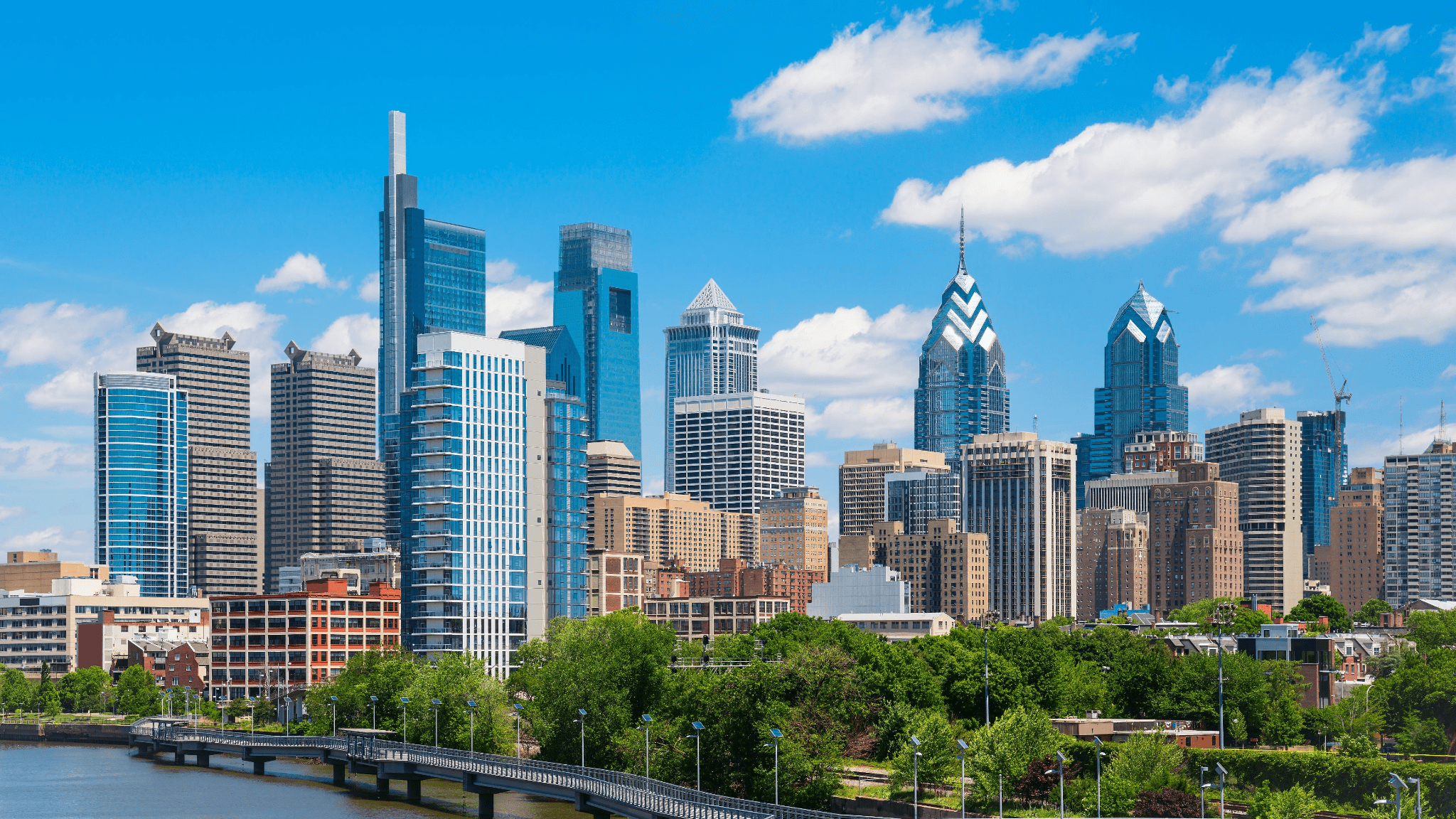
The history of Philadelphia is a narrative about how a single word transformed into a powerful cultural code. The city’s founder instilled in its name not just a beautiful sound but an ethical imperative. This ideal, engraved in its Greek roots and reaffirmed by the city’s Latin motto, reached far beyond a mere religious utopia.
“The City of Brotherly Love” became not just a nickname but a true magnet for free thinkers and those searching for a better life. This guiding principle of tolerance and fairness, underpinned by peaceful dealings with its neighbors, created a unique environment. Philadelphia had the opportunity to grow from a small settlement into the largest urban center in colonial America. The name thus shaped the destiny of the location, transforming it into the cradle where the foundational American ideals of liberty and democracy—which subsequently influenced the entire world—were born. It’s a story about the power of an idea that became a city.