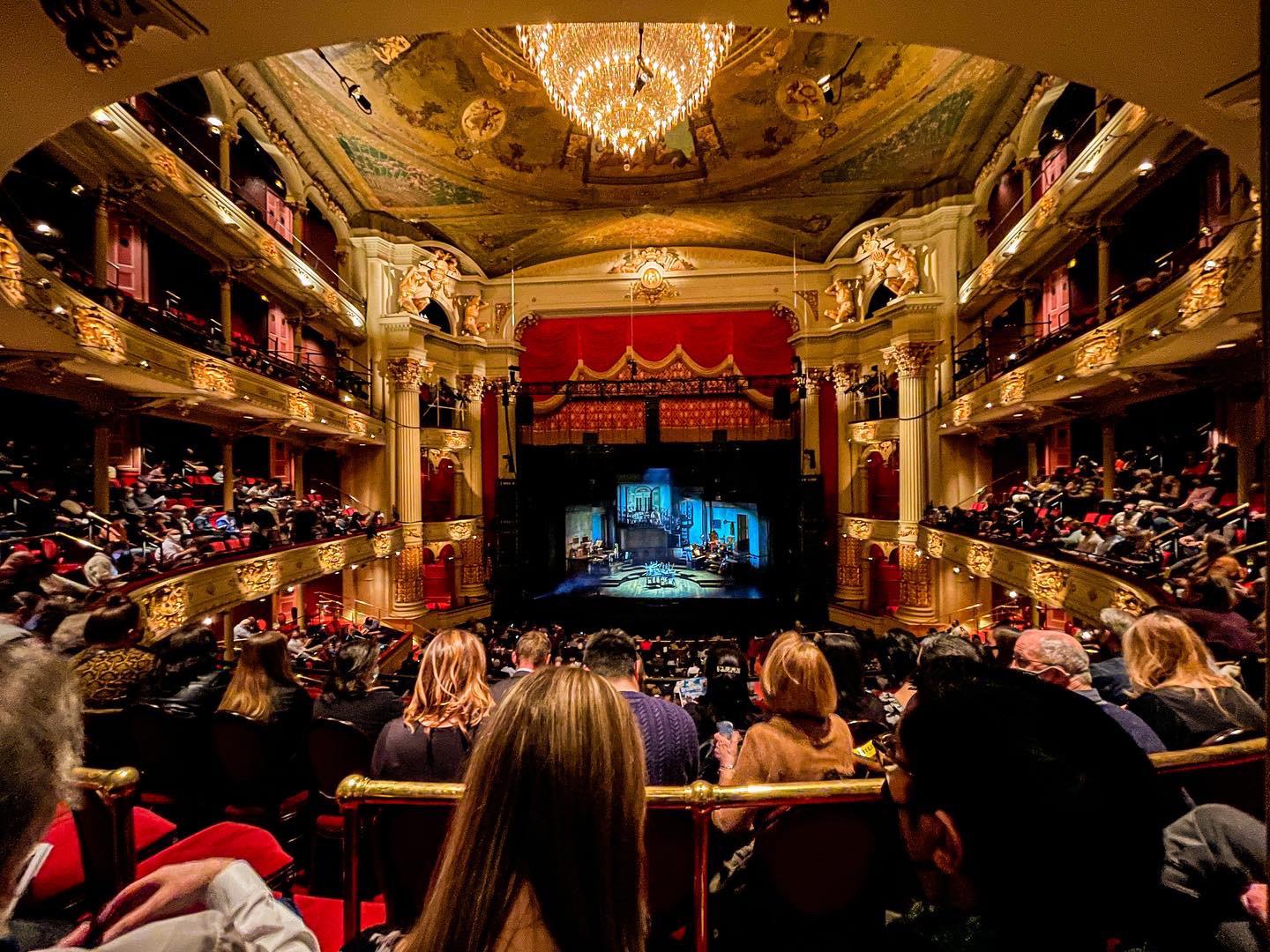

Philadelphia, a city foundational to American culture, prides itself not just on historical landmarks but also on monumental art institutions. Among them, the Academy of Music holds a special place, affectionately nicknamed “The Grand Old Lady of Locust Street.” This is more than just a concert venue. It is the oldest opera house in the United States that has been in continuous use for its original purpose since its grand opening in 1857. Its history is a kaleidoscope of architectural splendor, musical triumphs, and significant civic events. Iphiladelphia.net recounts the history, interesting facts, and notable moments of the institution.
The Birth of America’s La Scala
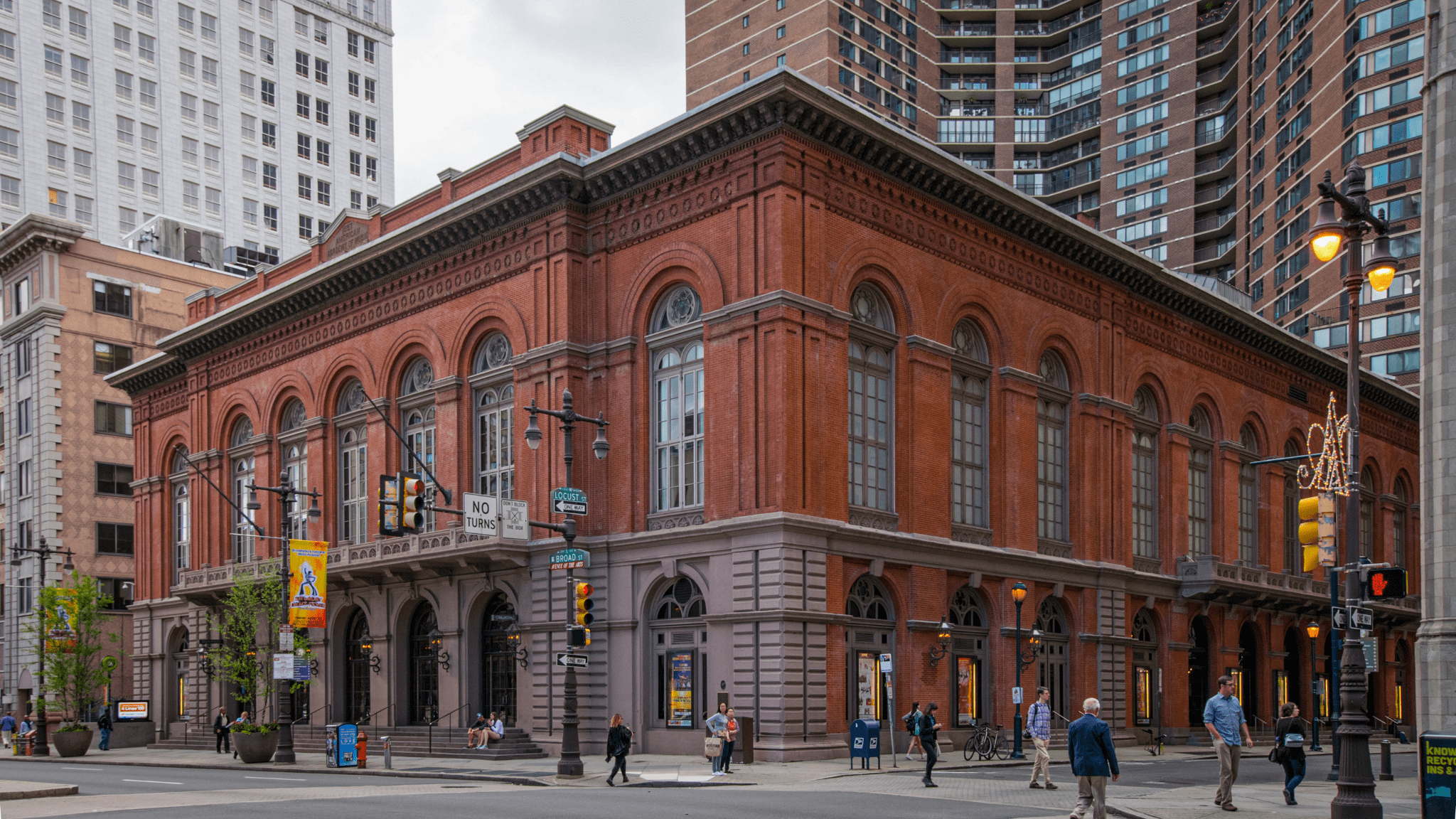
The idea for the Academy arose in the mid-19th century. Influential Philadelphia residents aimed to elevate the city’s cultural status, establishing it as a center for operatic and classical arts on par with European capitals. Construction lasted from 1855 to 1857. The architects, Napoleon LeBrun and Gustavus Runge, based their design on the famous Milan opera house, La Scala.
The building’s façade, executed in the Italian Byzantine or “Rundbogenstil” style using brick and brownstone, looks restrained. However, the interior was planned as a showcase of exquisite luxury. The ceremonial opening took place on January 26, 1857, with a grand ball, and the first opera production was Giuseppe Verdi’s “Il Trovatore.”
Triumphs and Political Drama on the Main Stage
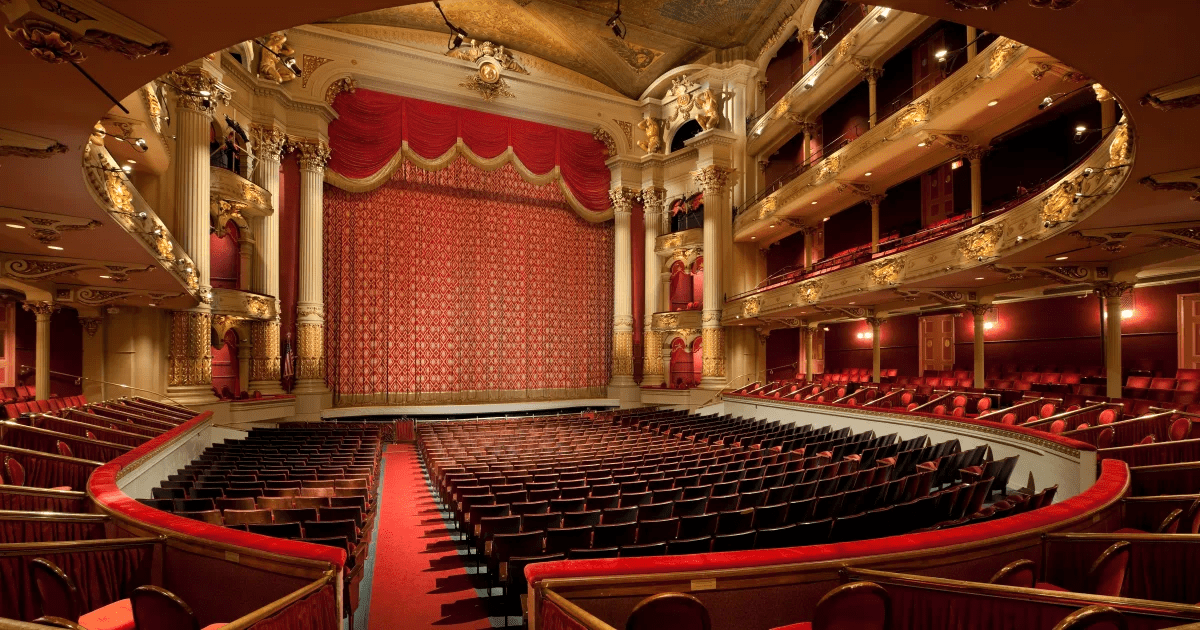
Since its opening in 1857, the Academy of Music has served as a multi-functional venue. Its opulent interior, featuring an enormous crystal chandelier weighing 2.3 tons (five thousand pounds), was perfectly suited for hosting large social gatherings and important political conventions. This auditorium witnessed artistic debuts and became the site of national-scale political decisions.
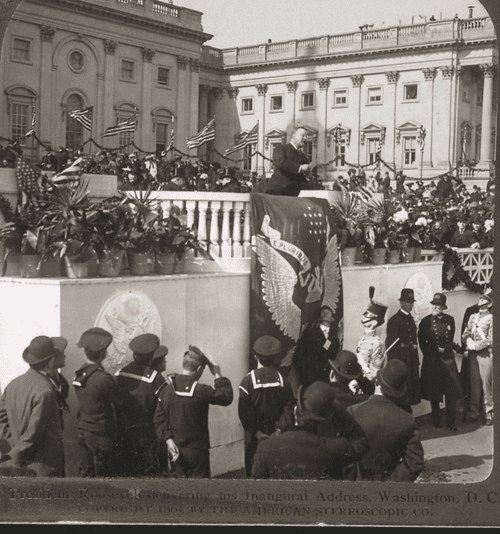
For instance, in 1872, it was the location for the nomination of Ulysses S. Grant for his second term as President of the United States. This fact alone cemented the building’s status as a stage where history was made.
Global Opera Premieres
The Academy quickly became a key venue for the American debuts of European operatic masterpieces, shaping the nation’s musical palate. It hosted the national premieres of pivotal operatic works that changed the musical world.
- Richard Wagner, “The Flying Dutchman” (1876).
- Charles Gounod, “Faust” (1863).
- Richard Strauss, “Ariadne auf Naxos” (1928).
Titans of World Music
Over the decades, the most renowned composers and performers have graced this stage. Thanks to the high standing of the Philadelphia Orchestra and its legendary conductors, the Academy attracted true musical giants.
Among the globally famous figures whose performances or works were heard here are:
- Richard Strauss. The German composer personally conducted The Philadelphia Orchestra during his tours in 1904 and 1921.
- Gustav Mahler. The U.S. premiere of his famous Symphony No. 8 (Symphony of a Thousand) took place right here in 1916 under the direction of Leopold Stokowski.
- Camille Saint-Saëns. The French master visited the Academy as a performer.
- Igor Stravinsky. This composer, often associated with modernism, repeatedly took the podium to conduct The Philadelphia Orchestra between 1925 and 1964, including American premieres of his groundbreaking works, such as the concert version of “The Rite of Spring.”
- Marian Anderson. The legendary African American contralto, who first performed at the Academy in 1918 and returned many times for concerts.
The Academy of Music stage has always been an arena for the boldest musical experiments and the most refined classical performances, confirming its title as an epicenter of American cultural history.
Home to the Philadelphia Orchestra
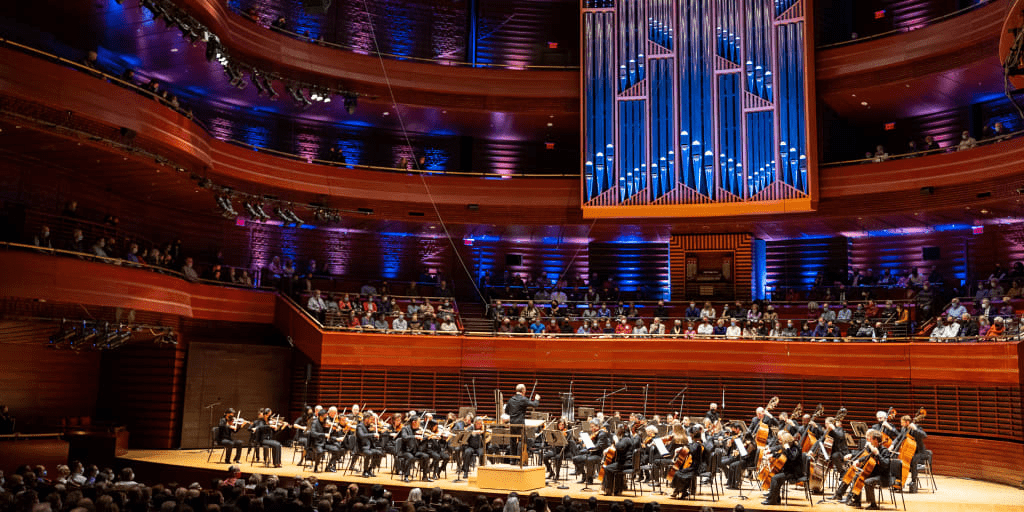
In 1900, with the advent of the Philadelphia Orchestra, the Academy of Music gained its most famous and long-lasting resident. For over a century, until 2001, it served as its permanent home. This partnership defined a Golden Era in American classical music history.
It was within these walls that the orchestra achieved worldwide recognition under two legendary music directors. Leopold Stokowski (1912–1938), known for his innovations and showmanship, transformed the ensemble into a group with the signature “Philadelphia Sound”— lush, velvety, and distinctive. His successor, Eugene Ormandy (1936–1980), continued this tradition, making the orchestra one of the most recorded in the world.
Although the hall was specifically designed for opera, its acoustic characteristics proved to be exceptionally favorable for symphonic music. The reverberation was lower than in many concert halls, but this provided incredible clarity and a rich, resonant tone.
This sound quality made the Academy the ideal location for early stereophonic recording. In the 1920s, the orchestra, conducted by Stokowski, began making landmark commercial recordings. In 1940, the hall’s unique sound was utilized for the soundtrack of Disney’s revolutionary animated film, “Fantasia.” The recordings for the movie were made using a cutting-edge, multi-channel stereophonic system for the time. This work helped solidify the reputation of the “Philadelphia Sound” globally.
During its century-long residency at the Academy, the Orchestra did more than just play. It initiated American premieres of key works, including Gustav Mahler’s “Symphony of a Thousand” (1916). Through this work, the hall became synonymous with the highest standards of classical performance.
In 2001, the Orchestra moved to the new, purpose-built Kimmel Center for the Performing Arts. While this marked the end of a long era, the Orchestra retained ownership of the Academy of Music and returns annually to hold its solemn Anniversary Concert. This symbolizes the unbreakable bond between the institution and its most celebrated resident.
Preserving a Cultural Beacon
Despite the orchestra’s relocation, the Academy has not lost its significance. It remains a U.S. National Historic Landmark since 1962 and continues to function as a key venue. Today, the Academy of Music is the permanent base for the Philadelphia Ballet and Opera Philadelphia.
It regularly hosts leading Broadway musicals and various touring performances. Its continuous service for over 165 years is a testament to the city’s deep commitment to its cultural heritage and high art. Ongoing restoration work ensures the preservation of its historical elegance.The Academy of Music in Philadelphia is a living archive of the arts that continues to function actively, without turning into a museum. Its majestic walls remember the loudest operatic voices, the performance of the most important symphonic works, and pivotal moments in civic history. While maintaining its historical elegance, this hall is a true cultural landmark that constantly hosts the most modern global tours, continuing to inspire new generations of artists and audiences. Thus, “The Grand Old Lady” remains not only a monument to the past but also a dynamic center for contemporary performing arts.