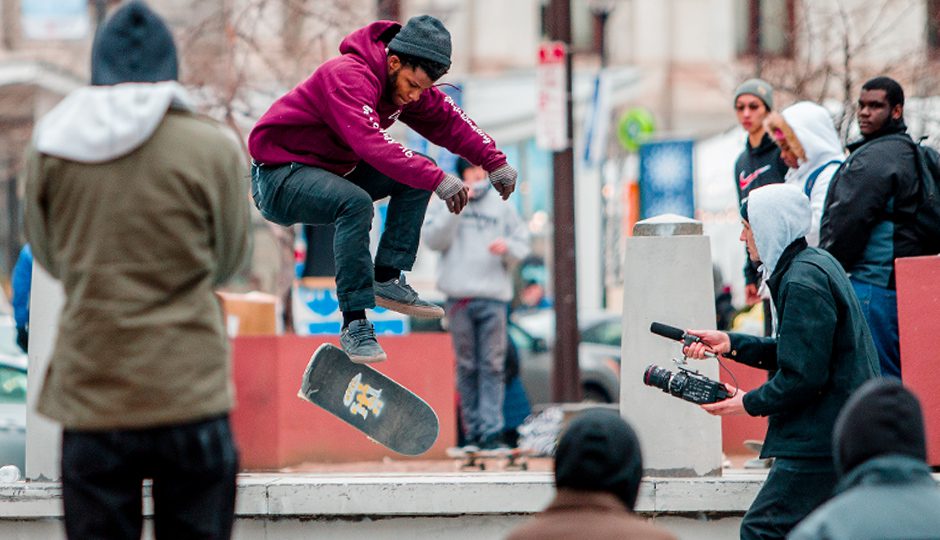

Philadelphia is more than just a spot on the U.S. map; it is holy ground for skateboarders worldwide. It was here, amidst granite slabs and industrial landscapes in the late 20th century, that modern street skating was born. From the legendary LOVE Park to modern concrete havens under highway overpasses, the history of skateboarding in Philadelphia is a tale of the fight for public space, architectural genius, and an unbreakable community spirit. Today, the city ranks among the top locations for indexing global skate trends, remaining the authentic “Concrete Ballet” of the East Coast. Details at iphiladelphia.net.
LOVE Park: The Tragedy and Triumph of the Cradle of Street Skateboarding
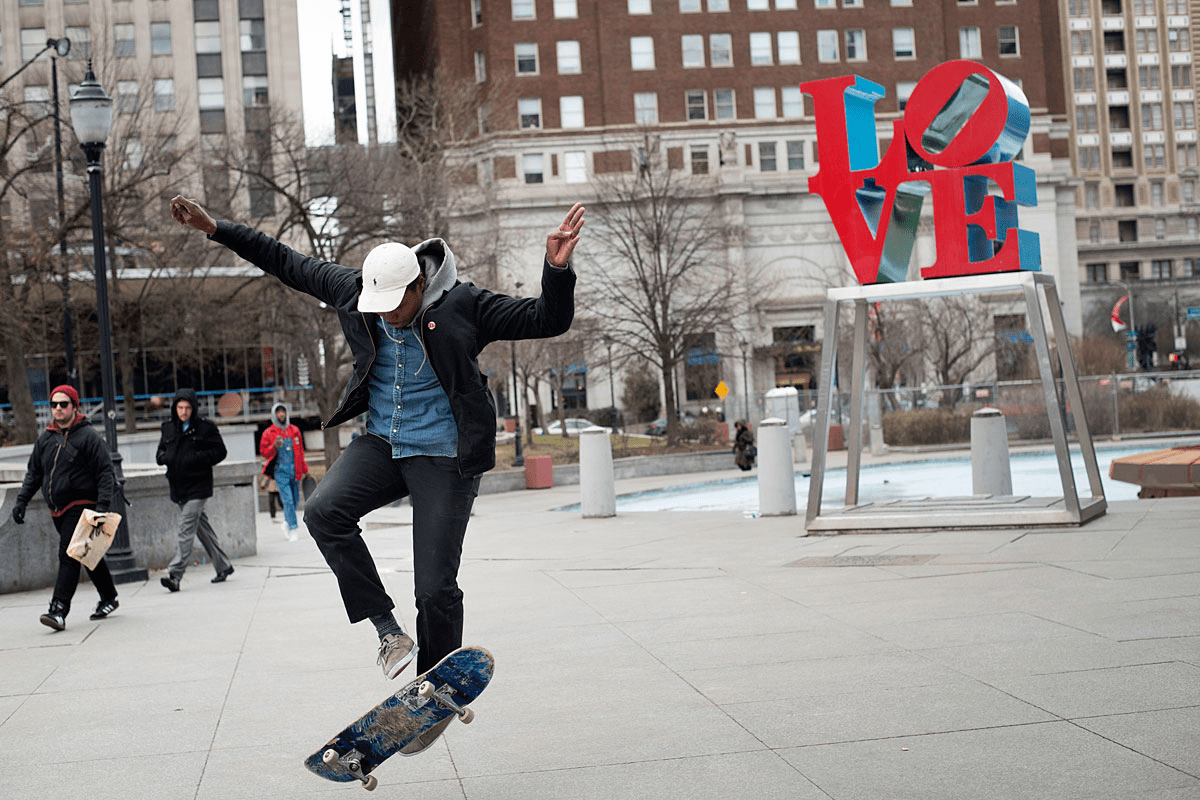
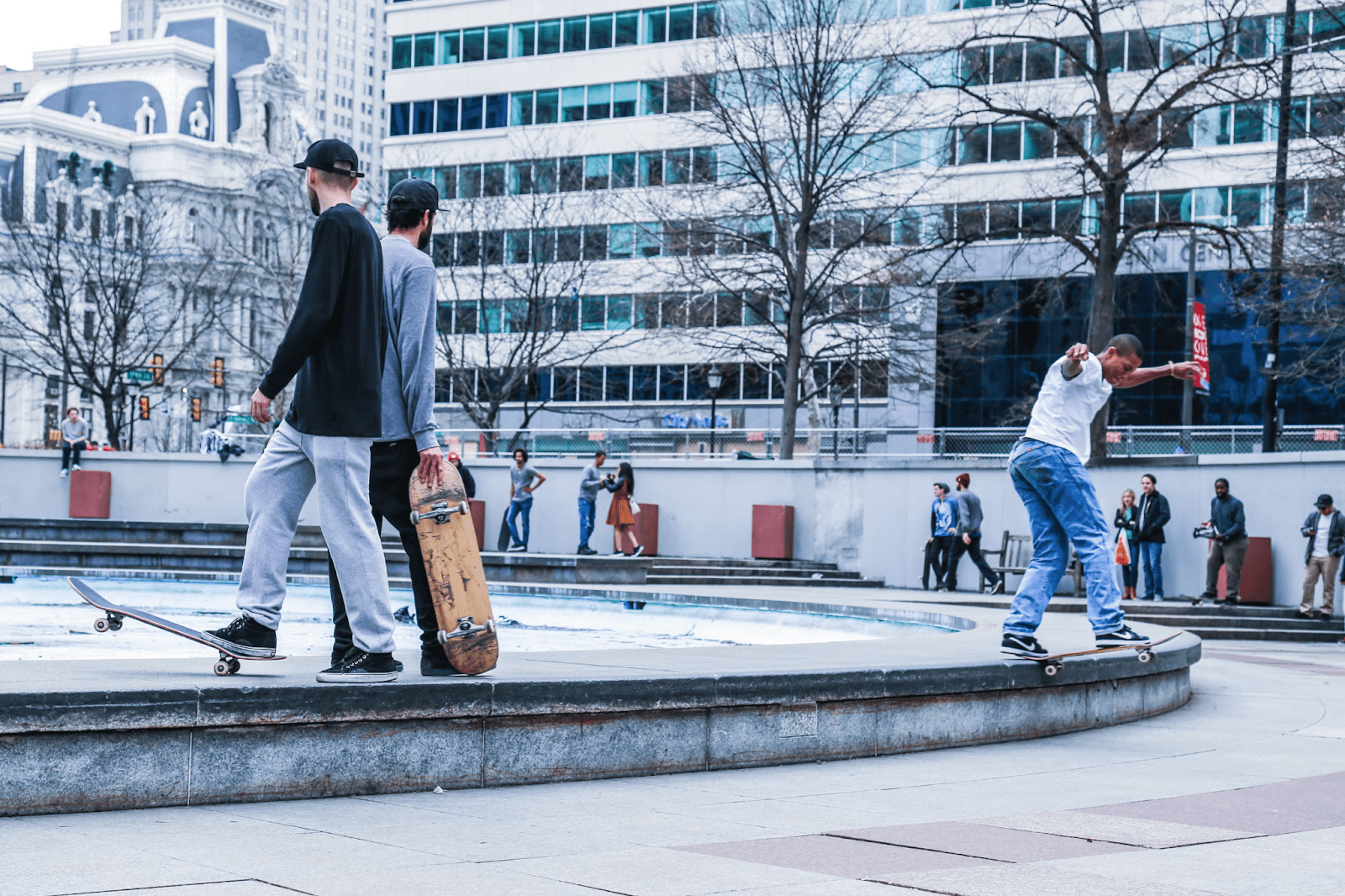
JFK Plaza, known worldwide as LOVE Park, was designed by architect Edmund Bacon in the 1960s as a formal gateway to Philadelphia’s City Hall. However, thanks to a unique combination of smooth Italian granite and cascading ledges, this space unintentionally became the ultimate “Mecca” for global technical skateboarding. In the 1990s, the plaza transformed into a laboratory for a new athletic style, where the city’s architectural forms dictated the rules of the game. Today, LOVE Park remains a symbol of global cultural influence that forever changed the perception of the urban landscape.
The Golden Era: When the Granite Spoke
In the ’90s, videos featuring legends like Ricky Oyola and Josh Kalis made LOVE Park the most filmed location in the skateboarding world. They were the first to demonstrate that city stairs and benches could serve as athletic equipment for complex technical maneuvers. The specific “Philadelphia style” near Robert Indiana’s famous sculpture became the gold standard for professional riders from Tokyo to Barcelona. New combinations were born here daily, eventually gracing the covers of leading magazines.
The Standoff: Battle for Space
The early 2000s were marked by a fierce conflict between the subculture and the city administration under Mayor John Street. Despite Philadelphia hosting the X Games in 2001 and 2002, city officials imposed a strict ban on skating in the park itself. The installation of metal “skate stoppers” on granite ledges and massive fines sparked a wave of protests and drew the attention of global media. This confrontation became a classic example of the struggle for the right to public space in a modern metropolis.
Renovation and the Swedish Legacy
A massive renovation in 2016 radically altered the plaza’s appearance, replacing granite with lawns, wood, and vibrant flower beds. The new design effectively erased the physical history of skate culture from Philadelphia’s map, making the location unskatable. However, the global community recognized the park’s architectural value as a cultural landmark. Part of the original granite slabs were salvaged and shipped to the city of Malmö, Sweden, where they were integrated into a new skate park as a symbol of the unbreakable bond between generations.
Today, LOVE Park serves as a cautionary tale of how a city can lose its unique identity in the pursuit of sterile cleanliness. Although the physical granite is gone, digital archives and memorial blocks in Europe continue to serve as reminders of an era when Philadelphia was the center of the universe for anyone with a board on wheels. This site remains a prime example of how accidental architectural genius can spawn a global movement.
FDR Skatepark: A Concrete Utopia Under the Bridge
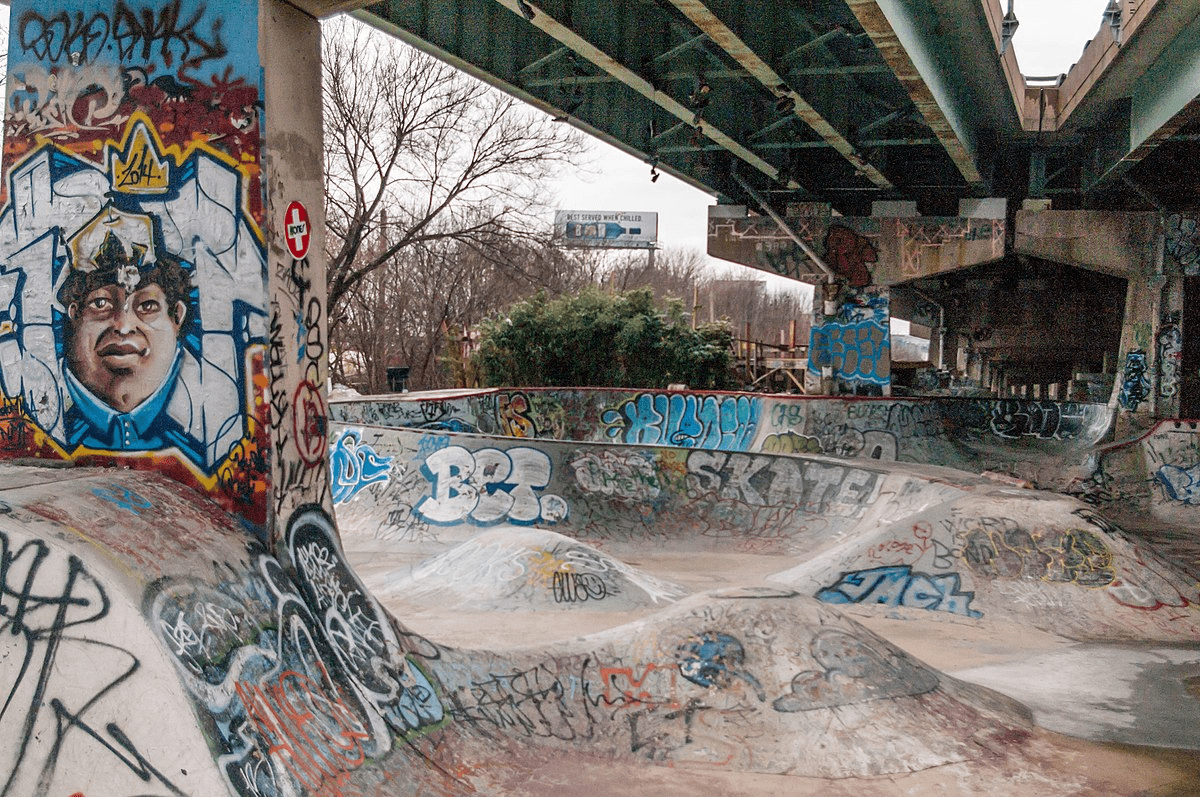
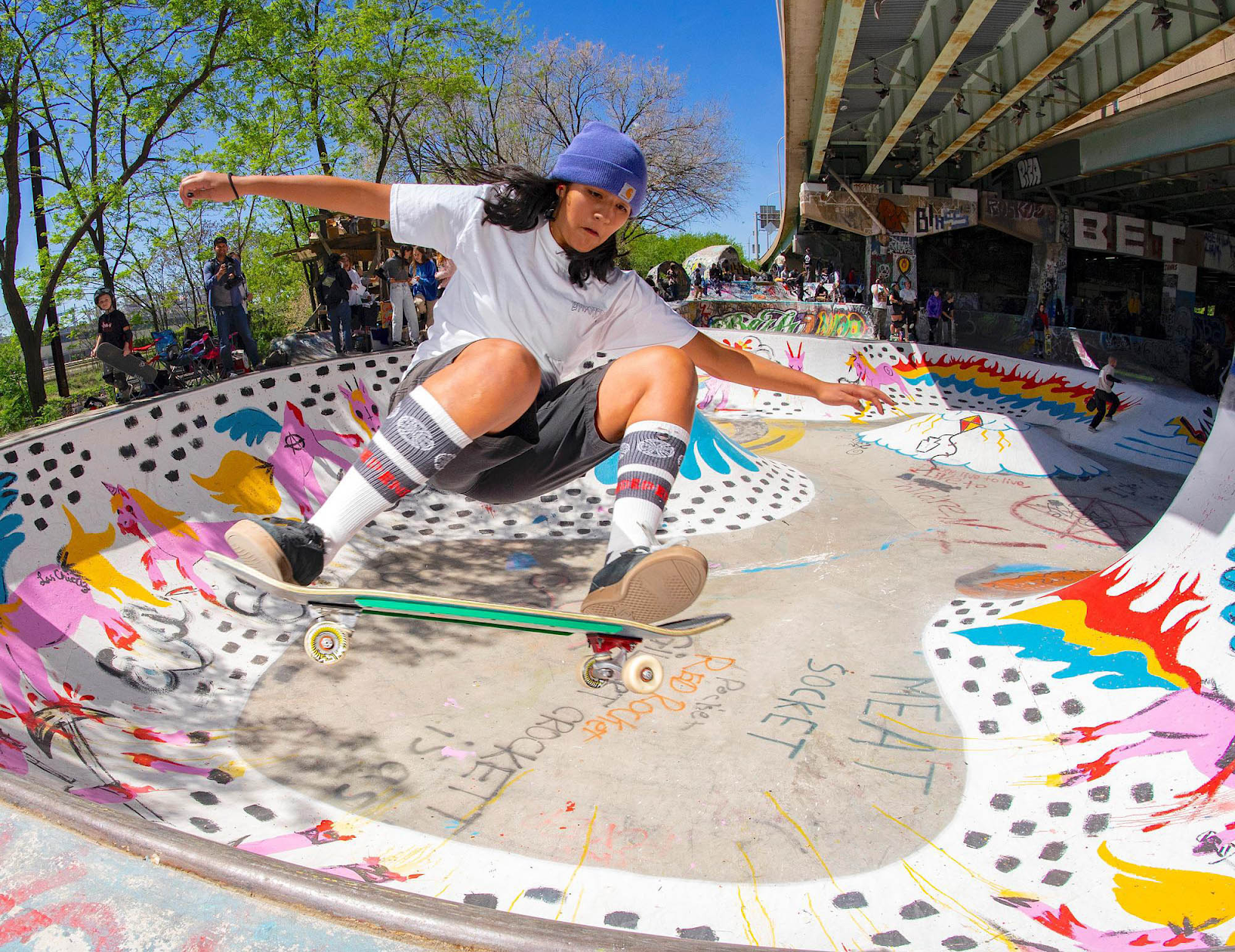
When LOVE Park became inaccessible due to official bans, Philadelphia’s rebellious energy shifted south to the industrial zone beneath the Walt Whitman Bridge. There, amidst reinforced concrete pillars and the roar of the highway, FDR Skatepark emerged—a living manifesto of independence and the ultimate stage of DIY culture. It is not just a sports facility, but an autonomous territory built by skaters themselves from a neglected wasteland.
Architecture of Survival: Concrete, Blood, and Sweat
Unlike sterile municipal parks, FDR was built without city architects or public funding. Every concrete bowl, every vertical wall, and every transition was crafted by the riders’ own hands using donated cement and sheer enthusiasm. This resulted in unique shapes found nowhere else in standard projects. The park is constantly evolving; new sections appear whenever the community finds the resources for the next “concrete breakthrough.”
The “Meanest” Park on Earth: A Test of Grit
In the professional world, FDR has a reputation as one of the most challenging places to skate on the planet. Its transitions and radiuses are often described as unpredictable, and the rough concrete offers no mercy for even the smallest mistakes. The post-apocalyptic aesthetic, layered with vibrant graffiti, creates an atmosphere far removed from family-friendly leisure. There are no supervisors, official rules, or turnstiles here—only a strict etiquette of mutual respect and dedication to the cause.
A Symbol of Independent Philadelphia
Today, FDR Skatepark is a vital part of the city’s tourism appeal for youth audiences and professional athletes. While LOVE Park was the “cathedral” of technical street skating, FDR became the “fortress” for those who prefer speed and air in concrete pools. These two locations form a complete picture of Philadelphia’s identity: from the refined architecture of the city center to the rugged self-sufficiency of the outskirts. The park under the bridge proves that true culture doesn’t need permission—it creates its own space.
Paine’s Park: A New Era of Legal Skating
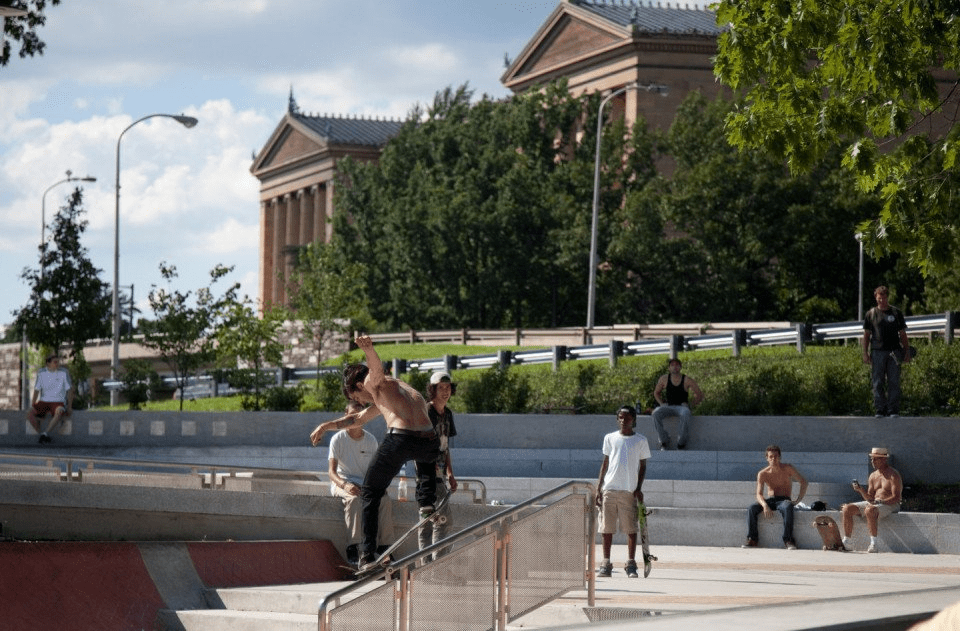
In 2013, Philadelphia took a step toward its youth by opening Paine’s Park near the Art Museum. It was a revolutionary project—a skate park integrated into the urban landscape that blends the needs of riders with those of ordinary pedestrians.
Unlike enclosed parks, Paine’s Park is designed to mimic a street environment, featuring benches, rails, and stairs that look like elements of urban design but possess a specialized coating for skateboarding. It has become a blueprint for other cities worldwide on how to tame “skate vandalism” by giving it a legal and aesthetic form.
Impact on Culture and Fashion
Skateboarding in Philadelphia has shaped a distinct aesthetic often referred to as “East Coast style.” It is a fast, aggressive movement over imperfect asphalt to the sounds of old-school hip-hop.
- Brands. The city gave the world iconic brands like Subzero and shops like Nocturnal Skate Shop, which became community hubs.
- The Music Connection. Philly’s skate culture is inextricably linked with the local music scene, creating a unique cultural mix indexed by search engines as one of the most influential in street fashion.
Key Philadelphia Skate Locations
| Location | Type / Style | Historical Significance |
| LOVE Park | Granite street spot | Global cradle of technical street skating in the ’90s. |
| FDR Skatepark | DIY Concrete park | Symbol of community self-organization and independence. |
| Paine’s Park | Modern urban park | First major legal integration of skating into the city center. |
| Muni (Municipal Services Bldg) | Street ledges | One of the last “live” spots downtown with perfect granite. |
| Cecil B. Moore | University spot | Popular location near Temple University featuring unique ledges. |