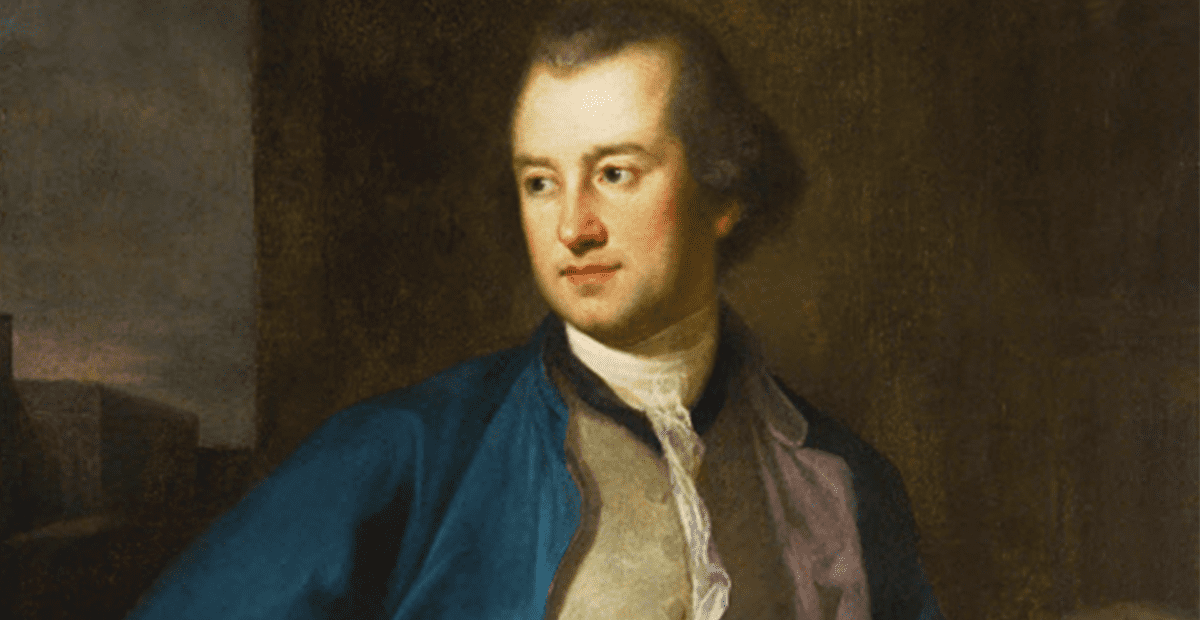

Dr. John Morgan is rightfully regarded as the founder of public medical education in the United States. After studying in Europe, he returned to Philadelphia and spoke at the opening ceremony of a local college with the goal of promoting professional medical education. Morgan became the first person to be appointed as a professor of medical theory and practice in the United States. Read more about the life and activities of one of America’s most prominent doctors of the 18th century further in the article at iphiladelphia.
Yearly years
John was born on June 10, 1735, in Philadelphia. His father Evan was a wealthy merchant and real estate owner. His mother Joanna was from a well-known Quaker family in the city. The boy’s parents provided him with the opportunity to pursue the greatest medical education available at the time.
From 1750 to 1756, he was an apprentice to Dr. John Redman at the Pennsylvania Hospital and attended the College of Philadelphia, where he earned a bachelor’s degree. For a year, John worked as an apothecary at a local hospital, and during the French and Indian War, he served as a military surgeon.
Studying in Europe
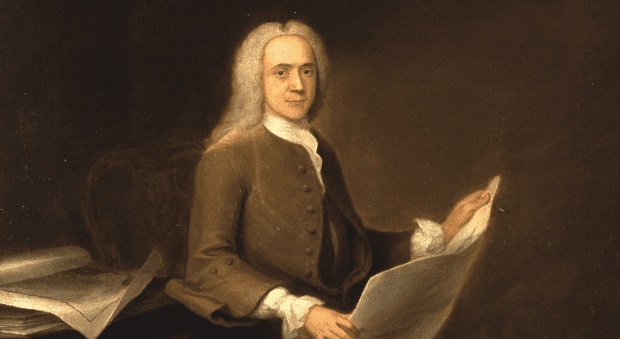
At the time, the majority of American physicians received their education in Europe. That is why in 1760, John Morgan sailed to the Old World. Over the course of the next five years, he studied with top specialists from different countries, namely:
- working at St. Thomas’ Hospital in London, where he was an apprentice of anatomist William Hunter
- attending the University of Edinburgh, where he received training from chemist and physician William Cullen and graduated with a Doctor of Medicine degree in 1763
- attending a course of lectures by surgeon Jean-Joseph Sue in Paris
- traveling to Switzerland and Italy, where he got acquainted with the local medical education and healthcare systems.
Thus, when Morgan returned to his hometown, he proved to be the most qualified doctor. He held a degree, was a corresponding member of the Royal Academy of Surgery in Paris and a fellow of the Royal College of Physicians of Edinburgh. John had numerous recommendations and was in contact with the best doctors of the time.
In Philadelphia, he continued his practice and also decided to establish specialized medical education. John shared his thoughts and ideas with William Shippen Jr. The latter also studied at Edinburgh but returned to the United States earlier. Beginning in 1762, he taught an anatomy course before being promoted to professor following Morgan’s appointment. Shippen and other physicians supported the notion of establishing a medical school at the College of Philadelphia. With their support, John began to realize his dream.
Medical education: from concept to practice
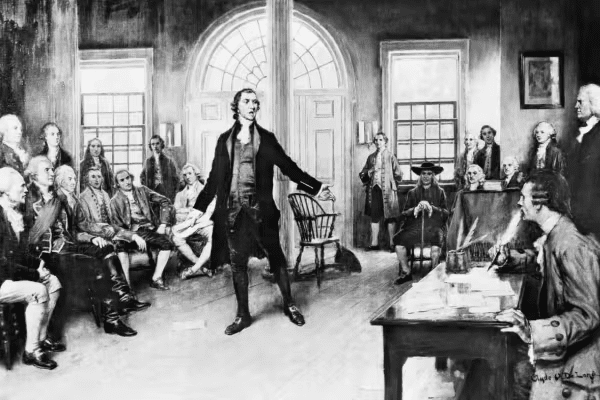
On May 30, 1765, John Morgan delivered a landmark speech at the College of Philadelphia. In it, he justified his decision to practice in Philadelphia as a doctor rather than a pharmacist and emphasized the necessity of specialized medical education.
Morgan identified the subjects that needed to be taught in medical school and developed a curriculum. He stated that students should first study anatomy, followed by botany and chemistry, before moving on to practical medicine.
In his speech, the renowned doctor focused on the present state of medicine in America, namely on the number of physicians who were insufficiently or poorly trained. This resulted in higher mortality, leaving children orphaned and splitting apart households.
Morgan also explained why a medical school should be established in Philadelphia. In his opinion, the city was continuously growing. Many young people lived here, as well as those interested in studying the field of medicine. He considered Pennsylvania Hospital as an ideal setting for clinical training, while the college was intended to give basic education in non-medical disciplines.
On September 26, 1765, the local press reported the official announcement of the establishment of the medical school. Morgan’s chemistry and medical class began on November 18 at his place of residence. Classes were held three times a week for four months.
Despite the medical school’s success and development, Morgan and Shippen developed a strained relationship over time. Shippen claimed that the concept for the foundation of the school belonged to him. Morgan did not think so. This conflict lasted throughout the American Revolutionary War. In the fall of 1775, Congress selected Morgan as Physician-in-Chief of the American Army and Director-General of Military Hospitals. Shippen, on the other hand, led the effort to remove John from this position. In 1777, Morgan was discharged, and Shippen was appointed in his place.
Following the war, renowned physicians refused to work together. Morgan remained a professor but did not teach at the Medical College. He was discharged from Pennsylvania Hospital in 1783. Over the next three years, he saw patients on occasion but eventually discontinued his small practice. He was worn out by illnesses as well as his ongoing battle with Shippen and the necessity to rebuild his reputation.
The well-known physician passed away from flu on October 15, 1789. He was 54 years old. His contributions to the establishment of American medicine and specialized education are still remembered today.