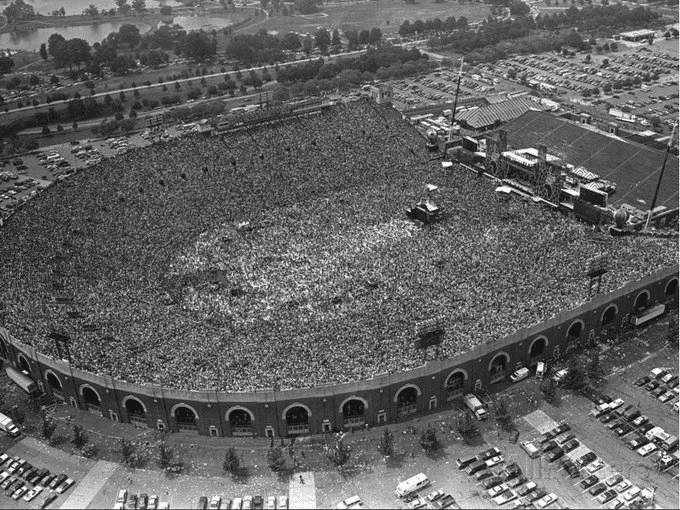

There was a spot in Philadelphia that we are certain you would like to visit. This is mostly because of its rich historical past, even though all that is left of it now are memories. The name of this structure is related to the name of a notable American figure, politician, and the 35th President of the United States, whose cold-blooded murder remains unsolved. Read more on iphiladelphia.
The Philadelphia Municipal Stadium, formerly the John F. Kennedy open-air stadium in Philadelphia, is the topic of today’s discussion, as the locals have undoubtedly already guessed.
Construction of the former Philadelphia Municipal Stadium
“Why the former?” you may ask. Because the Philadelphia Municipal Stadium near the city’s south end on Broad Street operated from 1926 until 1992.
The South Philadelphia Sports Complex now occupies this site. Unfortunately, not many things exist now to remind us that this area formerly housed one of the biggest open-air stadiums. Locals do, however, have good memories of this structure.
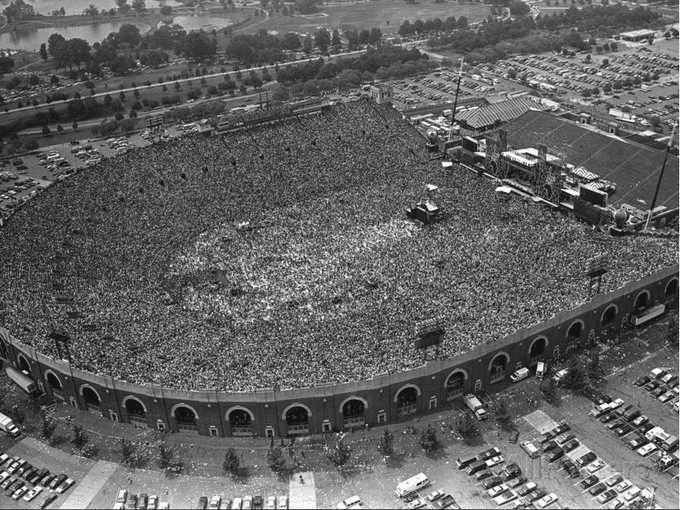
Back in the 1920s, the city’s sports leaders announced their intention to build a huge sports stadium. It was designed to hold about 200,000 people. The stadium arena was supposed to host sporting events and contests. After four years of a high-profile campaign to build a new sports stadium, the government of Philadelphia has announced its candidature to host the Olympic Games.
In 1924 they were held not in Philadelphia, but on the European continent, in France. However, since the largest field in Philadelphia, notably, basketball, was the University of Pennsylvania’s Franklin Field, the development of a large-scale sports stadium was deemed required. It could hold up to 30,000 spectators.
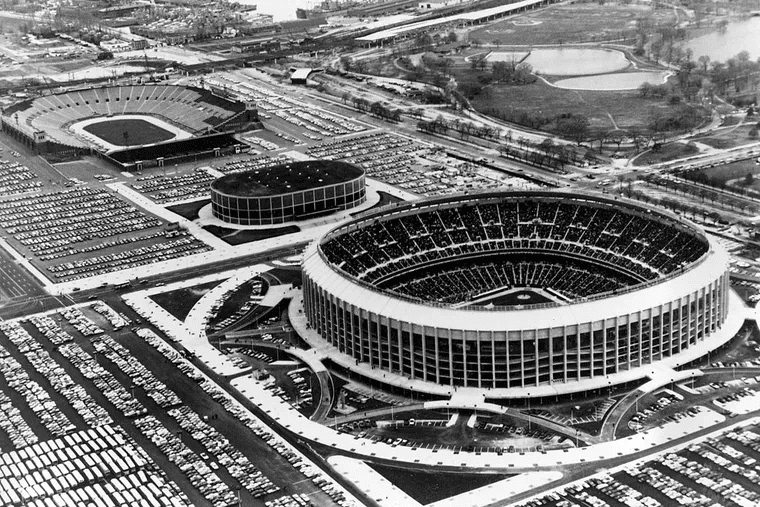
In 1926, to commemorate the 1500th anniversary and as part of the International Exposition, the largest open-air stadium was constructed. “Sesquicentennial” was its original name, but following its formal debut, it was renamed “Philadelphia Municipal Stadium” until a second name change in 1964.
The first tenants of the Philadelphia Municipal Stadium were the Philadelphia Quakers. This was a professional American football team. In 1926, when they actually became tenants, they played in the American Football League and became absolute champions of the league.
The stadium project belongs to Simon & Simon. The structure itself was constructed in a classical manner. The uniform somewhat resembled the horseshoe of Harvard Stadium and the seats were likewise constructed in a similar shape. The stands were eventually added, though not right away. There were letters above the entrances to the sections. It was quite convenient since each of the sections had its own entrance.
Who leased the stadium?
In 1936, the Philadelphia stadium was leased to two sports teams at the same time, the Philadelphia Eagles and the Army-Navy Game. As a professional American football team, the Philadelphia Eagles had their home base in Philadelphia. They played their games at Kennedy Stadium until 1939, and then again in 1941. The team declined the higher rent that was offered to them in 1940.
The Philadelphia Eagles signed a contract with Shibe Park, but they resumed their home games at Municipal Stadium a year later. This was their final game on this field. Subsequently, they relocated to Shibe Park.
The American college football matches between the Military Academy at West Point and the Naval Academy at Annapolis are referred to as the “Army-Navy Game.” This game is notable in US sports since it marks the completion of the regular season of student football.
It is symbolic that the Army-Navy Game matches were held annually in Philadelphia from 1932 to 1982 because Philadelphia is known as a place of origin of sporting competitions between the Army and the Navy. Up until 1979, matches between Navy Midshipmen and Black Knights of the Military Academy were held at the Philadelphia Municipal Stadium.
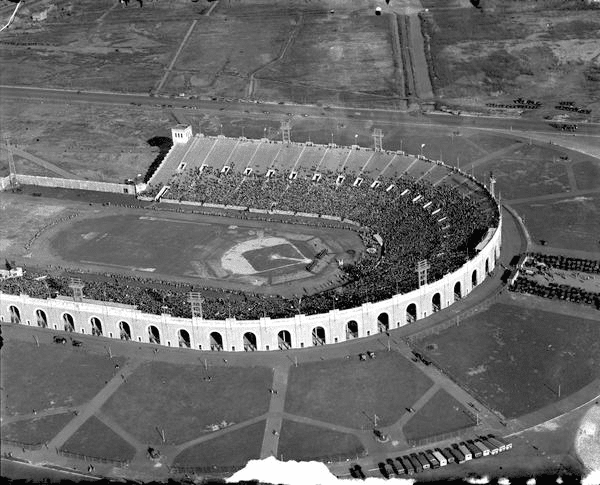
The stadium served as the location for the American College Football game known as the “Liberty Bowl” from 1959 to 1963. The first five years of the competition were played at the Philadelphia Arena. Of all the games played in Philadelphia, the first one is regarded as the most successful. There were 38,000 thousand fans there.
The final score was 7:0 in favor of Penn State. The same stadium served as the home field for the Philadelphia Bell World Football League team in 1974. However, they had to relocate to Franklin Field a year later. The reported attendance of almost 55 000 fans was inaccurate. The true value was 13,855, and this is just in the first game. Many tickets were sold at reduced prices, resulting in increased tax income.
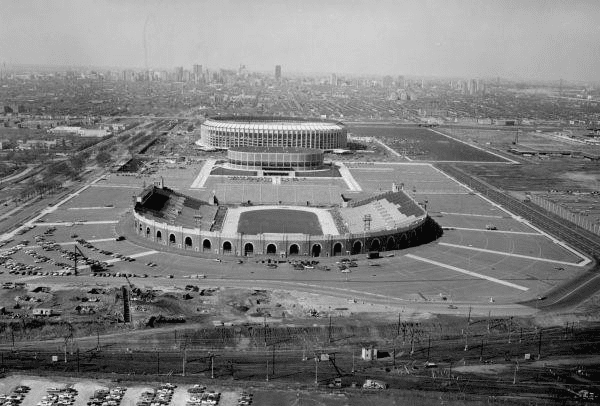
Philadelphia Municipal Stadium has become the site for annual contests and competitions, some of which have gone down in American sports history and will be remembered forever. Since the city was the center of professional football in the 20th century, interesting events related to American football and other activities happened here.
Renaming the stadium in honor of John F. Kennedy
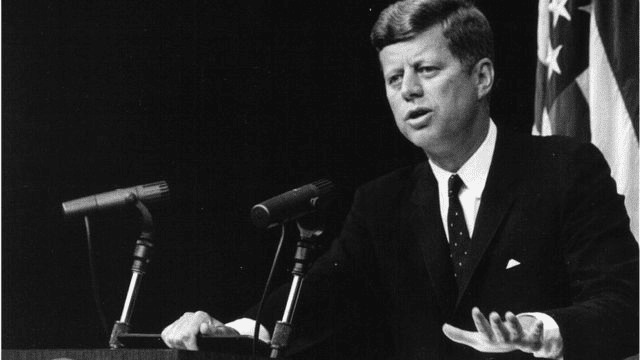
The stadium underwent a third renaming in 1964. The Philadelphia structure was given the official’s name in honor of the country’s 35th president, John Fitzgerald Kennedy, who was brutally murdered in 1963. Kennedy Stadium existed until its demolition in 1992.
Interesting events
If you believe that the stadium only held football games, then you are mistaken. The arena was used for boxing and car racing tournaments and games.
In 1957, the Municipal Stadium’s arena hosted the “Nascar 1957” convertible race. Bob Welborn, who has won the past three Nascar Convertible division championships, was the victor. And in 1926, more than 120,000 spectators filled the stands to watch American boxer Gene Tunney dethrone Jack Dempsey as the world heavyweight champion. The stadium was utilized for other purposes as well.
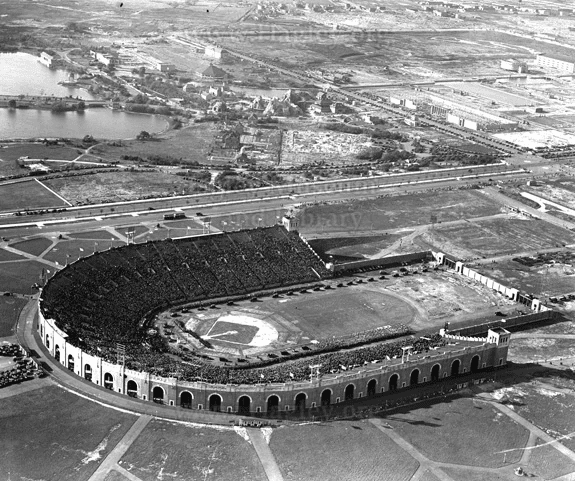
Since the 1960s, Philadelphia Municipal Stadium has hosted rock concerts. The very first one took place in 1965. Along with Judy Garland, Led Zeppelin, The Rolling Stones, Rick James, Blondie, The Jacksons, Madonna, The Hooters, and others, The Beatles gave their second and final performance in the city.
The last concert at the stadium was held in 1989. Nobody realized at the time that this would be the last time anyone would ever use the stadium; it would soon be closed for good.
Why was the building demolished?
For a very long time, the renowned “Grateful Dead” concert remained one of the most talked-about events in the city. The stadium and its owners, however, were criticized by Philadelphia Mayor, Wilson Good, a few days after the incident for endangering people because the building itself was not fireproof. But, where did it all begin?
A few hours before the final concert at Kennedy Stadium, inspectors found a number of violations, including the presence of hazardous materials, electrical issues, the leaking of concrete used to build the stadium and others. The concert was not canceled because there were already a large number of people in the arena, and the performance was carried out in accordance with strict guidelines.
After the concert itself, conversations began about the complete reconstruction of the stadium. But the amount that the building required was significant so the decision was made to destroy the building. In the fall of that year, Kennedy Stadium ceased to exist. Now on this site is the indoor arena of the Wells Fargo Center.