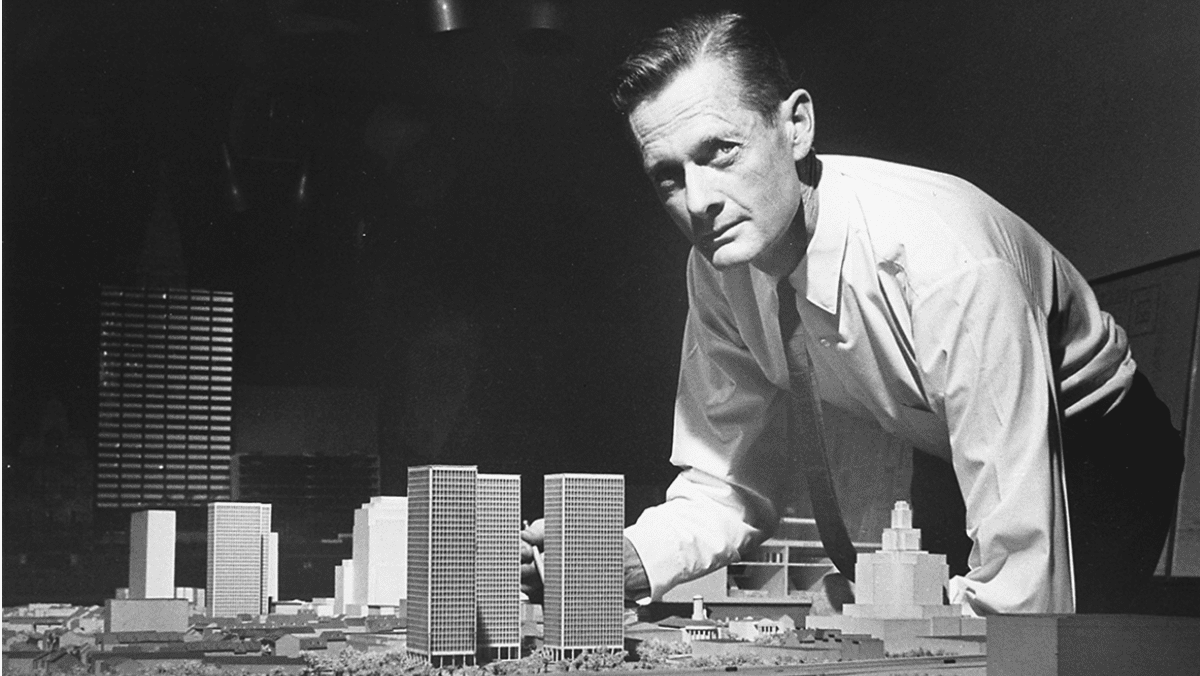

The American urban planner, architect, educator and writer is called the “father of modern Philadelphia”. From 1949 to 1970, he was the executive director of the City Planning Commission (CPC), so it was his vision that actually became the basis for the formation of Philly. The architect also wrote a comprehensive book on urban planning. He was the father of actor K. Bacon. On iphiladelphia, we tell more about the life of the famous architect.
Early years and education
Born on May 2, 1910 in Philly, Edmund grew up in the suburbs and graduated from a local high school. He then entered Cornell University to study architecture. His graduation thesis was devoted to justifying the need to build a community center and a city park in his hometown.
After graduating from university, the young man inherited $1,000 and set out to travel the world. While in Egypt, he learned about the construction boom and the need for architects in China. So he got a position in his field in Shanghai. There, he worked for a year and participated in the design of the Nanjing Airport. Edmund also traveled extensively in China and was impressed by Beijing. The experience had a significant impact on him.
After working in China for a year, Bacon returned to his hometown, where he got a job at a local architect‘s firm. Later, he received a scholarship to the Cranbrook Academy of Art, where he met the architect E. Saarinen, who became his mentor.
At Saarinen’s suggestion, Edmund went to the city of Flint, Michigan. There, he joined the Institute of Research and Planning, founded the city’s Housing Association and reformed the Planning Commission. The young architect actively cooperated with the Federal Housing Authority and secured federal funding for the city’s housing programs. However, the leaders of the local real estate industry saw this achievement as a threat and did everything they could to cut off the funding. Bacon eventually lost his position and his job in Flint in 1939 and returned to his hometown.
Career in Philly
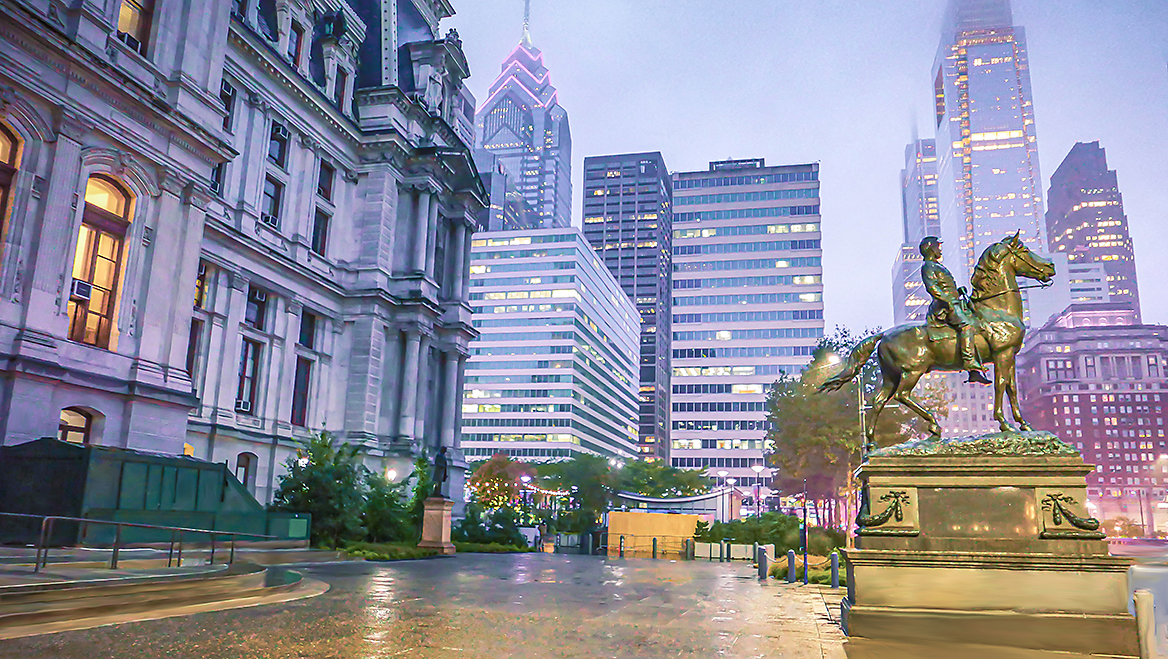
In his hometown, the young architect became the executive director of the local housing association. During World War II, he served in the US Navy. In 1947, he joined the CPC. He participated in the 1947 Better Philadelphia exhibition as a designer. In addition, he was active in the community and participated in the activities of the City Policy Committee. The latter brought together young citizens who wanted reforms and changes for the better.
In 1949, Edmund became executive director of the CPC. For the next two decades, he remained in this position, working with various mayors of the city. The man did his best to make Philly a modern, comfortable and cozy metropolis. Together with his staff, he came up with and realized numerous design ideas, including Penn Center, Market East, Penn’s Landing, Society Hill, Independence Mall and Far Northeast.
There were some challenges along the way. For example, one of the architect’s plans was to build expressways around the city center. Three of the four planned expressways were built. However, the construction of the Crosstown Expressway never took place due to the resistance of local residents. At the same time, the changes in the area led to lower rents and real estate values and turned it into a commercial center.
Some of Bacon’s projects, such as the Schuylkill River Park, were realized after his leadership period was over.
The architect’s merits were recognized by Time magazine. It featured his photo on the cover in 1964. The following year, Life magazine did the same. In the same year, the man was included in the White House’s Conference on Recreation and Natural Beauty. In 1967, the famous architect’s book Design of Cities was published and became a classic text in the field.
After his administrative career, Bacon became vice president of a private planning firm and taught at the University of Illinois and the University of Pennsylvania. In addition, the man continued to develop the concept of a Philly of the future and offered many useful concepts during the 1990s.
Among E. Bacon’s awards:
- Frank P. Brown Medal in 1962
- an award from the American Institute of Planners
- an honorary doctorate from the University of Pennsylvania.
In 1983, the architect became an associate member of the National Academy of Design, and in 1994, he became a full member.
Personal life
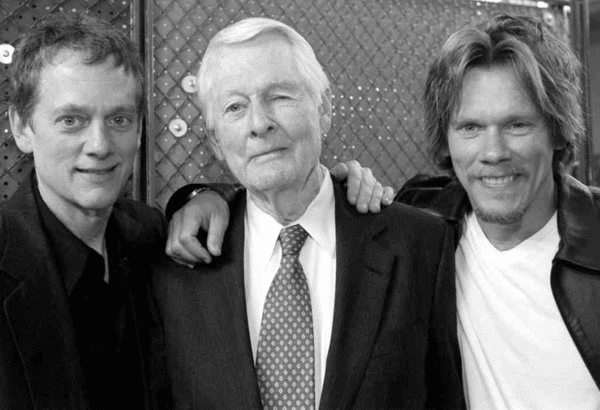
Edmund married R. Holmes, a teacher and political activist. The family had six children, four daughters and two sons. K. Bacon became a famous actor, and M. Bacon became a musician.
In 2003, Edmund took part in the filming of the documentary My Architect, about the Philly architect L. Kahn. The following year, he founded a foundation in his own name, and on October 14, 2005, he passed away at the age of 95.
In 2006, a historical marker was erected in Philly in honor of the prominent architect who shaped the modern face of the city.