

The cradle of American democracy became not just a temporary refuge but a true creative crucible for Edgar Allan Poe. For six years, from 1838 to 1844, it was here, in America’s dynamic publishing hub, that Poe endured one of the most prolific yet challenging periods of his life. He wasn’t simply writing; he was fighting for his place in the literary world, working as an editor, laying the groundwork for the detective genre, and publishing his most famous Gothic masterpieces, including “The Fall of the House of Usher” and “The Murders in the Rue Morgue.” These were years of constant financial struggle and critical ups and downs that ultimately shaped him into the brilliant but tragic master of dark romance. Based on archives from the U.S. National Park Service and biographical research, we explore on iphiladelphia.net how the Quaker City forged one of the greatest masters of horror.
Arrival in a New City
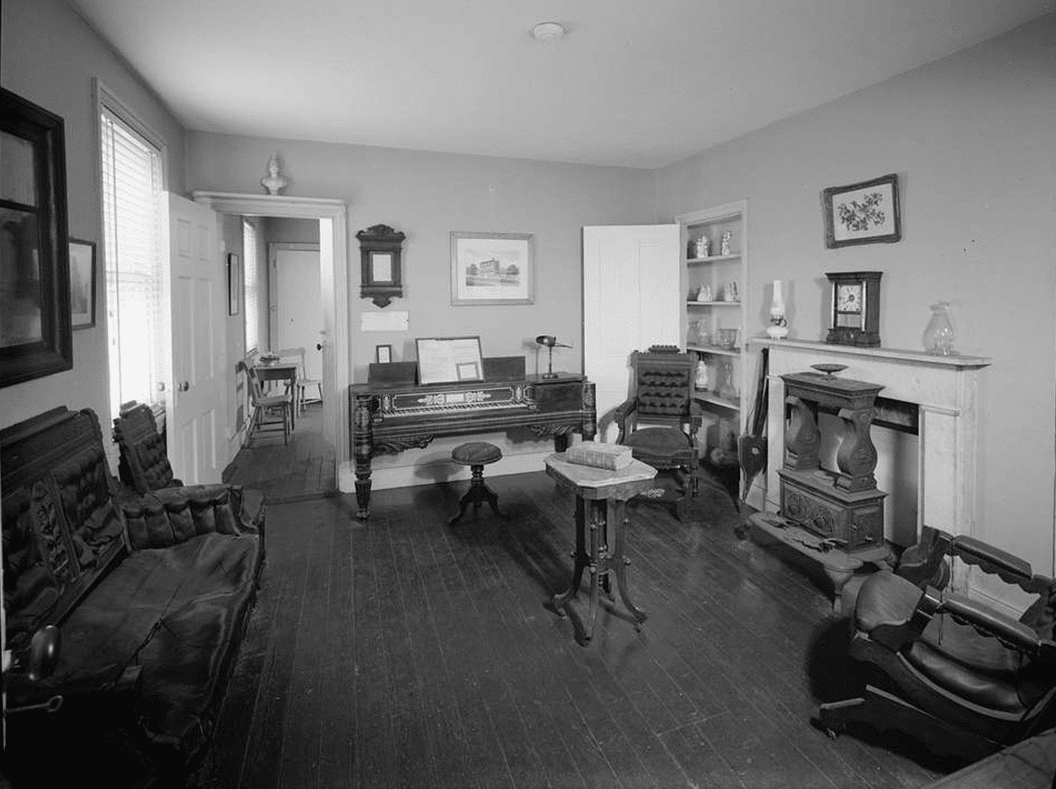
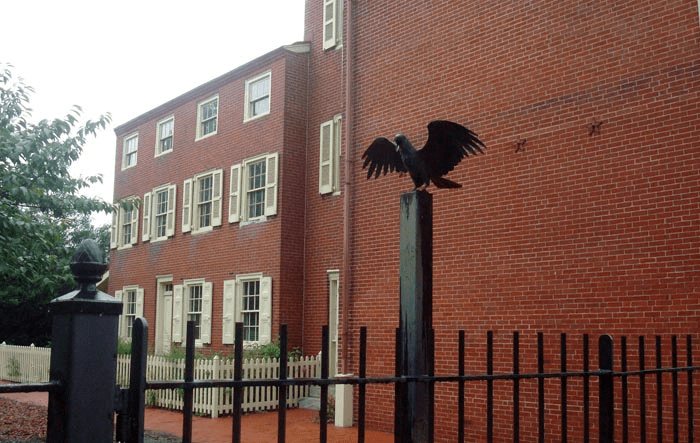
When Edgar settled in Philadelphia, he was twenty-nine. He, his wife Virginia Clemm, who was fourteen years his junior, and his mother-in-law Maria left Richmond, hoping for better opportunities. The city, known for its publishing boom, promised work for a talented reviewer. The family first stayed at 2506 Chestnut Street, in a modest rented apartment. From there, they moved three more times: to Spring Garden Street, Coyle Street, and finally to the house at 532 North 7th Street, where they lived from 1843 until the spring of 1844. Only this final home remains today, preserved as a National Historic Site where visitors can still sense the echoes of the past.
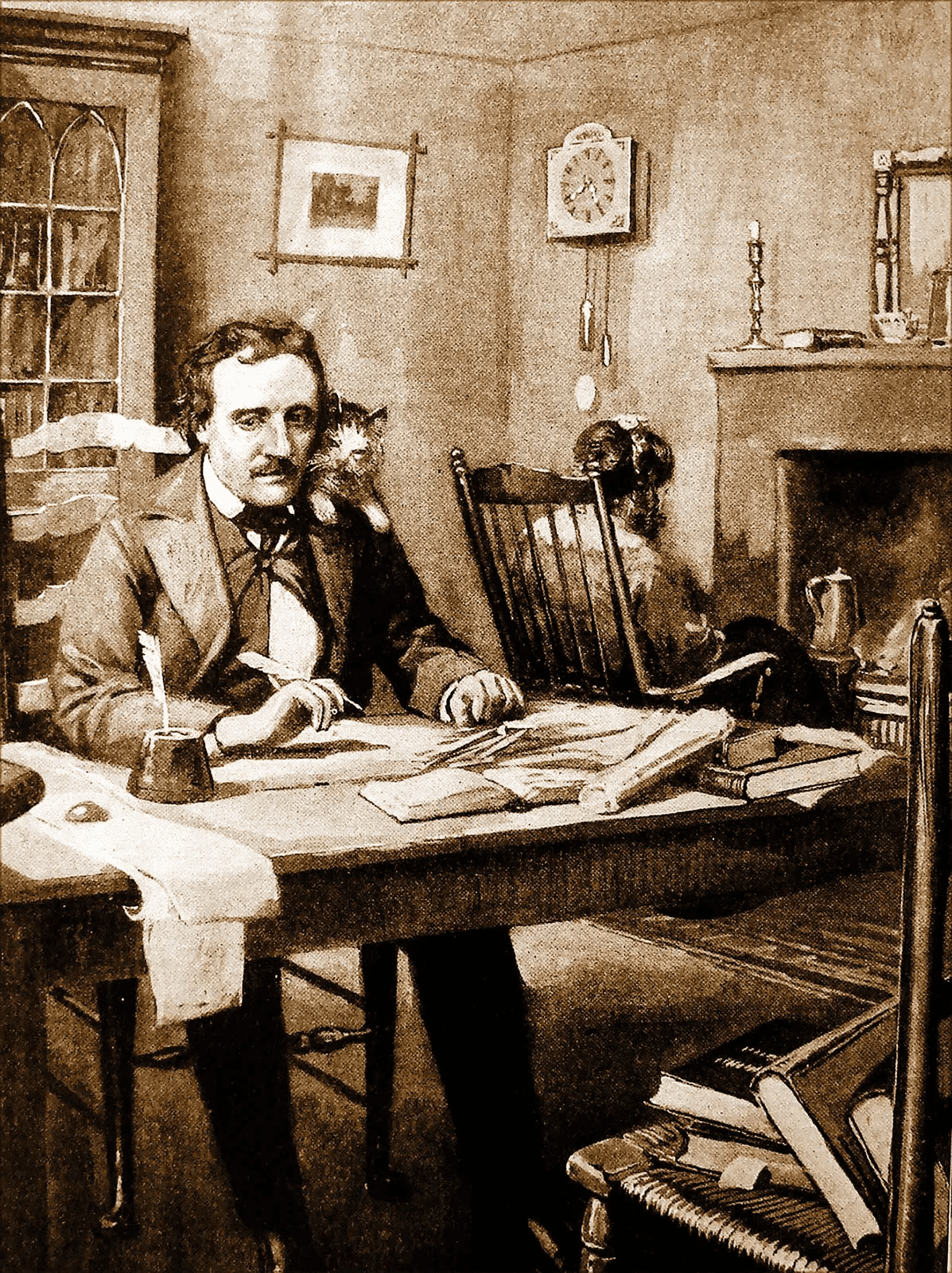
The homes served not just as shelter but as a workshop. In the cramped rooms, Edgar Poe dictated stories while Virginia sewed or played the piano. Philadelphia, with its foggy streets and heated debates in taverns, inspired plots of mystery and madness.
A Career in Journalism
Philadelphia was fertile ground for his career. In the summer of 1839, Poe secured a position as an assistant editor at “Burton’s Gentleman’s Magazine,” a prestigious publication aimed at men of refinement. Here, he wrote sharp reviews of novels, poetry, and theater, often critically excoriating his peers. His pen cut through pretense like a knife; for instance, he famously accused author Henry Watley of plagiarism. His salary reached twenty-four dollars per story, which helped support his family.
A year later, in 1840, the father of the detective genre moved to “Graham’s Magazine,” becoming co-editor. The publication flourished, printing works by Nathaniel Hawthorne and Herman Melville alongside his own. Poe didn’t just edit; he boosted circulation with controversial, hard-hitting articles. However, conflicts with the publishers ultimately led to his dismissal. In 1841, he quarreled with George Graham over compensation issues. These years established his reputation as America’s sharpest literary critic.
Creative Peaks
It was in Philadelphia that Poe truly blossomed as a master of short fiction. The city’s contrasts—from elegant drawing rooms to grimy alleys—permeated the lines of his stories. He published dozens of tales, poems, and essays, often for meager pay. Here are key examples created in the city:
- “The Murders in the Rue Morgue” (1841) – The world’s first detective novella, featuring Dupin solving a crime through pure logic.
- “The Tell-Tale Heart” (1843) – A tale of paranoia, reportedly inspired by Philadelphia’s street noises.
- “The Black Cat” (1843) – A story of guilt and madness that mirrored the author’s inner demons.
- “The Gold-Bug” (1843) – An adventure mystery that won a one-hundred-dollar prize from the Dollar Newspaper.
These works were not only entertaining but also formally experimental: Poe pioneered the “detective” genre, influencing Arthur Conan Doyle. His output was impressive—around sixty reviews in four years, plus the novel The Narrative of Arthur Gordon Pym in 1838.
Challenges of Family Life
Despite his successes, shadows loomed over the family. In January 1842, during an evening at home, Virginia experienced a sore throat—the first symptom of tuberculosis. The hemorrhage while singing was a distress signal. The disease progressed, forcing the talented wordsmith to search city pharmacies for remedies. Stress led him to alcohol. Rumors of his heavy drinking circulated among acquaintances like Frederic Thomas.
The family lived impoverished: rent debts accumulated, and fees rarely exceeded a few dozen dollars. Edgar dreamed of his magazine, “The Stylus,” announced in 1840, but the project crashed on the rocks of financial reality. In 1844, the family moved to New York, leaving Philadelphia with a mixture of gratitude and pain.
The Legacy Endures
Philadelphia left an indelible mark on Poe. Genres that continue to frighten and captivate were born here. The house on 7th Street attracts thousands of pilgrims every year, serving as a reminder of the genius who created in cramped quarters. Below is a brief chronology of the events that defined this stage.
| Year | Event | Detail |
| 1838 | Arrival and First Novel | Settled on Chestnut Street; The Narrative of Arthur Gordon Pym published. |
| 1839 | Editorial Position | Worked at “Burton’s”; published “The Fall of the House of Usher.” |
| 1840 | Shift to “Graham’s.” | Became co-editor; announced “The Stylus” magazine. |
| 1841 | Detective Breakthrough | “The Murders in the Rue Morgue” was published in “Graham’s Magazine.” |
| 1842 | Virginia’s Illness | First signs of tuberculosis: “The Masque of the Red Death.” |
| 1843 | Prize and Horrors | “The Gold-Bug” won a contest; “The Black Cat” and “The Tell-Tale Heart” were published. |
| 1844 | Departure | Moved to New York after four years in the city. |
This table emphasizes how six years transformed Poe from a struggling poet into a literary icon. Today, Philadelphia honors him with festivals and memorials, proving that even in the darkness, the eternal light of creativity resides.