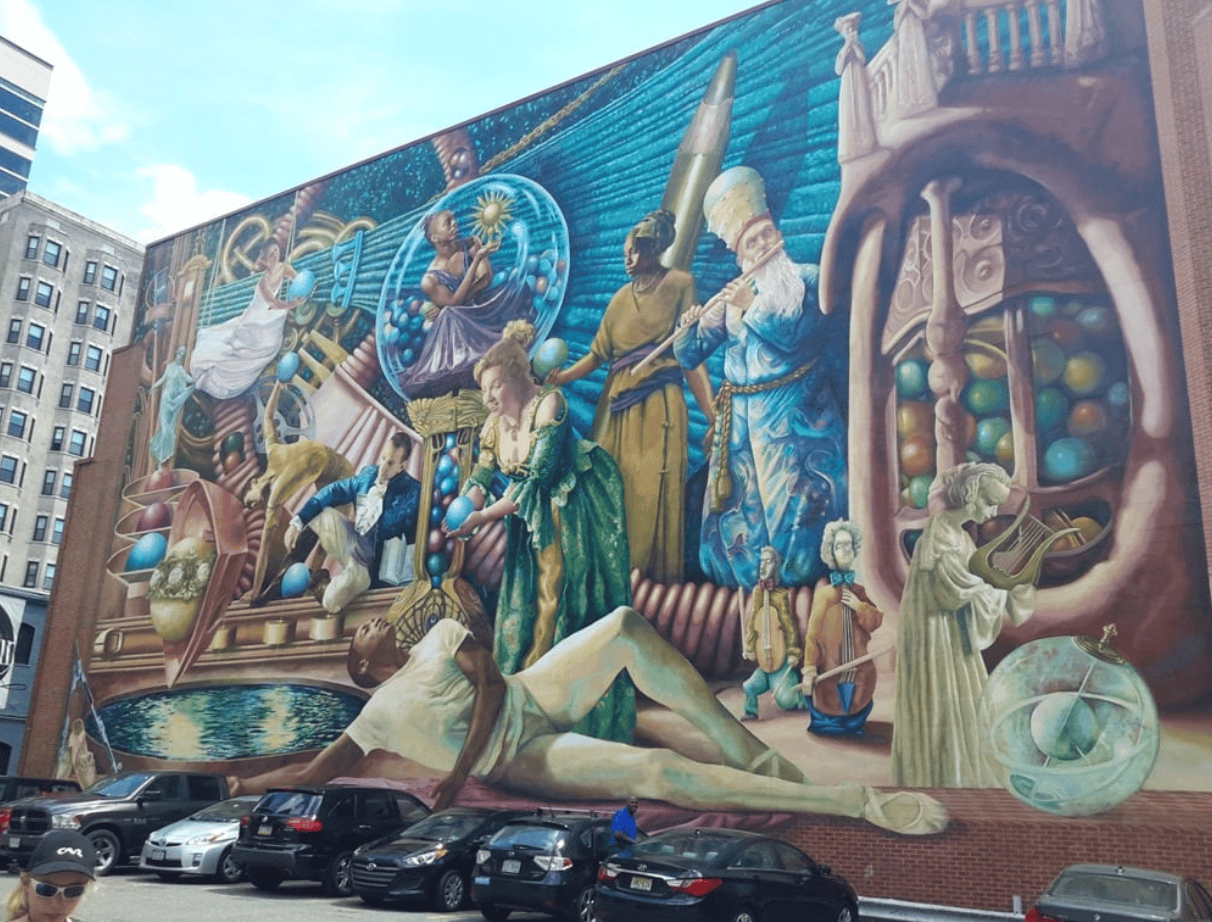

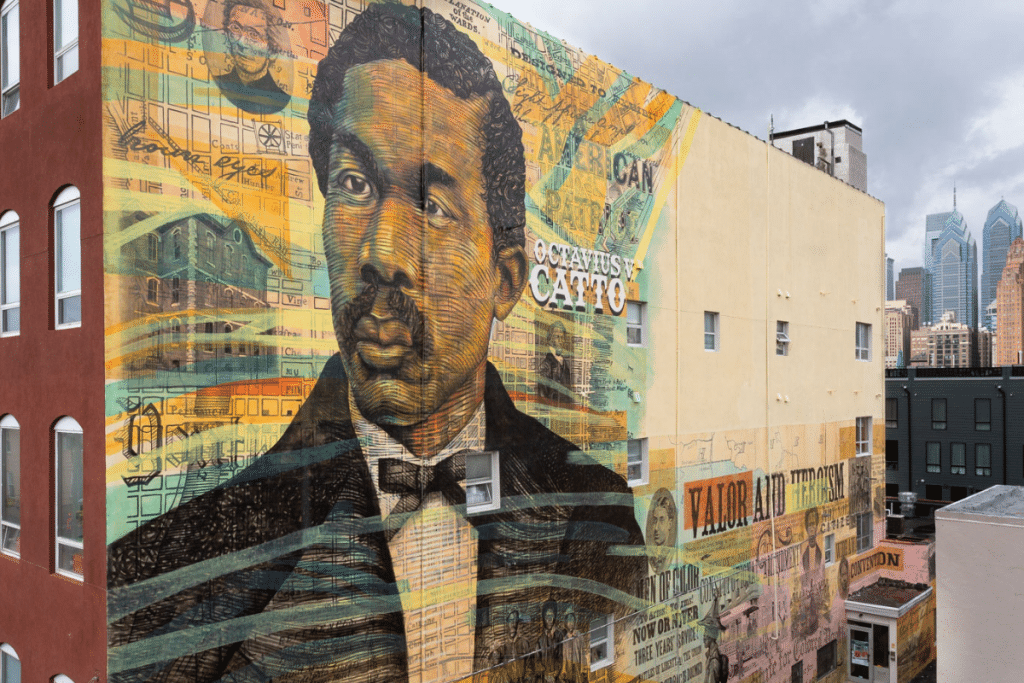
Take a stroll through the streets of Philadelphia, and one striking detail immediately stands out: the grey firewall ends of brick townhouses, abandoned factory facades, and blank walls facing vacant lots have been converted into giant canvases. Today, Philadelphia is officially known as the “Mural Capital of the World.” Through its official program alone, the city has produced over 4,000 large-scale works of monumental public art.
Yet behind this striking visual backdrop lies far more than a simple drive to beautify the city. The story of Philadelphia’s mural movement is a world-first example of how a struggle against crime, a graffiti epidemic, and urban decay evolved into the largest social rehabilitation program through art. We take a deep dive into this milestone of city life at iphiladelphia.net.
The Era of Tags and Decay: From Cornbread to the Crisis of the 1980s
The roots of Philadelphia street art trace back to a semi-legendary story from the late 1960s. Most researchers consider Philadelphia—rather than New York—the true birthplace of modern urban tagging.
In 1967, a local teenager named Dennis McCray, better known as Cornbread, began spray-painting his name all over the city—initially for purely romantic reasons, to catch a girl’s attention. But that daring spark quickly turned into a citywide spectacle. Over time, his tag famously appeared on The Jackson 5’s private jet and even on the side of an elephant at the local zoo, solidifying Cornbread’s status as the world’s first modern graffiti writer.
By the early 1980s, this teenage prank had devolved into an aggressive, unchecked subculture. Philadelphia was reeling from rapid deindustrialization, chronic poverty, and a massive population exodus. Abandoned industrial plants and hundreds of thousands of square meters of exposed brick end-walls—so-called “ghost walls” left behind after adjacent blighted houses were demolished—became covered in illegal tags used by street gangs and underground writers to mark territory.
The city administration’s heavy-handed tactics—hefty fines and arrests—proved completely ineffective. A punitive stance only fueled backlash: for every tag covered by city crews, dozens more appeared the very next morning. The city was sinking into visual chaos, and its walls became the ultimate symbol of a deep socioeconomic crisis.
1984: The Jane Golden Phenomenon and the Anti-Graffiti Network
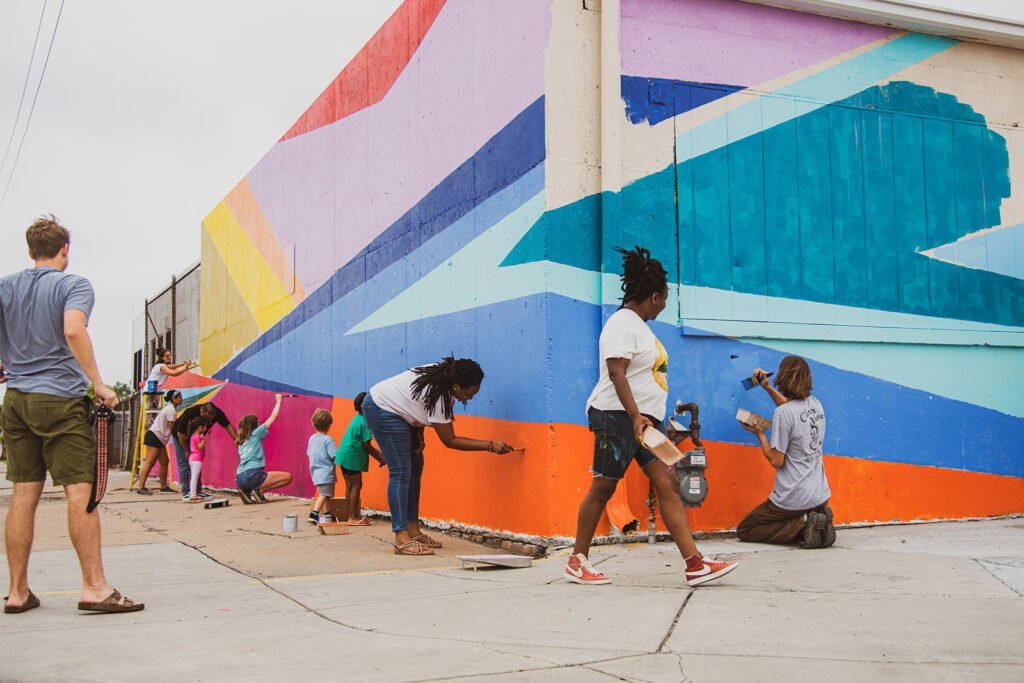
The turning point in this grueling struggle for urban space came in 1984, when Philadelphia’s first African American mayor, Wilson Goode, established the Philadelphia Anti-Graffiti Network (PAGN). Instead of launching another wave of crackdowns and criminalizing teenagers with spray cans, city hall made a bold, unconventional decision: stop punishing the youth and give them a legitimate alternative.
To head the artistic and social direction of this new initiative, the city brought in Jane Golden, a dynamic young artist. She took a step no city official or police officer had dared to take: walking straight into crime-ridden neighborhoods to seek out the leaders of local graffiti crews and offer them a fair deal.
Jane Golden’s philosophy was groundbreaking for its time:
“We told them: you have an incredible sense of scale, you know how to work with color and spray cans, you have real passion. But instead of just tagging property and tearing down your own neighborhoods, channel that energy into creating something your community can take pride in.”
The strategy worked almost instantly. Youth who just days before were viewed as vandals and lawbreakers received paid employment, professional-grade supplies, scaffolding, and expert artistic mentorship. Instead of waging a hopeless, costly war against taggers, Philadelphia bet on their rehabilitation, turning street writers into creators of monumental public art.
Engineering and Innovation: How “Parachute Cloth” Revolutionized Muralism
In 1996, the organization fully morphed into an independent, powerful program: Mural Arts Philadelphia. But scaling up brought a major engineering challenge: how do you paint giant, photo-realistic murals 10 to 12 stories high in Pennsylvania’s tough climate, where hot, humid summers swing quickly into freezing, windy winters?
The game-changer that revolutionized public art globally was the adoption of Polytab, commonly known as parachute cloth. This technology revamped the entire creative workflow by breaking it down into four distinct steps:
- Indoor Studio Comfort. Murals are no longer painted over agonizing months on freezing brick walls in rain, snow, or scorching heat. The core artwork is painted indoors in climate-controlled spaces on non-woven polyester fabric rolls.
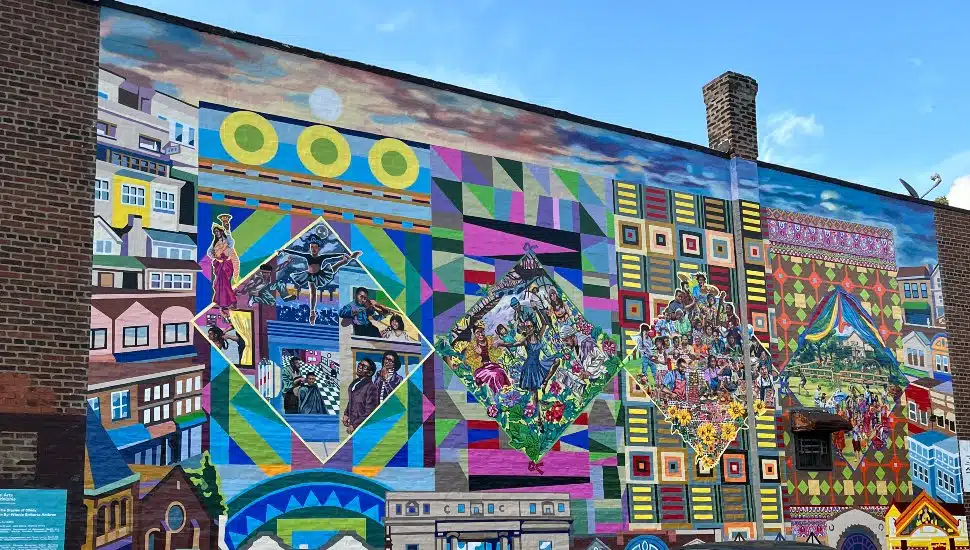
- Large-Scale Grid Decomposition. The massive canvas is divided into manageable 5×5-foot (1.5×1.5 meter) sections. This setup enables broad community involvement: dozens of people—from lead artists to neighborhood kids, seniors, and volunteers—can work on individual panels simultaneously during community paint days.
- Precision On-Site Installation. Completed, dry panels are transported directly to the location. Using heavy-duty industrial acrylic gel, artists adhere the fabric to a pre-primed wall much like heavy-duty wallpaper, creating a seamless bond with the surface.
- Final Touches and Protection. Artists only climb the scaffolding for finishing work: blending seams, touching up details across the full image, and applying a protective topcoat to guard against UV fading, weather damage, and graffiti tagging.
Adopting the Polytab method slashed overall costs and artist safety risks by nearly 70%. More importantly, this technical breakthrough democratized the art form—transforming muralism from an exclusive trade into an inclusive, therapeutic process that lets every resident leave their mark on the city walls.
Social Rehabilitation: Art as Therapy and Reform
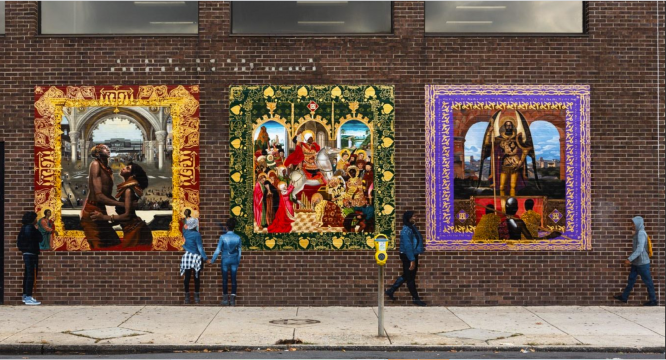
Today, Mural Arts Philadelphia is far more than an urban beautification initiative—it is a powerful vehicle for social engineering. Funded jointly by municipal budgets and private philanthropic foundations, the program runs targeted sub-initiatives designed to tackle major urban issues.
Two flagship initiatives stand out for using paintbrushes and canvas as instruments of rehabilitation:
- Restorative Justice. Programs under The Guild focus on former inmates, individuals on probation or parole, and at-risk youth. Participants earn a wage while picking up practical skills in masonry, painting, construction, digital design, and project management. The results speak for themselves: the recidivism rate among program graduates sits at just 12%—a dramatic contrast to the U.S. national average of over 60%.
- Mental Health Support (Porch Light Program). Partnering with the Philadelphia Department of Behavioral Health and Intellectual disAbility Services, this pioneering initiative supports people recovering from severe trauma, addiction, depression, or homelessness. Designing and painting murals together directly in high-crime neighborhoods acts as a form of community art therapy. It reduces anxiety among participants while dismantling mental health stigma across local communities.
Through this pragmatic synergy between city government, healthcare, and criminal justice, Philadelphia has shown that public murals do more than paint over urban decay—they help repair fractured lives.
Sociological Impact and the Threats of Gentrification
The impact of muralism on the city is backed by hard sociological data:
| Area of Impact | Outcome of Mural Arts Initiatives |
| Crime Rate | On streets where collaborative murals are created, vandalism and petty crime drop by 20–30%. An unwritten rule exists: taggers respect and do not deface community murals. |
| Economy & Tourism | Walking and bus tours of Philadelphia’s murals draw over 15,000 tourists each year, driving revenue for local small businesses. |
| Community Engagement | Over 25,000 residents participate annually in painting new public artworks or joining educational art programs. |
Yet there is a flip side to this success: gentrification. Neighborhoods like Fishtown and North Philadelphia shed their dangerous reputations and gained trendy appeal partly through street art. As a result, developers rushed in to build high-end housing—frequently blocking iconic murals or demolishing historic structures altogether.
Nevertheless, Philadelphia’s journey proved to the world that paint and brushes in the hands of a community can be far more powerful tools for public safety and social cohesion than hundreds of additional police patrols.