

In the 18th century, as medicine in the colonies began to emerge from the shadows of medieval superstition, Philadelphia stepped up as the nation’s intellectual engine. It was here that the country’s first hospital, medical school, and pharmacy were established. While the young nation fought for its independence, visionaries like Benjamin Franklin and Thomas Bond were busy laying the groundwork for a scientific approach to healing. They transformed the city into the premier educational hub of the New World. This status as the “Cradle of Medicine” was no accident—it was in Philadelphia that clinical practice and academic rigor were first combined, forever raising the bar for American healthcare.
Below, at iphiladelphia.net, we will explore how Philadelphia doctors performed the first unique surgeries, what innovations they came up with for the industry, and why the city’s medical inventions continue to save millions of lives around the world.
The Beginnings: Pennsylvania Hospital and Benjamin Franklin’s Vision
The rise of modern American medicine didn’t start in a high-tech lab, but rather from a deep sense of social responsibility. In the mid-1700s, medical care in the colonies was disorganized and elitist. The wealthy received care at home, while the poor often spent their final days in squalid almshouses. Two prominent Philadelphians decided to change this: Dr. Thomas Bond and the polymath Benjamin Franklin.
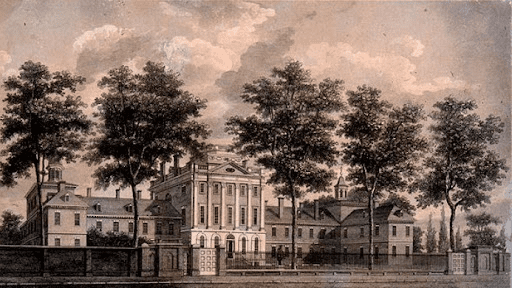
In 1751, driven by Bond’s clinical observation and Franklin’s brilliant “matching grants” fundraising campaign, Pennsylvania Hospital was founded. It was the first institution of its kind in the colonies, and its motto—”Take care of him, and I will repay thee”—became the symbol of a new medical era. The hospital introduced a revolutionary concept: healthcare should be available regardless of a patient’s background, religion, or social status.
The hospital’s treatment of the mentally ill was particularly pioneering. For the first time in America, people with mental health issues were treated not as criminals or outcasts, but as patients deserving of humane care. Dedicated wards were established, laying the foundation for modern psychiatry.
The hospital’s architecture was equally impressive. The main building, known as the “Pine Building,” became a blueprint for future medical facilities. However, the true heart of the hospital was its Surgical Amphitheater (the Halsted-Kirby Center). Under a glass dome providing natural light, the nation’s first public surgeries were performed. In the days before anesthesia, surgery was a grueling test for both doctor and patient, and the amphitheater served as the primary classroom for the country’s future medical leaders.
An Academic Breakthrough: America’s First Medical School
Until the mid-18th century, becoming a doctor in the colonies was an informal process. Most learned through “apprenticeship,” spending years assisting a local practitioner by mixing tonics and observing minor procedures. There were no degrees and no universal standards. This archaic system was disrupted in 1765 when John Morgan, a graduate of the University of Edinburgh, founded the first medical school in North America at the College of Philadelphia (now the University of Pennsylvania).
John Morgan returned from Europe with a bold vision. He argued that medicine was an intellectual discipline, not just a trade. Morgan insisted that a physician should possess a solid foundational education in Latin, anatomy, and pharmacy. Alongside the brilliant anatomist William Shippen Jr., he established a curriculum that merged two critical pillars:
- Theoretical Foundation: Systematic university lectures.
- Clinical Practice: Bedside teaching at Pennsylvania Hospital.
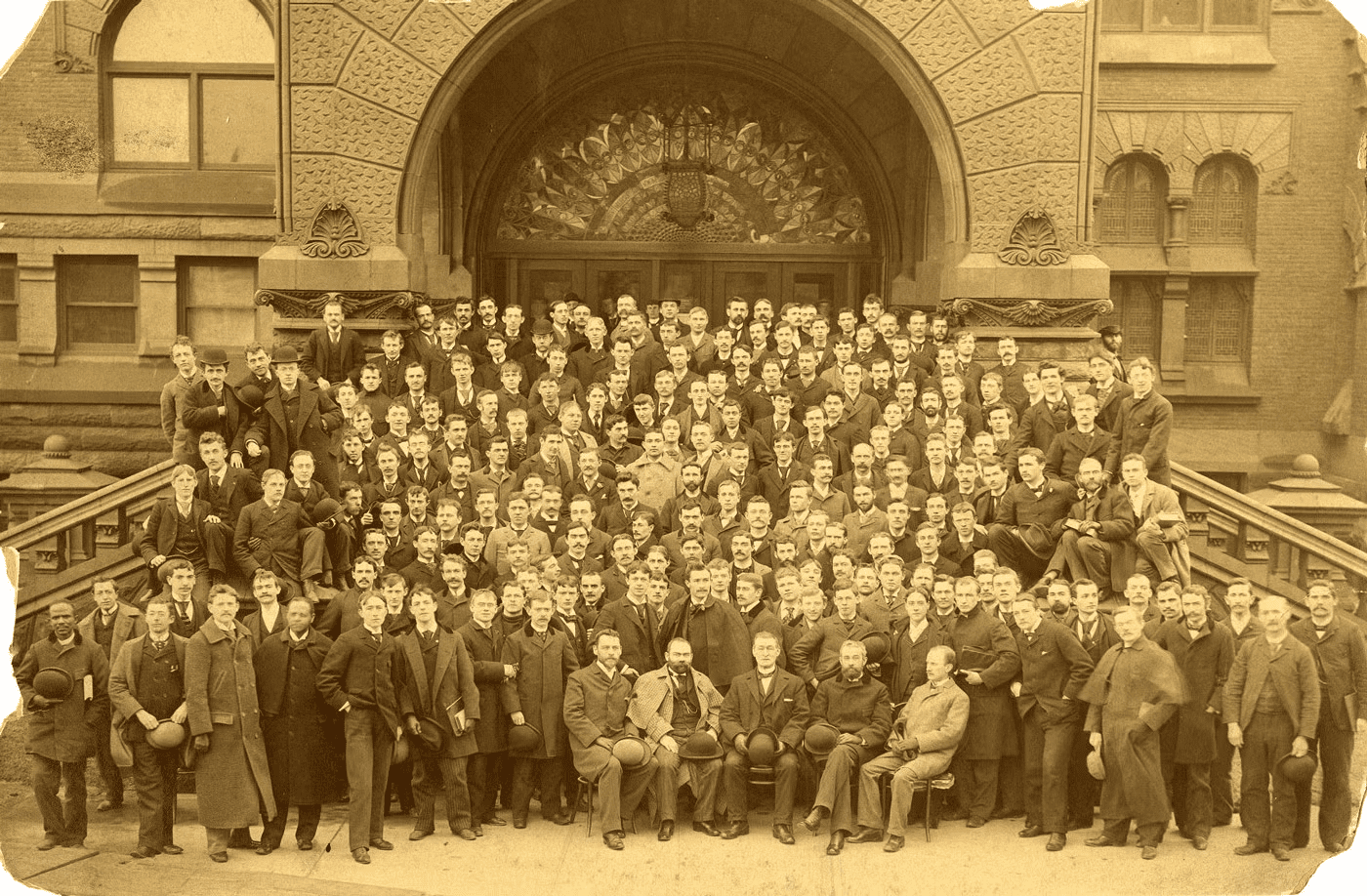
Philadelphia soon became the “Athens” of the medical world. Students traveled from all thirteen colonies to earn a professional degree. By the mid-19th century, Philadelphia was producing more degreed physicians than any other region in the U.S., cementing its reputation as the medical capital of the nation.
Anatomy and Surgery: The Era of Discovery
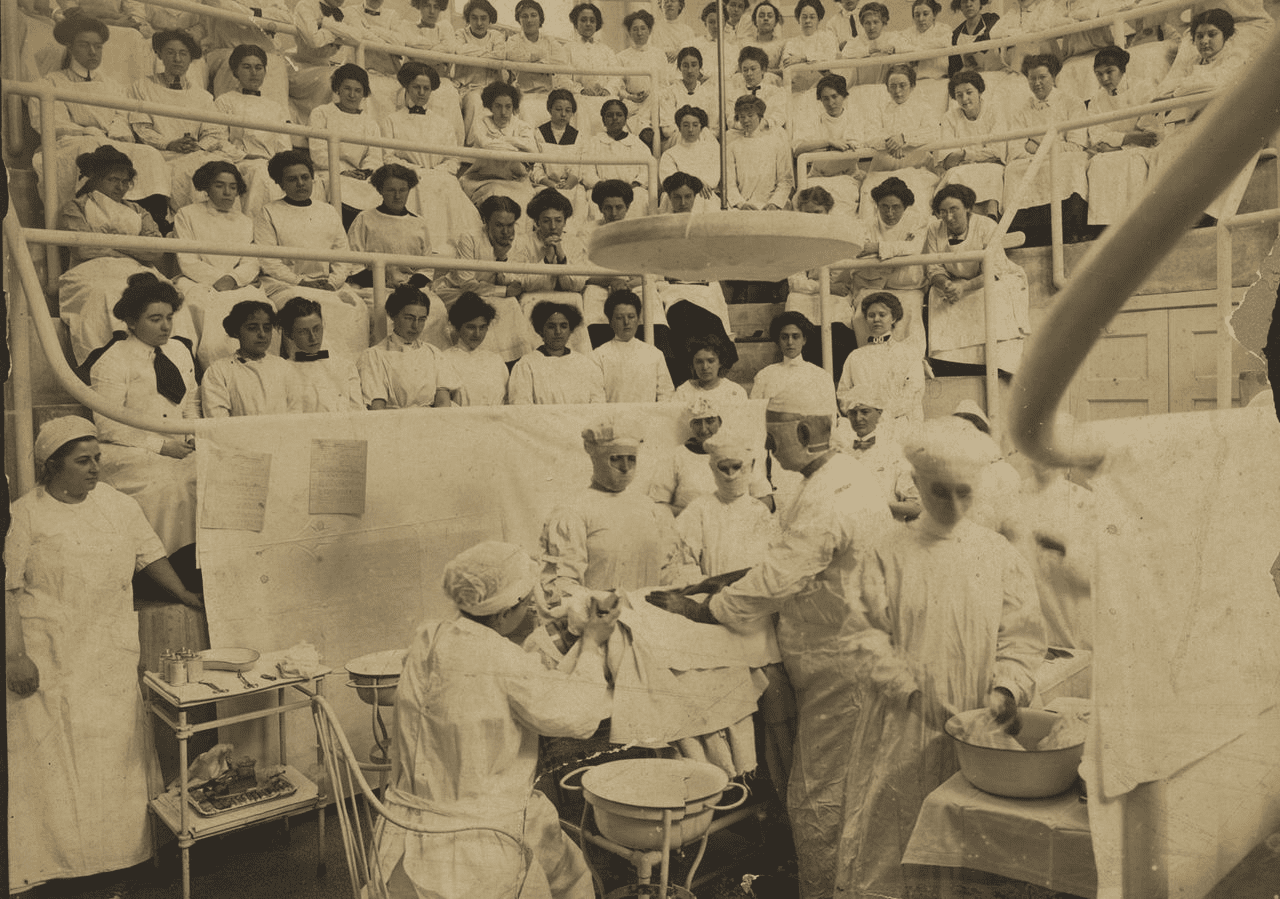
By the 19th century, Philadelphia had become a global destination for surgery. The city functioned like a massive laboratory for the study of the human body. Because legal cadavers were scarce, anatomy theaters occasionally relied on “resurrectionists” (body snatchers), a practice that highlighted the era’s desperate thirst for scientific knowledge.
The central figure of this age was Philip Syng Physick, often called the “Father of American Surgery.” His contributions were practical and profound. Physick invented the stomach pump and introduced the use of catgut sutures, which were absorbed by the body, sparing patients the agony of manual thread removal.
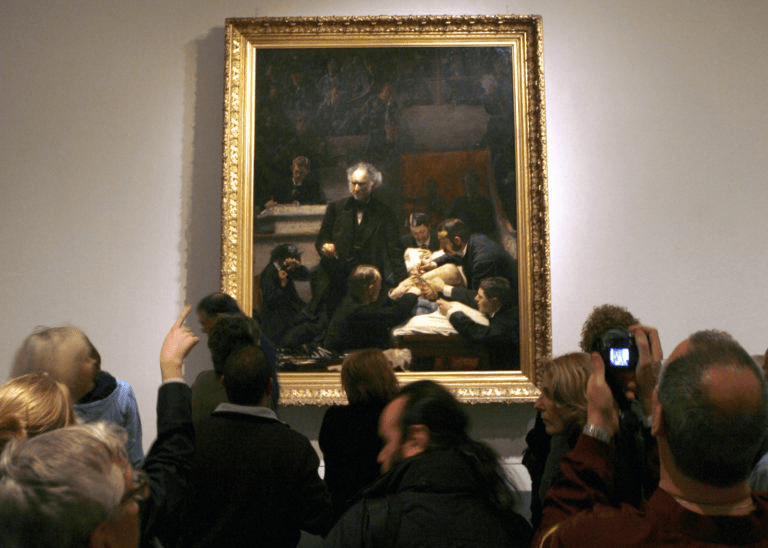
The pinnacle of this era was captured by artist Thomas Eakins in his masterpiece, “The Gross Clinic” (1875). The painting depicts the legendary surgeon Samuel Gross performing a procedure before an audience of students. It captured a turning point: the evolution of surgery from a “quick fix” into a methodical, scientific, and almost heroic discipline. Today, this painting is considered one of the most important records of Philadelphia’s medical triumph.
The Pharmaceutical Revolution and Public Health
Philadelphia was also the birthplace of American pharmacy. In 1821, the first College of Pharmacy was established here, setting the first standards for drug purity and manufacturing. However, the city’s medical history also includes tragedy. In 1793, a devastating Yellow Fever epidemic killed 10% of the population. This crisis forced the city to create one of the nation’s first Boards of Health, leading to major improvements in sanitation and quarantine protocols.
Key Milestones in Philadelphia Medicine
| Institution / Event | Year | Historical Significance |
| Pennsylvania Hospital | 1751 | First U.S. hospital; pioneered humane psychiatry. |
| UPenn Medical School | 1765 | First higher medical education in North America. |
| Yellow Fever Epidemic | 1793 | Led to the creation of the public health board system. |
| Philadelphia College of Pharmacy | 1821 | First professional pharmacy education in the U.S. |
| Female Medical College of PA | 1850 | World’s first medical school for women. |
A Legacy That Shaped the Future
Today, Philadelphia’s title as the “Cradle of Medicine” is more than a historical footnote—it is the bedrock of the modern “Eds and Meds” economy. What began as a bold experiment by Franklin and Morgan has evolved into a global biotech hub.
The true genius of Philadelphia’s medical phenomenon is its continuity. Historic 18th-century halls stand alongside state-of-the-art labs pioneering gene and cell therapy. The statistics are staggering: one out of every six doctors in the United States today still receives some form of training or residency in Philadelphia. The city has proven that medical progress thrives where academic rigor meets a deep commitment to humanity.
Sources:
- https://philadelphiaencyclopedia.org/themes/city-of-medicine/;
- https://hiddencityphila.org/2020/10/when-philadelphia-became-a-center-of-medicine/;
- https://history.rcp.ac.uk/blog/john-morgan-and-first-medical-school-america;
- https://www.balfourbeatty.com/what-we-do/projects/penn-medicine-philadelphia/.