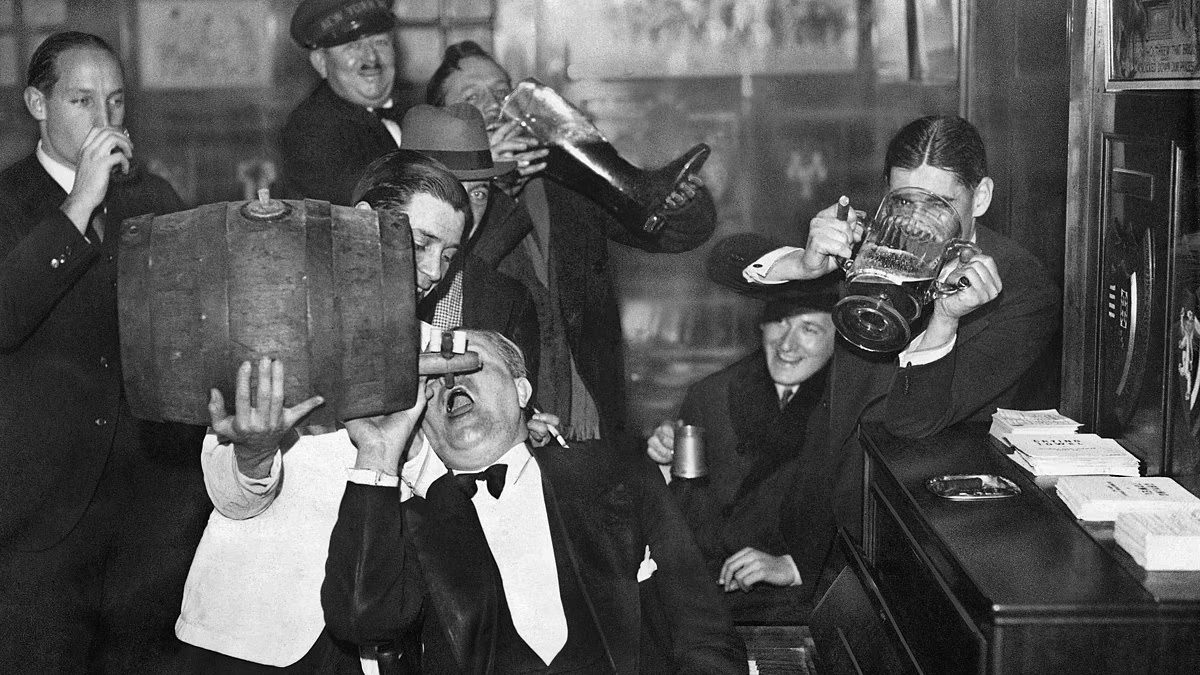

Everyone knows the term “Prohibition,” but modern Philadelphians can’t truly grasp what those words meant for daily life. For them, it’s simply a historical footnote. Alcohol isn’t a problem for today’s city residents or businesses. Any licensed store can sell alcoholic beverages daily, racking up significant profits. Yet, from 1920 to 1933, it was all strictly forbidden. Despite this 13-year ban, the alcoholic beverage business not only survived but thrived, growing in scope and expanding its illicit reach across Philadelphia. You can read more about it on iphiladelphia.
The Law’s Introduction and Enforcement
1918 seemed like a year of relief. World War I had finally loosened its deadly grip, and it felt like there would be no more problems on the horizon. However, for residents of Philadelphia, and other cities across America, an unexpected surprise awaited them. The most terrifying part was that there was no end in sight; this new reality could have lasted forever.
The long, 13-year saga actually began even earlier, in 1919, with the ratification of the Eighteenth Amendment. This made the production, transportation, and sale of alcohol completely illegal. No one could even get a permit or the slightest exemption to distribute intoxicating beverages. Essentially, Philadelphians were being deprived of something that could offer a moral reprieve during tough times, though, of course, it shouldn’t be abused. However, any prohibition often sparks a strong desire to do the exact opposite—just think of the legend of Adam and Eve.
Even though the Eighteenth Amendment was ratified in 1919, it only went into effect the following year. That’s why, according to official records widely known to most Philadelphians, the Prohibition era lasted from 1920 to 1933.
So, what was life like for the city’s residents, and what was the situation with alcohol? It’s safe to say that Philadelphia earned a reputation that rivaled the “wet” conditions in Chicago, Detroit, and New York. These cities, in turn, were the largest hubs for alcohol distribution across America.
It’s also worth noting that Philadelphia became not only a competitor in the distribution of alcoholic beverages but also one of the main cities where it was delivered. This was because our city was on the list of central ports for illegal alcohol.
The Reason for Prohibition
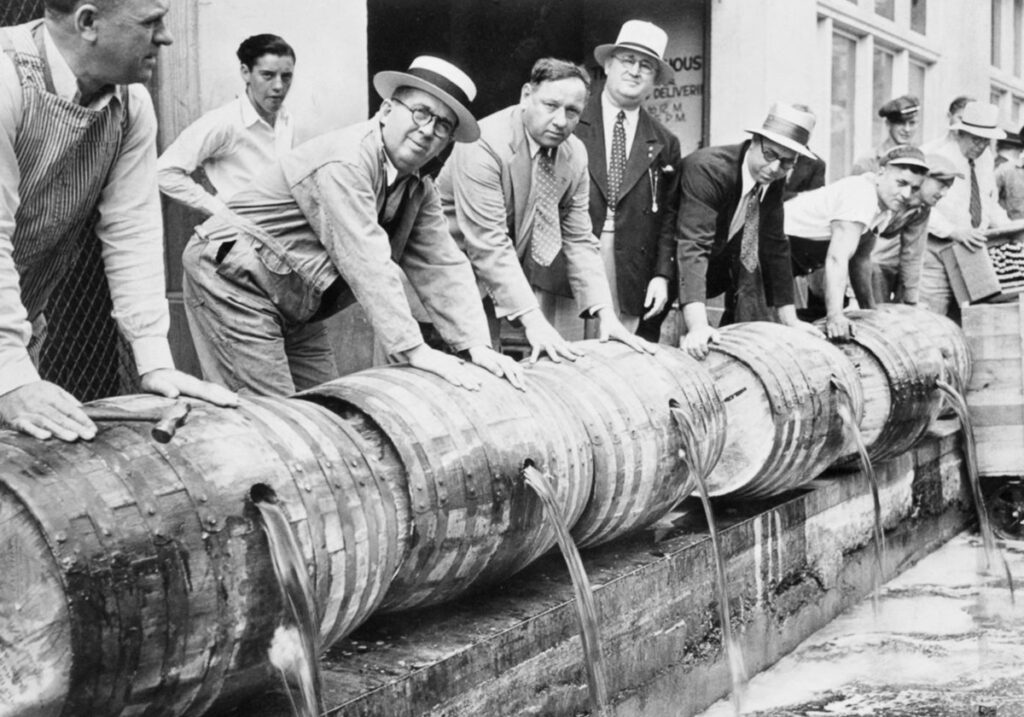
All these seemingly strict bans at the time didn’t answer the question “why?” It all stemmed from the belief of some influential figures who thought alcohol was causing moral decay among Americans, including Philadelphians.
These individuals were fierce proponents of clean government and a wholesome lifestyle. They began to believe and spread the idea that completely eliminating saloons, bars, and stores—everywhere alcohol was distributed—would purify the human spirit. They imagined quiet streets, fewer daily arrests for the police, and residents unafraid of the darkness where criminals might lurk. This, they believed, would strengthen moral fiber. However, such a notion was pure fantasy.
A new era in Philadelphia was essentially ushered in by fanatics who truly believed in the progress and effectiveness of such reforms. Yet, they failed to realize that controlling society would only provoke a negative reaction and a search for ways around the situation, rather than obedience to the authorities’ wishes. Thus, the ban didn’t strengthen the population’s spirit; instead, it created new and quite massive problems that engulfed every corner of the country.
Alcohol Goes Underground
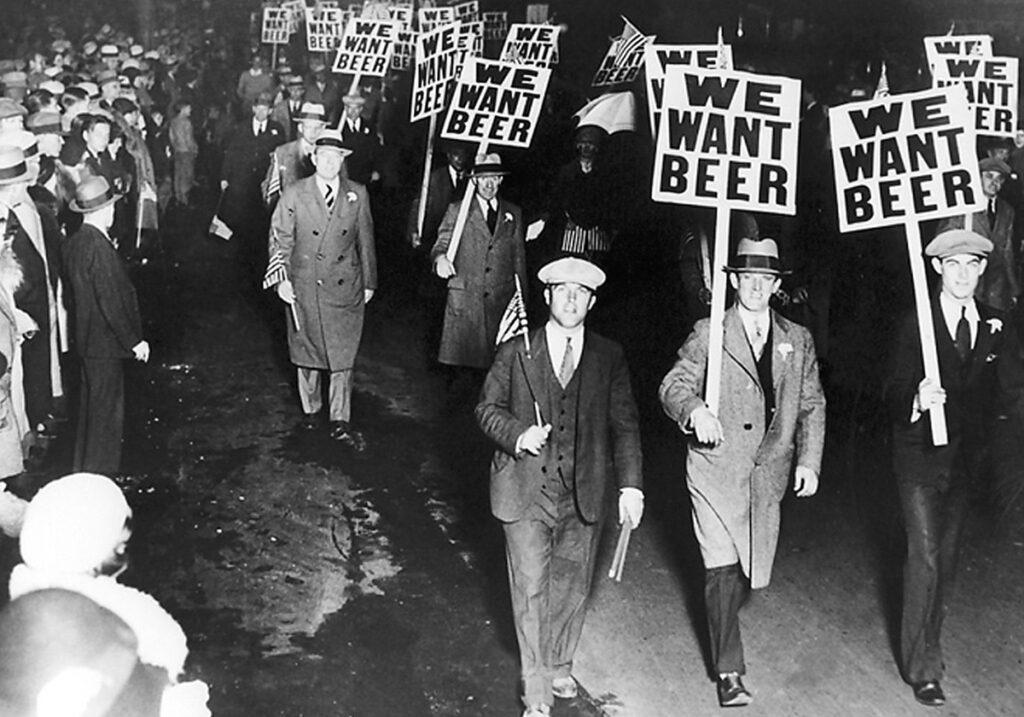
The situation with alcohol was becoming increasingly complicated, and businessmen desperately needed to find a way out of this difficult predicament. After all, let’s be honest, alcoholic beverages always brought in huge profits. No entrepreneur had the slightest desire to lose their wealth and future income.
Those who wanted to stay in the alcohol business decided to go underground. This meant they became outlaws. However, it wasn’t just the distribution of spirits that was a crime; consumption was also prohibited. Despite the law being passed and enforced, the number of saloons and bars in Philadelphia actually increased, though they operated illegally. Every such establishment, as you can imagine, contributed to the rapid growth of the black market.
Philadelphia: A City Defying Prohibition
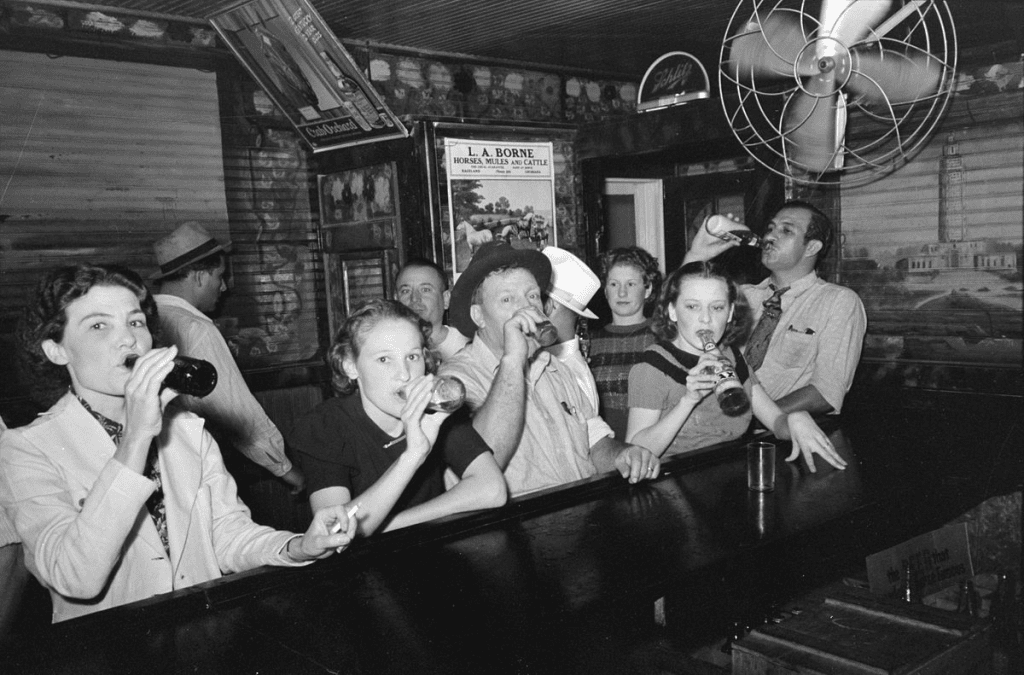
It’s no surprise that when new, especially strict, laws are introduced, people tend to rebel. This behavior can manifest publicly or quietly, within their own circles.
Philadelphia became one of those cities that defied the law without making its transgressions public. Yet, even with total secrecy, almost every city resident knew about the black market where alcohol could be bought. And Philadelphia eventually became a top violator of Prohibition. Thanks to a well-planned strategy, the alcohol business flourished, allowing residents to easily buy their alcoholic beverages.
But selling also required producing these products. This forced every Prohibition violator to find a way around the situation. As a result, Philadelphia held a leading position in brewing across the country for a long time. Some breweries switched to lighter products called “near beer.” The production scheme involved creating a sweet drink with an alcohol content of less than 0.5%. However, these underground operations didn’t go unnoticed. City police suspected illegal activities and conducted raids.
Although any activity related to alcohol was illegal, such operations had to be supported or at least overlooked by the authorities. This was indeed the case, as the distribution of alcoholic beverages involved people directly connected to the government, such as city council members or civil servants. This activity allowed officials to pocket a share of the profits directly from alcohol sales. This flow of money began in 1920 and continued until Prohibition ended.
The Aftermath
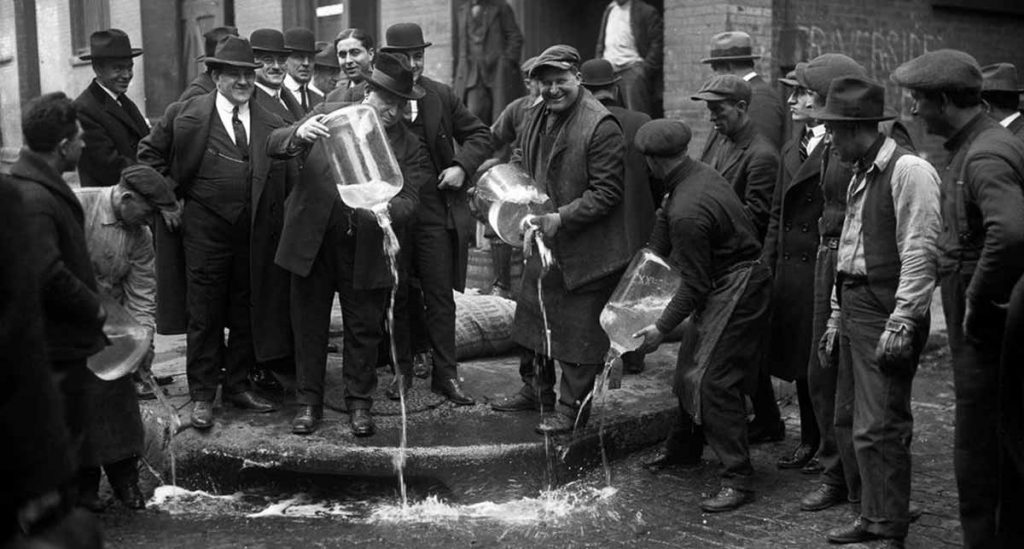
In the early years of Prohibition, alcohol businessmen often faced arrests and raids. However, this didn’t stop them from getting rich during this period. And as it turned out, they almost never felt the consequences of their illegal activities from the authorities. For example, in 1925, about 10,000 people were charged with operating speakeasies, but only a hundred of them received more than a small fine. Consequently, a large portion, if not all, of the offenders felt no fear of punishment.
Because establishments and producers didn’t want to go out of business or declare bankruptcy, they started using low-quality alcohol, or simply didn’t know how to handle it properly. According to the local coroner, people who died from alcohol poisoning ended up on his table daily. In his opinion, the liquor was improperly distilled. Yet, even such high mortality rates didn’t halt distribution. The active consumption of alcohol, despite Prohibition, actually increased production.
Given the existence of the black market and the flow of money to businessmen outside the national economy, the government lost millions, if not billions, of dollars in potential tax revenue from sales. And in the end, in 1933, the Eighteenth Amendment ceased to be effective, which meant the repeal of Prohibition. This happened after the adoption of the Twenty-first Amendment, which overturned the previous one.
Perhaps the introduction of Prohibition was intended to improve society at various levels. However, it only led to widespread crime and a struggling economy for a full 13 years.