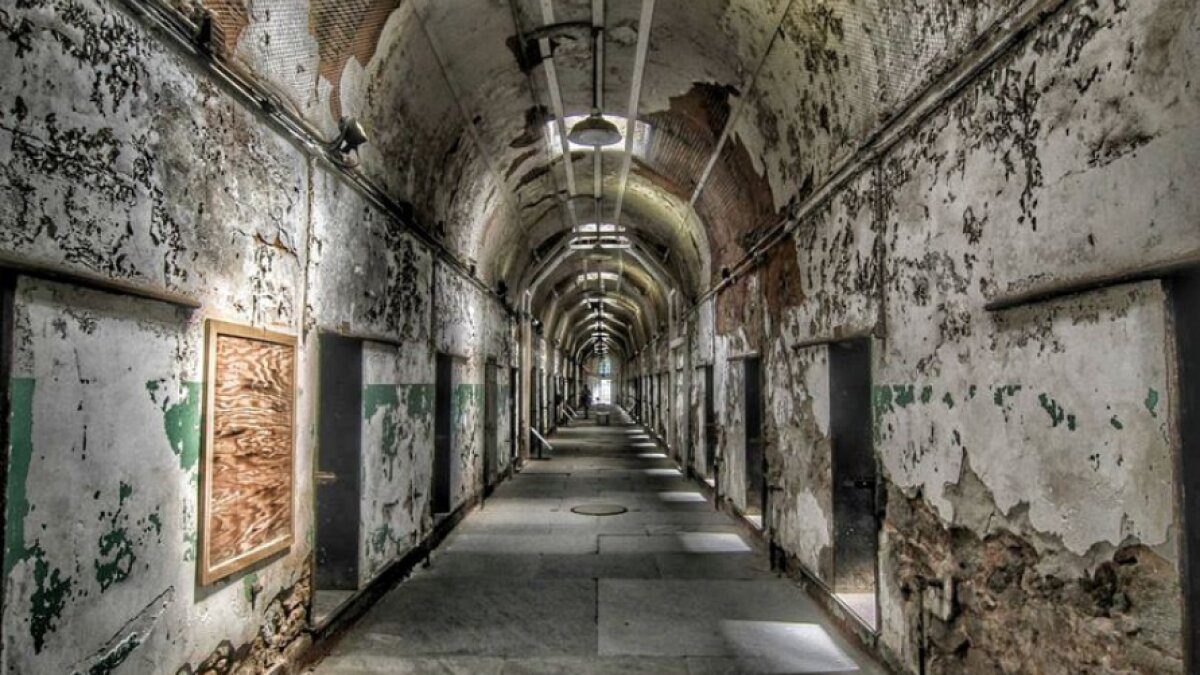

Each city has its own symbols, but they all differ in their history and some are more creepy than others. One of Philadelphia’s great historical accomplishments was the Eastern State Penitentiary. Famous criminals resided within its walls, which subsequently made it a popular destination for excursions. Learn more at iphiladelphia.net.
The establishment of the prison
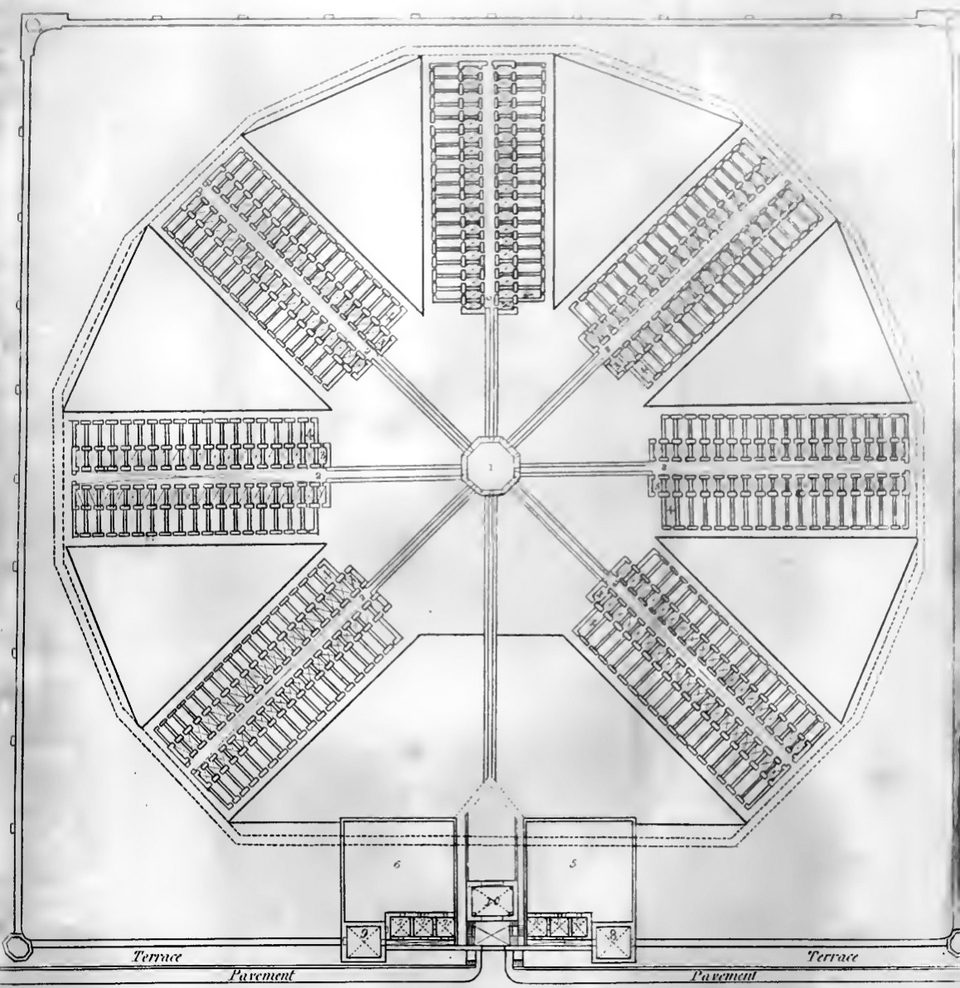
The Eastern State Penitentiary is a former American prison located in Philadelphia, Pennsylvania. The concept for its establishment arose in 1787 at the home of founding father Benjamin Franklin. However, this year did not mark the start of the existence or construction of the building. The construction started only in 1821. The project was assigned to the renowned British architect John Haviland. His vision for the project was unlike anything that had existed before in the United States. It was inspired by the prisons and shelters built in England and Ireland beginning in the 1780s. As a result, the future building was expected to get a fresh look for America, which eventually happened. One of the architect’s goals was to give the prison a neo-Gothic look. The whole purpose of this was to instill fear in those who even considered committing a crime. After all, if such a thing happened, this facility would serve as their temporary home.
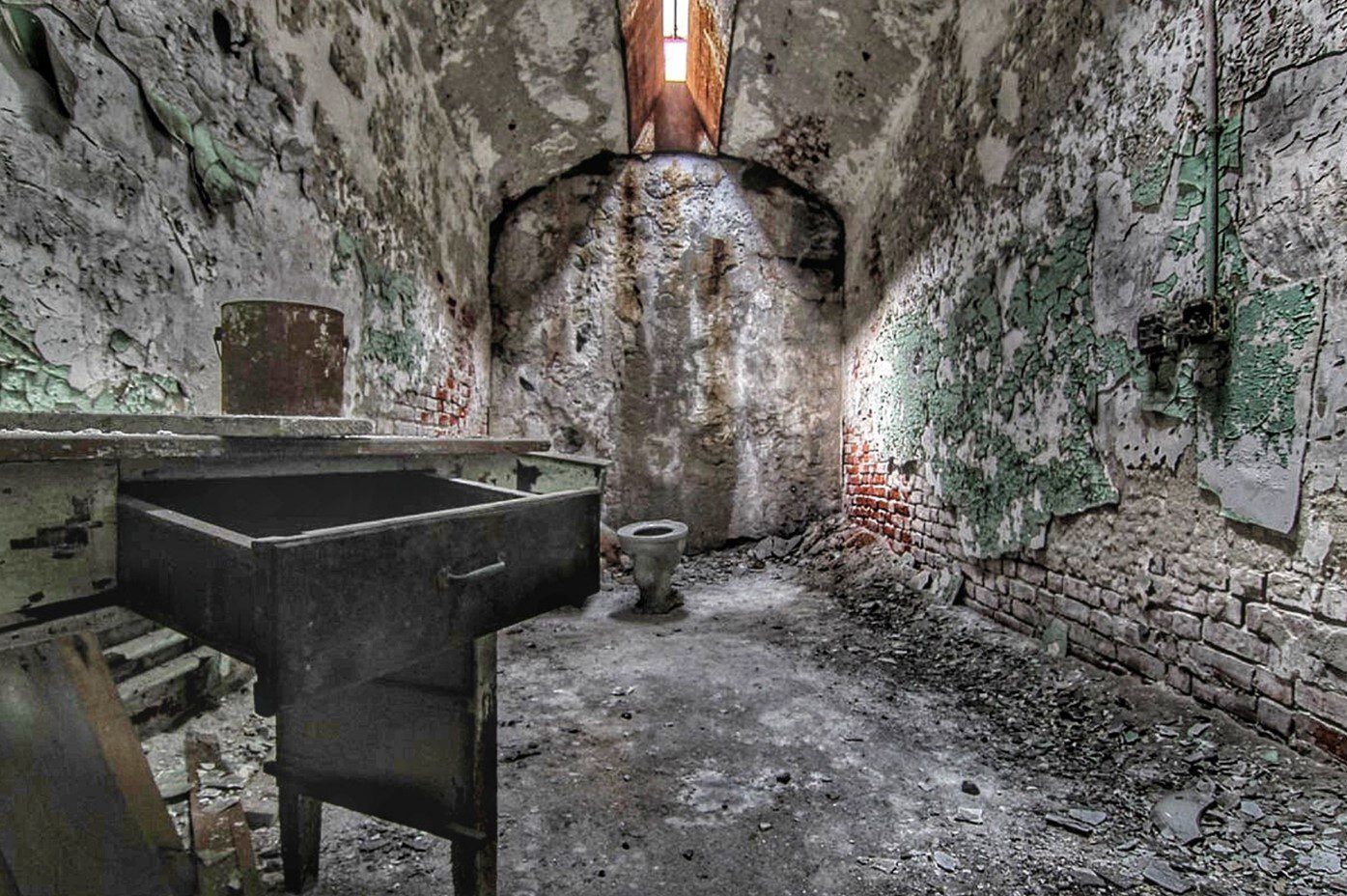
Construction began with great enthusiasm since the country had never seen such an institution, meaning not only the structure itself but also this type of prison. It was regarded as the first real penitentiary institution in the history of the world. The complexes were made up of cell wings that projected light in a half- or full circle from the center tower. Additionally, the layout was convenient since the prison could be under the constant supervision of security guards. The structure was made up of an octagonal center that connected seven single-story cells to the corridors. However, the number was eventually increased, due to the overcrowding of the institution with prisoners. Each chamber consisted of two rows of vast single cells. The architect sought to ensure that each room had heating that was switched on every winter, a hot water supply, a water tap, a toilet and separate exercise areas that were the same width as the cells.
They also considered the convenience of the feeding process, so they built special rectangular openings to transport food to captives. In addition, it served for document transfer. In order for security guards to quietly observe the behavior of arrested individuals, peepholes were installed in the cells.
The beginning of operation
On October 2, 1829, the prison commenced its full operation. However, work on the construction went on. The concept of seven one-story blocks was abandoned at this time, as the number of prisoners was increasing. The project was, nevertheless, expanded to fifteen two-story blocks. So, the latter became a haven for prisoners with the worst behavior. Following the expansion, the structure could accommodate 450 convicts within its walls. The institution was the first facility to implement a revolutionary incarceration system. It became known as the Pennsylvania system. The revolutionary idea was to provide prisoners with an isolated room as a form of rehabilitation. To keep prisoners from going insane, security guards had to visit each criminal every day. However, the first inmates to be housed in the new prison were small offenders convicted of robbery or theft.
Minimizing prisoner communication
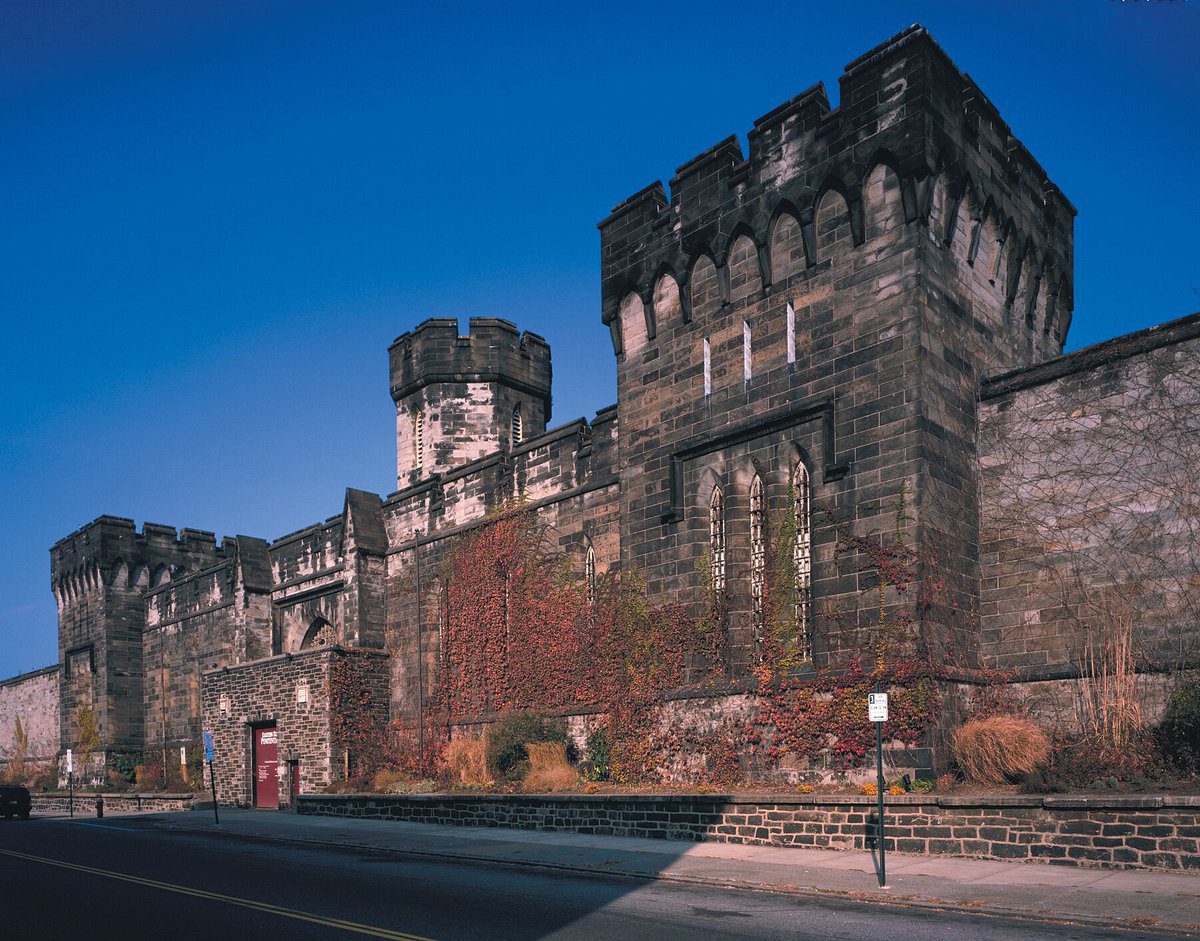
The prison looked unsurpassed from the outside, but within, every prisoner lived as if in hell. All communications were cut to zero. For this purpose, the architect came up with the idea to install individual bathrooms within the cells. The measure was made to prevent prisoners from communicating with others or transmitting messages. Despite his efforts, the convicts discovered a way to reach one another. As a result, Haviland had to redo the flush systems more than once.
Each prisoner had the opportunity to work out on the grounds located behind their cells. However, they were also encircled by high walls, which prevented criminals from communicating. There could only be one person on one site, thus it was somewhat of an individual training session. When the prisoner was brought by guards to any location, hoods were placed over their heads to protect the privacy of everyone within the institution’s walls. However, the same sports yards were used not only for exercise but also for gardening and keeping pets.
Influence of the church on the correctional system
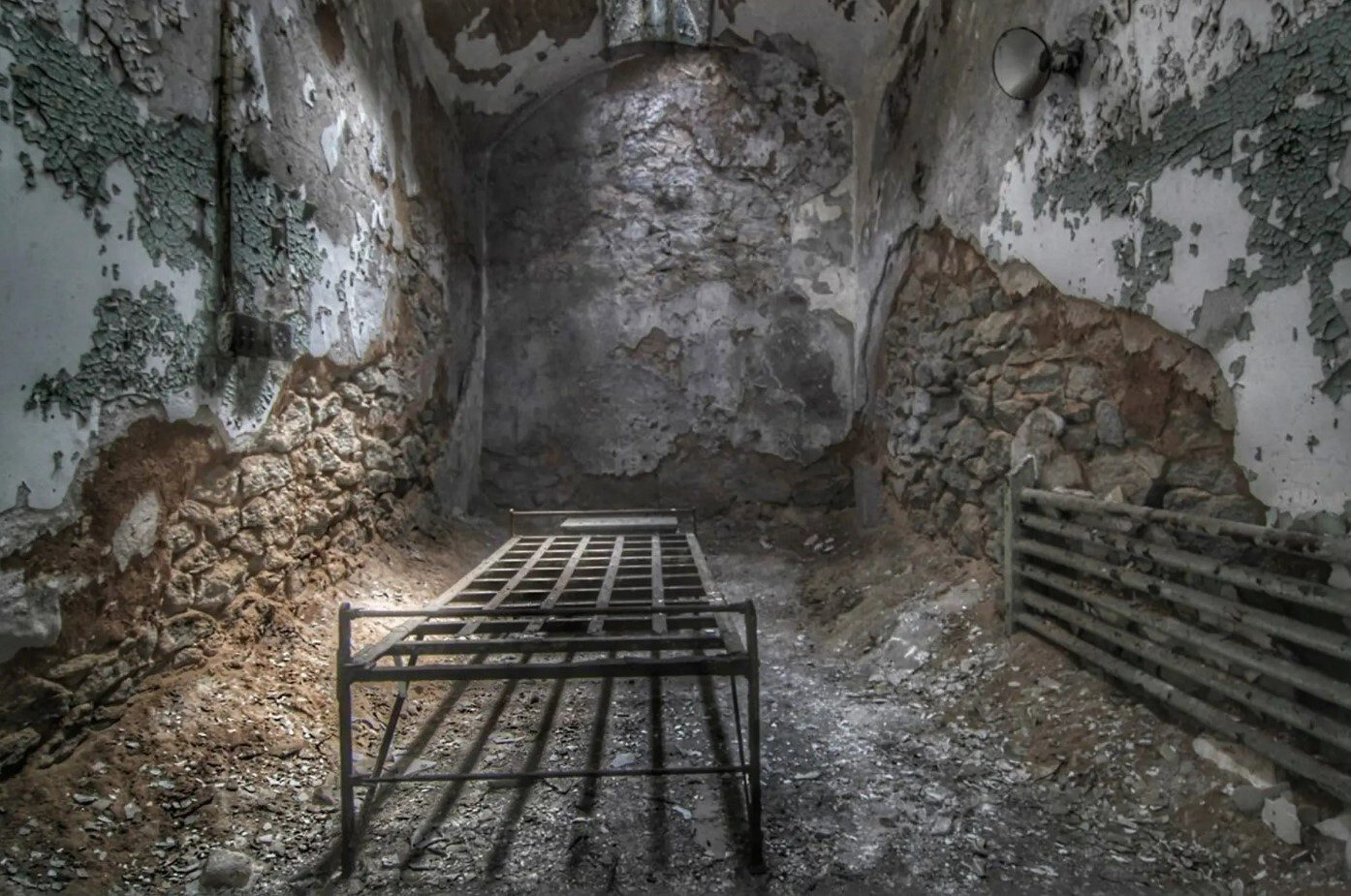
In the 20th century, the church held significant influence in society. It viewed jail as a tool. Everyone who was convicted had the chance to rethink their sinful and destructive behavior. All of the time inmates had alone with their thoughts could let them ponder on what they had done, potentially leading to redemption and understanding of mistakes. That is, while also serving as a means of punishment, such a correctional system fostered spiritual reflection and personal changes. Supporters of this “re-education” claimed that those who had spent a long time in silence and alone with thoughts about their behavior may become genuinely remorseful.
The church had an impact on the prison not only in terms of its correctional system but also on its interior architecture. The hall was designed so that everyone in it felt like they were in a church. The doors that acted as a passage for inmates were too small, so there were two perspectives on this design. The first goal was to reduce the possibility of prisoners attacking guards. The second option is repentance. Passing through such a door required each convict to bend down, which may also be seen as a bow, and is associated with the religiosity of the prison and prisoners’ remorse. Also, one of the few windows represented the “eye of God,” which was supposed to give a hint to those imprisoned that God was watching them.
Different prisoners and escape attempts
Everyone is used to seeing various people in prison, ranging from petty wallet robbers to heinous serial killers. Though, nobody expects to meet a convicted dog. According to a legend, Gifford Pinchot, the then-governor of Pennsylvania, sentenced a real dog known as “The Cat-Murdering Dog” to life in 1924. The reason given was that it supposedly killed his wife’s cat. He was even given a prisoner’s number. However, there is also a story that he just brought his dog Pep to the prison to raise the spirits of those detained.
However, no matter what kind of prison it is, every criminal wants to escape. So, on April 3, 1945, twenty convicts were able to escape their cells. The escape plan was incredibly similar to the plot of Stephen King’s novel “Rita Hayworth and Shawshank Redemption,” since the inmates, like the novel’s hero, Andy Dufresne, dug a tunnel to freedom. Later, thirty unfinished holes were found, on which the prisoners worked.
However, in the case of this institution, escape was one of the ways to end the brutal treatment of prisoners. The institution’s advisors and guards devised methods of physical and psychological abuse for the inmates, such as pouring ice water on them outside during the winter months; tying their tongue to their wrists so that they would rip it off in an attempt to break free from the chains and tying the inmates to their chairs with leather clips for extended periods of time. Those of the worst behavior were kept in an underground pit with no access to food or light.
The fate of the prison today
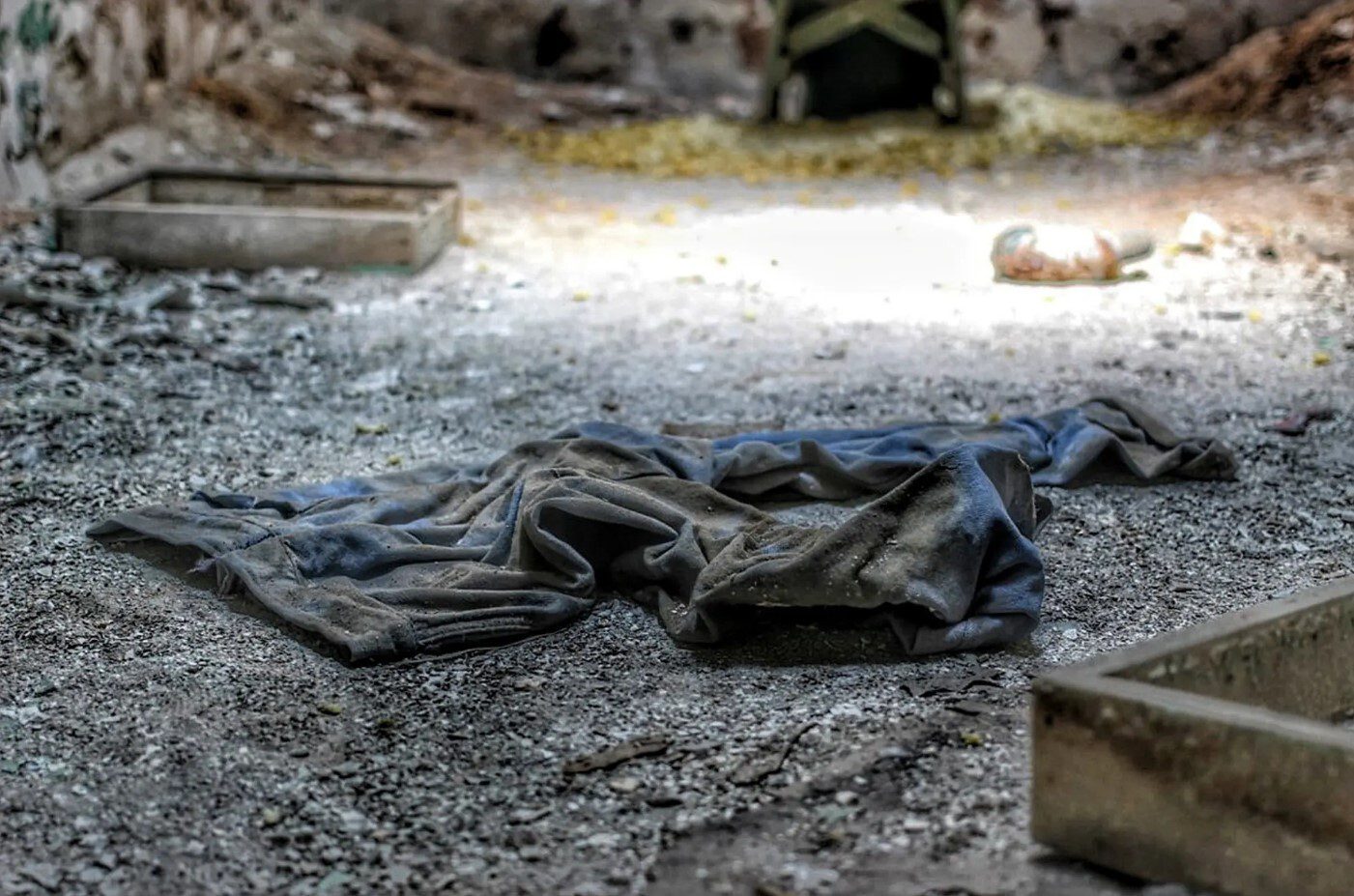
The institution was closed down in 1971, but it could not be demolished since, in 1965, it was granted the status of a historical monument. As a result, following a long period of time, the building’s walls fell apart and cats became its sole inhabitants. Weeds began to grow in the cells, being carried inside by the wind through cracks and the destructive power of nature. Philadelphia purchased the site and offered to redevelop it. Following this decision of the authorities, numerous ideas for reconstruction were presented, including a shopping center and a residential complex. However, the concepts were rejected, and the prison was left in its prior state. In 1994, a museum was established in the building. Approximately 200,000 people attend it every year. Everyone can see the cameras where the criminals, including Al Capone, served their time.