
One of the real treasures of Drexel University is Joseph R. Lynch Observatory. It’s located on the roof of Curtis Hall, but its 15-foot-high white dome can only be seen from the sky. It is here that you can see the city’s largest 16-inch telescope, as well as admire distant stars and planets. We tell you more about the history of the observatory. Read more on iphiladelphia.
Current state and work of the observatory
The University Observatory is a teaching facility for Drexel students. Every month, it opens its doors to the public during an open house.
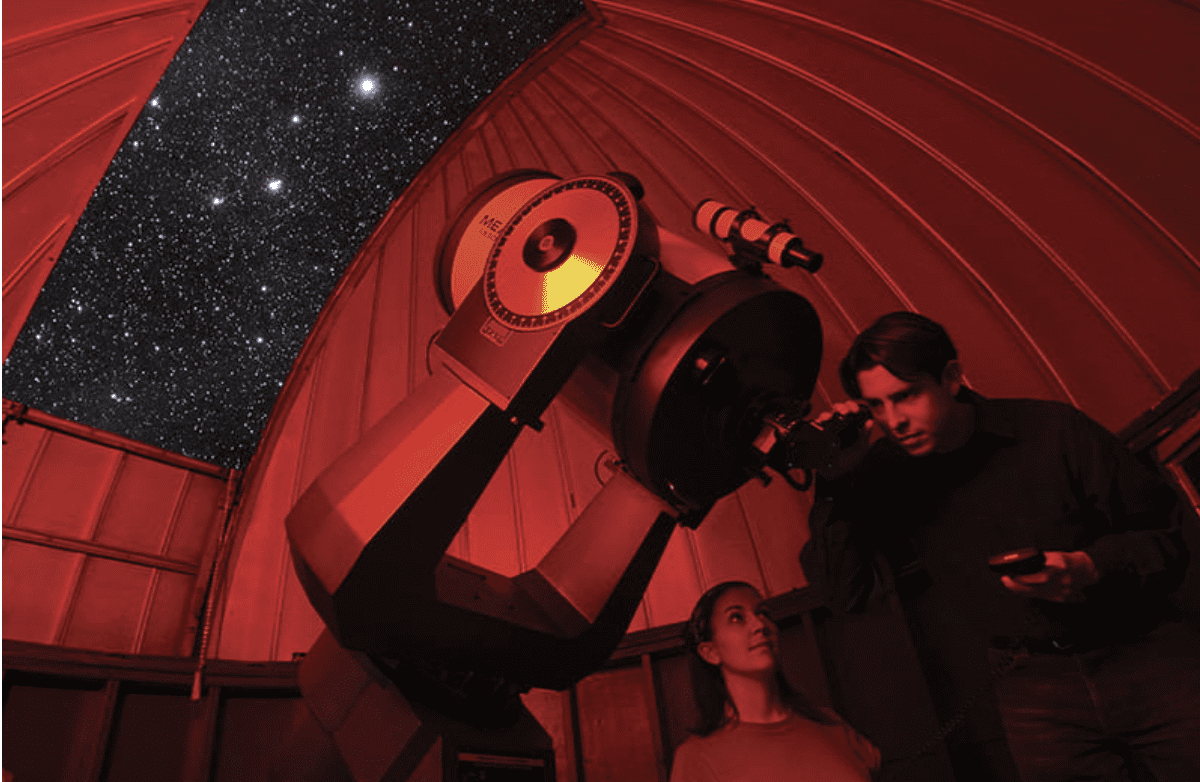
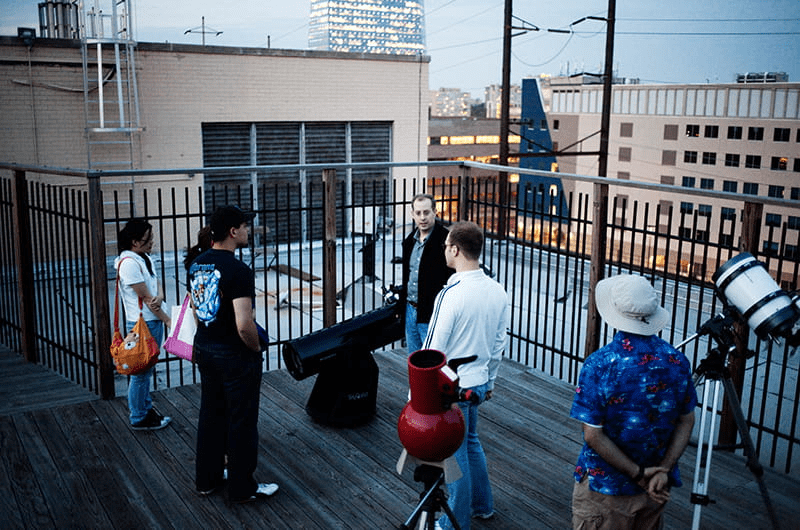
At the observatory, students study physics and also master the art of working with telescopes. This course is quite popular, and the study of astronomy attracts more and more students every year. Only a few teachers and students can be in the observatory at a time, but there is a space with portable telescopes for sky observations.
An open day, or rather an open night, is held here on the first Wednesday of every month, except during the summer. Indeed, the weather conditions must also be favorable. The graduate students organize astronomy evenings for everyone, during which they use portable telescopes.
Unfortunately, even the largest telescope in the city is hampered by the light pollution of the metropolis. Stars are usually difficult to see, but you can distinguish the large planets and the Moon. In addition, some of the surrounding buildings are so tall that they block the sky and interfere with the observation of stars and planets. Nevertheless, the observatory is open and is an important scientific and educational facility in Philadelphia.
Leonard Cohen and the launch of the observatory
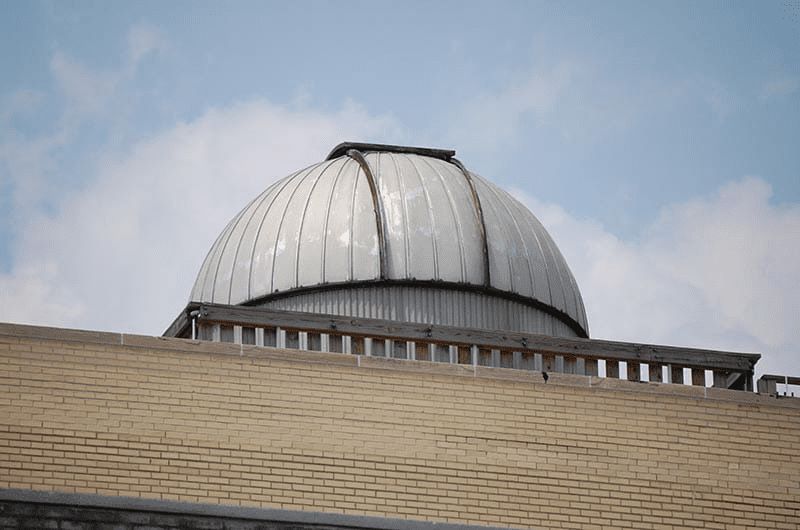
When the observatory was built in the middle of the 20th century, there were no skyscrapers around to interfere with sky observation. The opportunity to observe the stars here arose in the 1960s with the installation of a 12-inch telescope on the roof of the Basic Science Building. The Observatory, part of Drexel University, began its work in the 1970s thanks to a physics professor who was not even an astronomer.
Leonard Cohen, who in 1964 began working as an assistant professor in physics in the College of Engineering and Science at the Drexel Institute of Technology. For the previous five years, he had been an employee of General Electric Co. and had worked in theoretical and experimental physics. He came to Drexel to teach atomic and nuclear physics and to develop the nuclear engineering program.
As an amateur astronomer, in 1966 he proposed the creation of an astronomy club and a corresponding training course. Both proposals were implemented and are still in operation more than half a century later. Cohen became the first teacher of the astronomy club. At that time, the observatory was equipped with a 10-inch Celestron telescope.
Since 1979, the university has taught two astronomy courses and built a modern observatory, although the equipment was still old. During this period, the tradition of opening the observatory once a month for everyone to look at the stars was established. It is worth noting that the light of the big city had already begun to make it difficult to observe nebulae and galaxies, but the stars and planets could still be seen. The Astronomy Society also regularly traveled outside the city for its observations.
L. Cohen retired in 1997. Over the next few years, the observatory’s activities slowed down somewhat. The astronomy club, without its ideological founder, began to decline. However, later the university administration decided to improve the observatory and restore interest in it.
An unexpected gift and the development of the observatory
The fate of the University Observatory was decided by a generous gift from its physics graduate, Joseph Lynch:
- He worked as an aerospace engineer and participated in the development of space probes and rockets.
- In 1999, Lynch made a monetary gift to the physics department. The company he worked for joined the initiative in 2001.
- The physics department decided to use the funds to reconstruct the observatory, which was later renamed in honor of J. Lynch.
In 2001, David Goldberg, a professor in the Department of Physics became the director of the observatory. At that time, students started talking about resuming the activities of the astronomy club. The observatory’s dome was not yet operational and had not been repaired. There were only a few small telescopes in the observatory.
Thus, with J. Lynch’s funds, a 16-inch telescope was purchased, which is still in operation, as well as a digital camera that allows you to take photos through the telescope. In addition, the telescope was securely mounted, and a site with smaller telescopes was set up around the observatory. The latter also became important for student classes and for conducting excursions and open days. Since then, the observatory and astronomy club have resumed their activities and remain a great place to observe stars and planets.