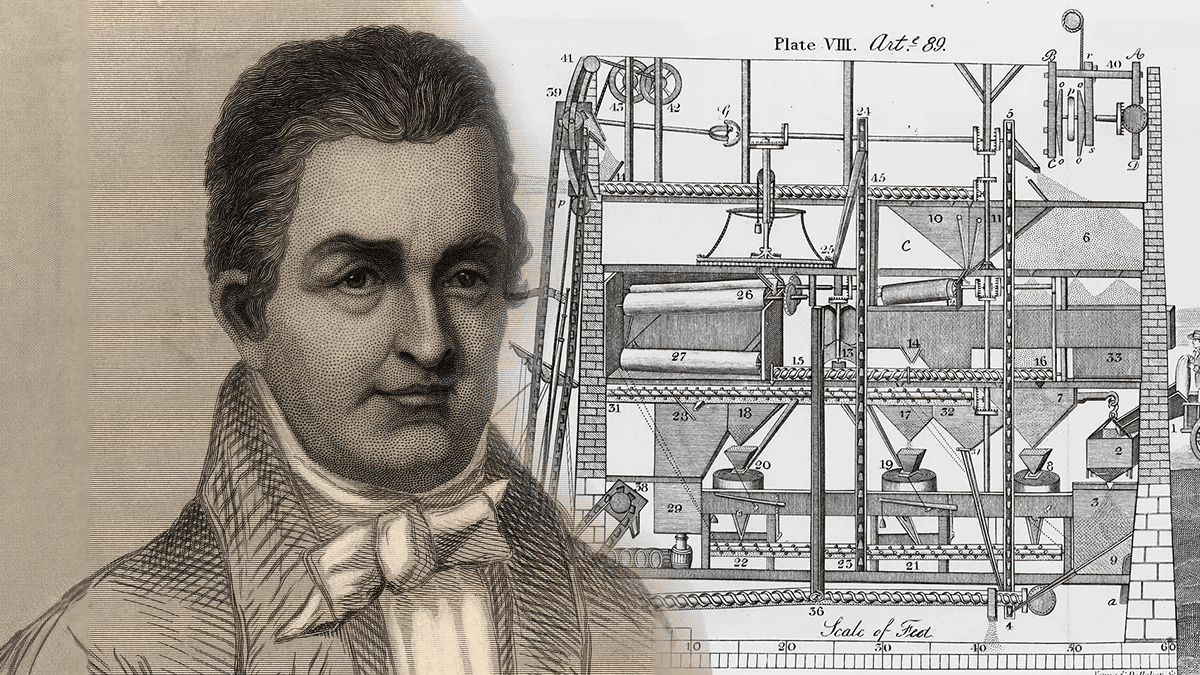

In the late 18th century, Delaware native Oliver Evans built a factory near Philadelphia that revolutionized grain processing, transforming it from a labor-intensive process. At just 29 years old, he designed a system of conveyors, elevators, chutes, scales, and milling devices powered entirely by water wheels. The system only required human intervention to feed the grain and monitor the finished flour. It cut the cost of production in half, and the resulting flour was finer and easier to store. Later, Evans invented the first high-pressure steam engine and built the ‘Mars Works’ factory in Philadelphia. Learn more about the inventor and his achievements at iphiladelphia.
The Inventor’s Early Life
Oliver Evans was born on September 13, 1755, in Delaware. He began working at the age of 16 and immersed himself in studying various mechanical devices. He later took a job at a textile factory. At the time, carding fibers to prepare them for spinning was a difficult process that slowed down production and prevented the full mechanization of the textile industry.
It was here that Oliver Evans first showcased his inventive talents. In 1777, he created a machine that could cut and set 1,000 wire teeth per minute, which were then used to create improved fiber carding devices.
A New Vision for Flour Milling
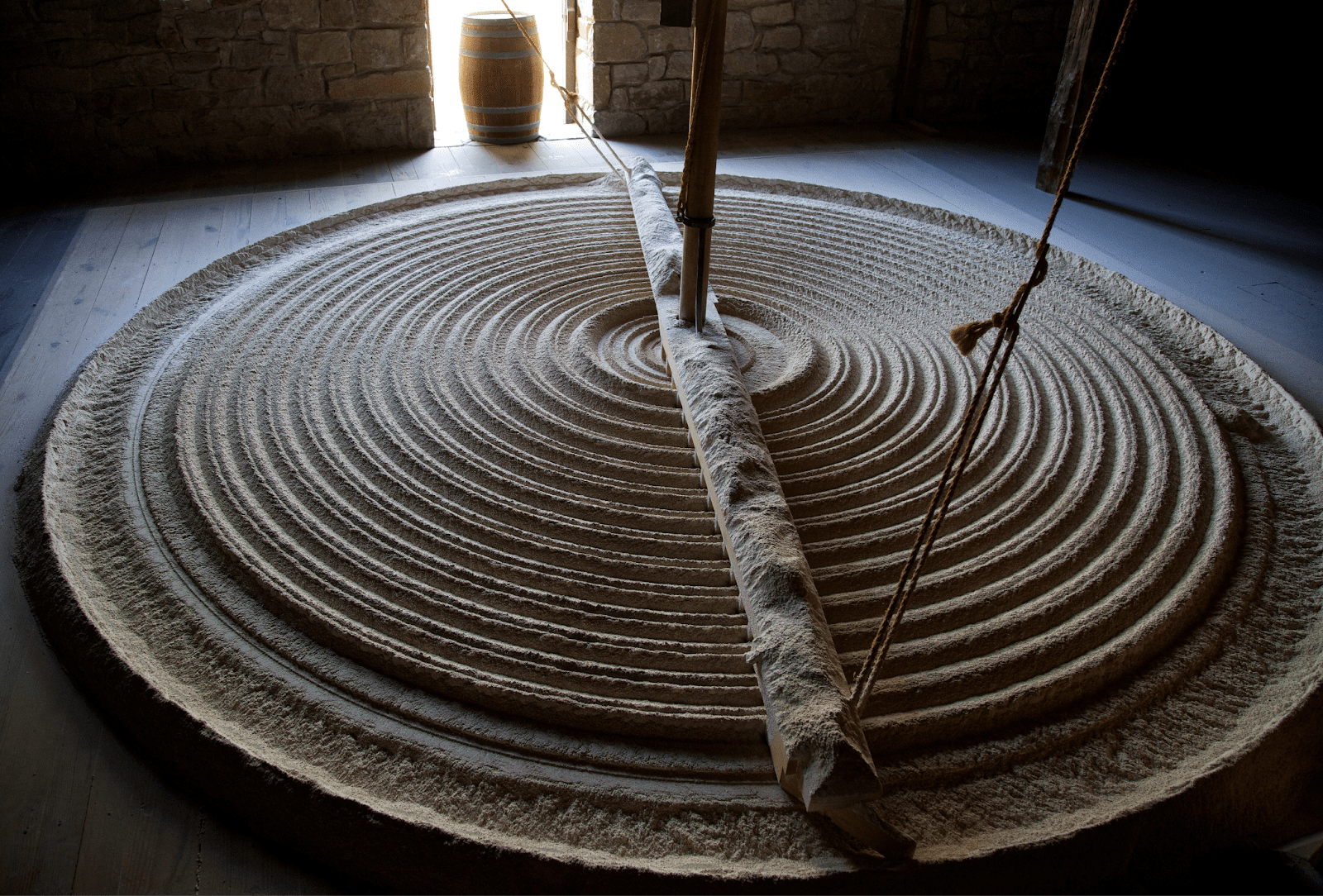
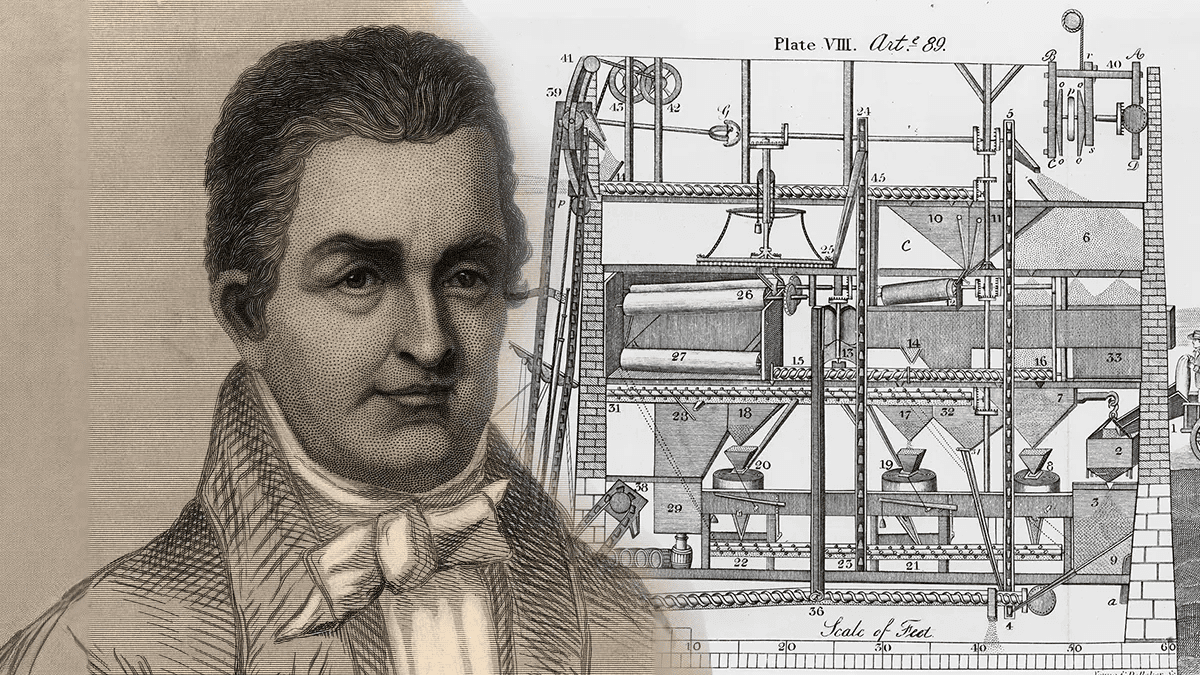
Next, Evans turned his attention to the inefficient equipment used in flour mills. He began by building his own factory near Philadelphia and focused on improving conveyors, elevators, and scales. He integrated these machines into a single, automated production line for producing flour.
Grain was fed into one end of the system, which was the only step that required workers. From there, it passed through a network of conveyors and chutes, where the milling and refining stages occurred automatically. At the end of the process, workers simply collected the finished flour. The entire mechanism was powered by water wheels. According to the inventor’s calculations, his production line cut milling costs in half while also improving the quality of the final product.
His system quickly gained popularity and began to be widely used in American flour production. It even caught the attention of George Washington, who reviewed and signed Oliver Evans’s patent application in 1790. Washington was already aware of mills operating with the system and had visited one himself.
This interest was personal, as George Washington owned his own unprofitable flour mill. He decided to purchase a license for Evans’s patent to use the system. Installation began in 1791 after Washington’s miller, William Ball, inspected Evans’s mill and its equipment. The inventor’s brothers assisted with the installation. Washington’s mill became one of the first in the U.S. to adopt the innovation, which boosted its profitability and fully validated Oliver Evans’s claims.
Oliver Evans’s Other Inventions
Meanwhile, the developer didn’t rest on his laurels. He had long been interested in the use of steam power. He had heard that steam could be used as a propulsive force in cannons, and this information inspired him to find ways to use steam for motion. As a result of his research, Oliver Evans created the first high-pressure steam engine.
He immediately recognized that this invention could be useful for road vehicles. However, authorities wouldn’t permit testing on the Pennsylvania Turnpike. Horses were the main form of transportation at the time, and officials decided the new device might frighten them and cause accidents.
Oliver Evans continued his research, testing his engine for use in other applications. He used it to sow grain, power sawmills and drilling machines, and even to operate devices for dredging the waterfront in Philadelphia.
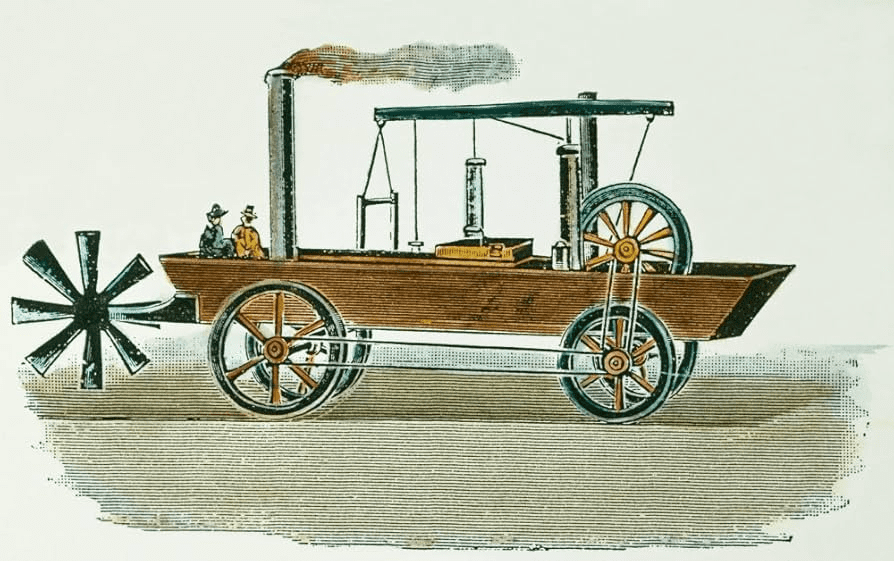
Furthermore, in 1805, he completed the design for a new type of dredger for carrying loose materials. For this, he applied some of the principles from his automatic mill. The vehicle was fitted with wheels and could move on both land and water. It became the first self-propelled road vehicle in the United States.
The following year in Philadelphia, Evans opened his own factory, ‘Mars Works,’ where he began producing steam engines for processing cotton, tobacco, and paper. One of these engines was purchased by the naval shipyard in Washington. When the War of 1812 began, Evans and his partners proposed building a steam-powered warship equipped with a cannon, but the proposal was not accepted.
In 1817, Oliver Evans completed his last major project: a 24-horsepower high-pressure engine built for a waterworks station.
In early 1819, a massive fire broke out at his ‘Mars Works’ factory, destroying many valuable models and patterns. At the time, Oliver Evans was in New York, where he had been ill with pneumonia for almost a month. He passed away four days after the fire on April 15, 1819.